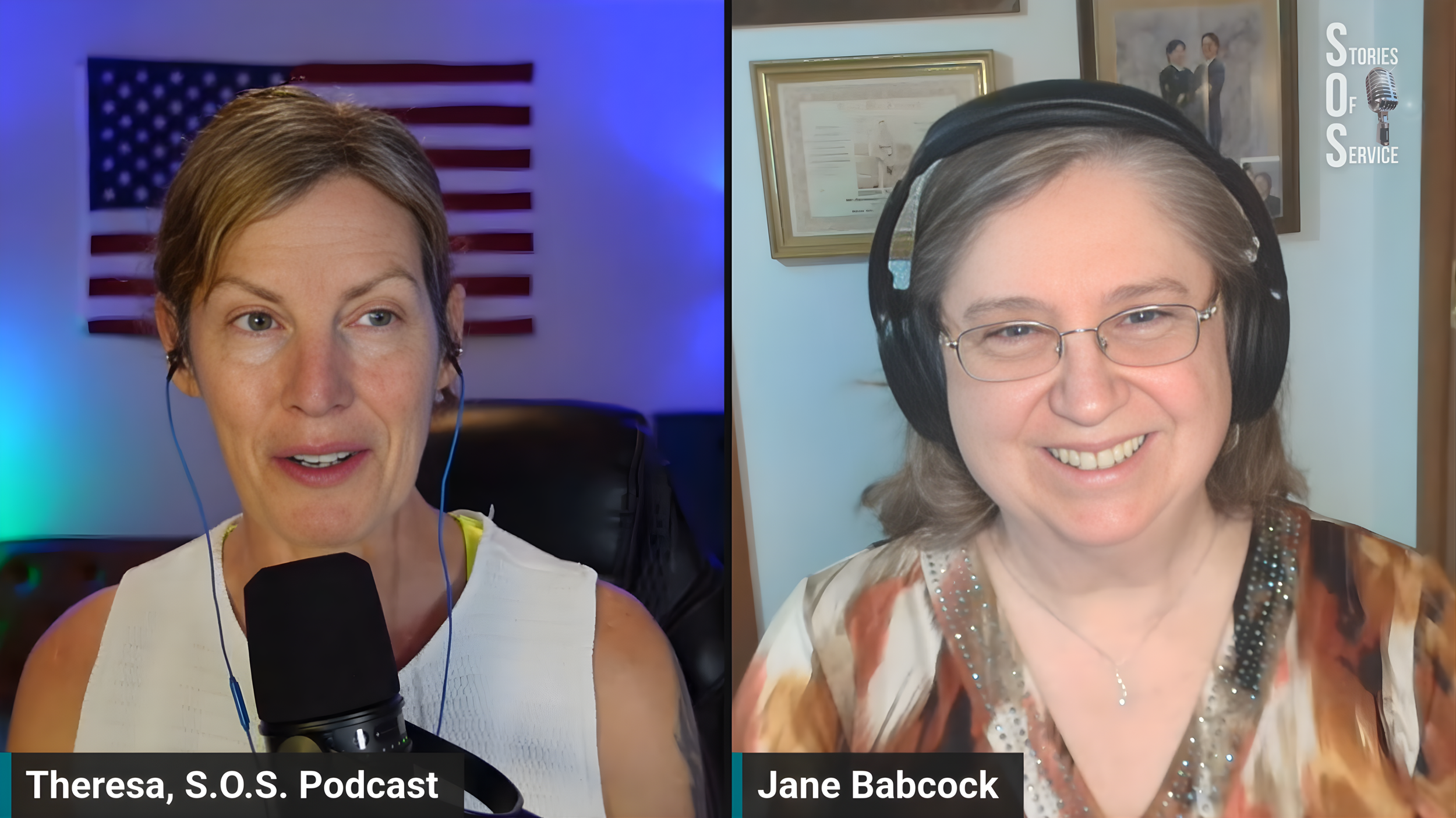
Benefit or Betrayal with Jane Babcock
Every few months, the same headline cycles back through the media:
Are veterans committing fraud?
Is the disability system out of control?
Are former service members gaming the VA for lifetime checks?
It’s a narrative that spreads fast—and sticks. A Washington Post investigation here. A book with cherry-picked case studies there. Social media posts amplifying the worst examples. Suddenly the implication becomes collective: the system is bloated because veterans are exploiting it.
But here’s the truth.
It depends.
Fraud exists. No serious person denies that. In any system that distributes money, someone will attempt to abuse it. The real question isn’t whether fraud happens. It’s whether the system is defined by it—and whether the public conversation reflects reality or political framing.
To understand that distinction, you have to understand how the VA disability system actually works.
The Knowledge Gap No One Talks About
Jane Babcock, a retired Army and Army Reserve veteran with four DD-214s and over a decade of experience as an accredited County Veteran Service Officer (VSO), spent 11 and a half years helping veterans navigate VA claims. She filed more than 1,200 claims. She has seen the system from the inside.
And before becoming a VSO?
She didn’t even know she qualified for benefits herself.
After a spinal injury during pre-deployment training—an injury that required surgery and left her with lasting impairment—she left the service without filing a claim. No one told her she could. She learned years later, after taking the VSO job, that she could have used VA healthcare and disability compensation the entire time.
That’s not fraud. That’s a knowledge gap.
And it’s enormous.
Babcock says in over a decade of outreach, she asked thousands of veterans if they understood lesser-known benefits like the wartime pension or ALS presumptive conditions. Almost none did. Widows came forward years after their spouses died from service-connected illnesses—unaware they were eligible for survivor benefits.
The conversation about fraud rarely includes this reality: underutilization and ignorance are far more common than exploitation.

GUEST BIO: WHO IS JANE BABCOCK?
Jane Babcock is a retired U.S. Army and Army Reserve veteran and longtime accredited Veterans Service Officer (VSO) who has spent more than a decade helping former service members navigate the Department of Veterans Affairs disability system. With four DD-214s and a service history that includes both active duty and reserve components, she transitioned after her military career into county-level veteran advocacy, where she assisted with over a thousand VA claims. Known for her practical, inside-the-system perspective, Babcock has spoken publicly about gaps in veteran awareness, the complexity of presumptive conditions, and the difference between isolated fraud and widespread misunderstanding of benefits. Her work centers on education, access, and ensuring veterans understand the resources available to them.
What “Presumptive” Actually Means
One of the most misunderstood aspects of VA disability is the concept of presumptive conditions.
A presumptive condition is one that scientific evidence links strongly enough to military service that the VA presumes the connection—without requiring the veteran to prove the exact causal chain.
ALS is one example. Veterans are nearly twice as likely to develop it compared to the civilian population. Agent Orange–related Parkinson’s is another. Burn pit exposure cases are part of the same evolving framework.
Critics often argue that conditions like sleep apnea or certain cancers are too difficult to tie directly to service. But the VA system includes a doctrine called “equipoise.” If the evidence for and against service connection is balanced, the ruling must favor the veteran.
That isn’t generosity. It’s law.
And it reflects a basic reality: in complex medical cases, certainty is often impossible.
The Survival Paradox
Another piece of context rarely acknowledged in fraud debates is medical advancement.
In World War II or Korea, many service members simply didn’t survive catastrophic injuries. Today, they do. Rapid evacuation, battlefield medicine, and surgical advances mean more veterans are living with severe disabilities that would once have been fatal.
Higher survival rates mean higher long-term disability rates.
That’s not system abuse. That’s progress.
If a paralyzed veteran survives because modern medicine saved him, the country doesn’t get to celebrate the survival and then complain about the lifetime cost.
Where Fraud Actually Lives
So where does fraud exist?
It exists in exaggeration. It exists in occasional malingering. It exists in rare cases where someone knowingly fabricates or inflates symptoms.
But Babcock is blunt: most veterans are not trying to scam the system. Many actually avoid filing because of pride, stigma, or fear of being judged.
There are, however, structural issues worth examining.
Certain conditions can improve. Some cancers go into remission. Some injuries are surgically corrected. The VA already reevaluates conditions in certain cases. Reductions happen when justified.
The controversy arises when policymakers attempt sweeping changes—like rating veterans based on how well medication manages symptoms.
That proposal, briefly floated and then rescinded, would have evaluated disabilities in their “medicated state.” On paper, it might sound logical. In practice, it ignores how chronic conditions function.
Medication manages symptoms. It does not cure underlying damage.
A veteran whose migraines are controlled by injections still has a neurological condition. A veteran whose PTSD is stabilized with therapy and medication still carries that diagnosis. Stability is not recovery.
More importantly, policies like that create perverse incentives. Veterans may avoid medication to preserve ratings. That outcome would harm both individuals and the system.
The backlash to that proposed change was swift—and effective. Veterans mobilized quickly, forcing a reconsideration. It was a reminder of something important: this community pays attention.
Mental Health and the Myth of “Getting Better”
Mental health claims often draw the harshest skepticism.
Critics argue that PTSD and depression improve over time and should be reduced accordingly. But mental health rarely follows a straight-line trajectory. It fluctuates. It stabilizes. It relapses.
Veterans often describe their conditions as seasonal—manageable at times, overwhelming at others.
Brain chemistry doesn’t reset because someone is having a good month.
And there’s another layer few acknowledge: many veterans entered service already shaped by adversity. Chaotic childhoods, instability, trauma—these backgrounds often make military structure appealing. The same experiences that foster resilience can also complicate post-service adjustment.
Trauma can be both a wound and a coping mechanism.
Reducing mental health to a binary of “better” or “worse” misunderstands its complexity entirely.
Can the System Sustain Itself?
The inevitable question follows: can we afford this?
The answer depends on what we believe disability compensation represents.
If it is viewed as a welfare program vulnerable to abuse, scrutiny feels urgent.
If it is viewed as a long-term cost of national defense—an extension of the social contract between a country and those it sends into harm’s way—the framing shifts.
Every military deployment carries downstream costs. Those costs don’t disappear when the war ends. They show up in healthcare, in compensation, in survivor benefits, in long-term care.
The bill comes due eventually.
The real risk isn’t rampant fraud. It’s policy driven by public perception rather than data.
Yes, fraud should be investigated. Yes, oversight matters. But broad narratives that paint veterans as opportunistic undermine trust and discourage those who legitimately need help from seeking it.
WATCH FULL EPISODE HERE
A More Honest Conversation
The disability debate deserves nuance.
It deserves acknowledgment that:
Fraud exists but is not the defining feature.
Most veterans struggle more with navigating the system than exploiting it.
Advances in medicine increase survivor disability rates.
Chronic conditions are managed, not erased.
The social contract includes long-term responsibility.
The loudest voices often flatten the conversation into extremes: either the system is broken by abuse, or it is untouchable.
Reality sits somewhere in between.
Veteran disability compensation isn’t about getting something for nothing. It’s about recognizing that service sometimes leaves permanent marks—physical, neurological, psychological—and that those marks carry lifelong consequences.
The question isn’t whether we can eliminate fraud entirely. No system ever does.
The question is whether we are willing to have an informed discussion without turning the people who served into caricatures.
And that requires something rare in today’s climate:
Editor’s Note
Discussions about veteran disability often generate strong reactions—especially when fraud enters the conversation. This piece is not an argument against oversight, nor is it a claim that abuse never occurs. It is an invitation to examine the full picture: the medical realities, the legal standards, and the long-term costs of service that don’t disappear when a uniform comes off.
Thoughtful reform requires data, nuance, and respect for the people affected. If you’re a veteran, family member, or policy professional with insight into this issue, your perspective adds value to the conversation.
Learn More
👥 Connect with Stories of Service Podcast