From Poverty to Politics with Carl Boyanton
What drives someone who has spent decades building businesses to enter politics? For Carl Lester Boyanton, the answer begins with childhood poverty, years of physical work, and a belief that complaining about government is insufficient without getting involved.
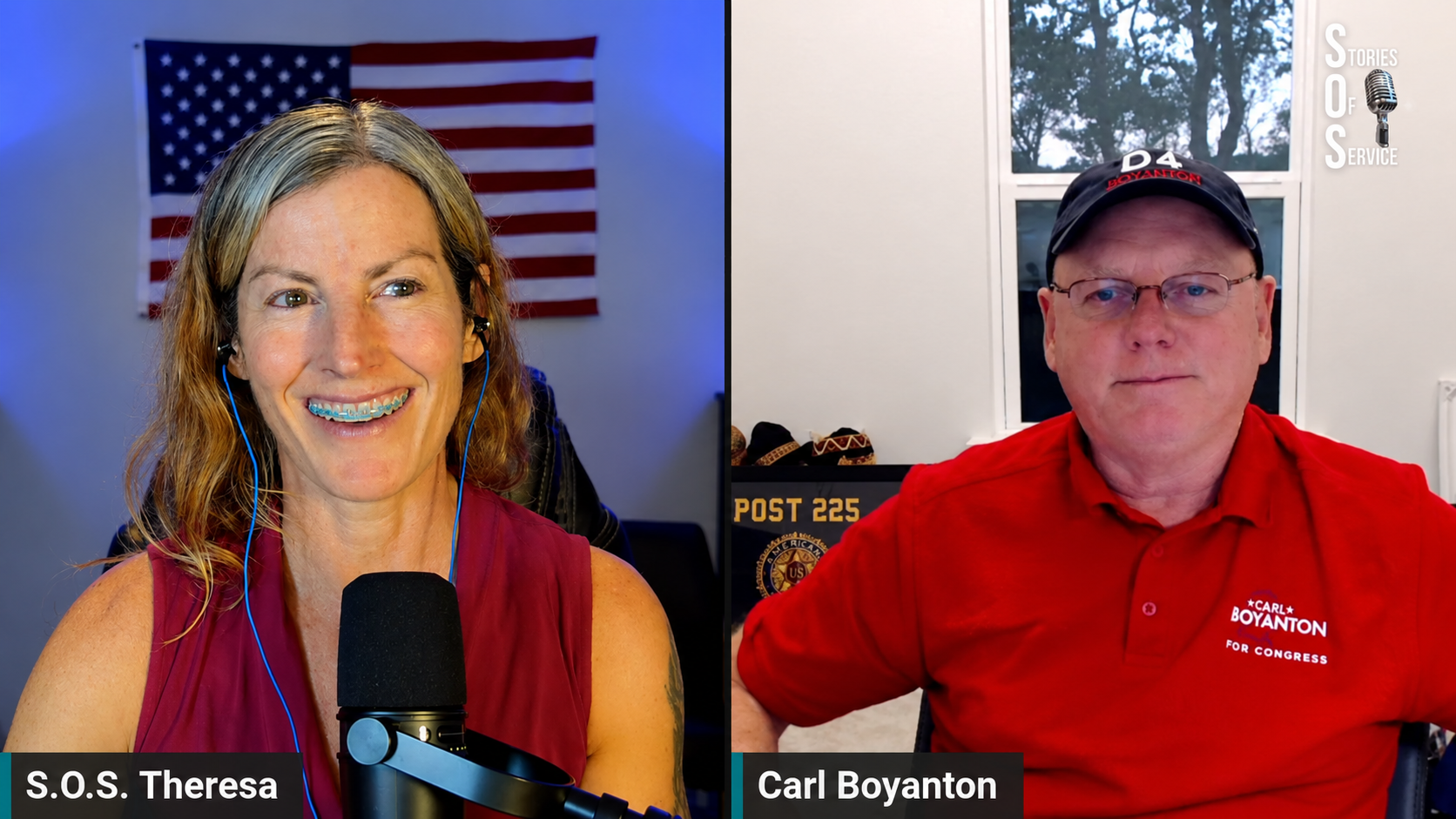
In this episode of S.O.S. Stories of Service, host Theresa Carpenter speaks with Boyanton, introduced in the interview as an independent congressional candidate in Mississippi’s fourth district. Their conversation explores his upbringing, business experience, response to Hurricane Katrina, and proposals for public accountability. It also asks what voters should expect from someone seeking to represent them in Washington.
Childhood Poverty and an Early Work Ethic
Boyanton describes growing up near Picayune, Mississippi, in a community called Burnt Bridge. The youngest of seven children, he was raised by a single father and began helping with fencing work around age eight.
Money was scarce. He recalls spending what would have been his ninth grade year working to help feed the family before returning to school. Those responsibilities shaped his understanding of work long before he entered business.
Inspired by a brother who served in Vietnam, Boyanton wanted to join the Army. He says previous arm injuries prevented his enlistment, redirecting him toward civilian employment.

GUEST BIO: WHO IS CARL BOYANTON?
Carl Lester Boyanton is a businessman and community advocate who grew up near Picayune, Mississippi. Raised by a single father as the youngest of seven children, he began working at an early age to help support his family. His career in produce distribution took him from warehouse labor to management at Charlie’s Produce in Seattle. After returning to Mississippi, he built another produce business and rebuilt its operations following Hurricane Katrina.
In his interview on S.O.S. Stories of Service, Boyanton is introduced as an independent congressional candidate for Mississippi’s fourth district. He discusses political accountability, legislative transparency, affordability, and support for farmers and veterans. His community work includes donating fresh produce to a veterans’ home and organizing food giveaways for people in need.
From Warehouse Labor to Business Leadership
Boyanton’s produce industry career began with demanding warehouse work. He later moved to Seattle and joined Charlie’s Produce, where he says learning every job helped him advance into management.
His account emphasizes practical knowledge: unloading trucks, understanding distribution, finding customers, and managing financial records. Rather than separating leadership from daily operations, he presents familiarity with the work as essential to running a company.
Eventually, he returned to Mississippi so his children could grow up there. That decision meant leaving an established career and beginning another business chapter, with the long hours and uncertainty that starting over required.
Hurricane Katrina and Rebuilding a Business
Back in Mississippi, Boyanton built a produce distribution company he identifies as Farmer Fresh. He says annual sales reached approximately $40 million before Hurricane Katrina disrupted the operation.
His recollections focus on employees as much as financial losses. With workers displaced across Mississippi and Louisiana, rebuilding required helping people return, restoring deliveries, and finding ways to meet payroll.
Boyanton describes taking a Small Business Administration loan and going without personal pay while supporting employees. He also recalls buying a house so a key driver could return with his family. For him, recovery depended on rebuilding the workforce alongside the business.
Leadership Means Caring for Employees
Asked what makes a good boss, Boyanton emphasizes firmness, competence, and respect. His approach combines clear expectations with a willingness to help employees through difficult circumstances.
Carpenter identifies a consistent message in his examples: leaders should be accountable, understand their work, and care about people. Boyanton argues that paying and treating workers well helps attract dependable employees.
This perspective connects his business history to his political message. He wants voters to see leadership as a responsibility to others, measured through decisions and relationships rather than a title or public image.
Why Carl Lester Boyanton Entered Politics
Boyanton says his brother’s Senate campaign helped prompt his interest in political participation. After encouraging others to become involved, he decided he needed to follow his own advice.
He describes examining campaign finance filings through the lens of his financial experience. That scrutiny became central to his concerns about political influence and the relationship between fundraising and representation.
Throughout the interview, Boyanton makes allegations about other political figures. Those statements represent his account; the conversation alone does not establish wrongdoing. The broader theme is his call for voters to examine records, question candidates, and demand explanations.
Running Independently and Answering Voters
Boyanton presents an independent campaign as a way to avoid obligations to party leadership. He argues that representatives should explain their decisions to constituents rather than rely on party identification to secure support.
One concrete commitment is holding a town hall in every county of his district each year if elected. He says disagreement would not prevent him from discussing why he supported a particular vote.
Carpenter connects that promise to the value of candidate debates. Hearing different answers side by side, she explains, gives voters a clearer view of priorities and differences than campaign slogans alone.
Affordability, Farmers, and the Food System
When asked about policy priorities, Boyanton identifies affordability and draws on decades in produce distribution. He wants agricultural and food policy discussions to include people familiar with logistics and the pressures facing growers.
He also criticizes what he views as overly broad communication around food recalls, arguing that farmers can suffer when consumers cannot distinguish affected products from unrelated supplies.
His comments express his perspective as a businessman rather than independent findings about a particular recall. The underlying proposal is to improve traceability and communication while considering the economic consequences for producers and distributors.
WATCH FULL EPISODE HERE
Veterans and Community Service
For the Stories of Service audience, Boyanton discusses working with veterans’ advocates and donating fresh produce to a veterans’ home. He says those relationships would help inform his priorities if elected.
He also describes food giveaways, holiday assistance, and charitable work providing fruits and vegetables to people in need. These examples link his professional experience with community service.
Supporting veterans, in his view, includes listening to people who understand their circumstances. His discussion highlights both recognition of military service and practical assistance through local organizations, food donations, and relationships with advocates.
Proposals for Transparency and Accountability
Boyanton outlines proposals involving congressional term limits, disclosure of who writes or contributes to legislation, and bills addressing a single issue. He presents these ideas as ways to make government easier to scrutinize.
The interview offers a portrait of a candidate connecting personal experience with public ambitions. Listeners can consider his proposals, assess his claims, and compare his commitments with the standards they expect from elected representatives.
For readers, the useful questions remain specific: How would these proposals work? What evidence supports the concerns he raises? How would constituents measure progress? Asking those questions keeps attention on substance and gives voters a framework for evaluating the interview beyond either agreement with his opinions or enthusiasm about biography.
Watch or listen to Carl Lester Boyanton’s conversation with Theresa Carpenter on S.O.S. Stories of Service to explore his background and perspective on Mississippi representation.
Editor’s Note
This article summarizes the interview. Candidate status, proposals, and personal accounts reflect the conversation at the time of recording. Allegations about other individuals are attributed to the speaker and have not been independently verified for this article.
Learn More
👥 Connect with Stories of Service Podcast