Why America Wins Battles but Loses Peace with Eric Hommel

Winning a battle does not automatically create a lasting peace. Defeating an enemy may answer an immediate military question, but it leaves others unresolved: Who provides security afterward? Who restores public services? Why should people trust the government that follows?
On S.O.S. Stories of Service, Theresa Carpenter explores those questions with retired Air Force Lieutenant Colonel Eric Hommel. A former Navy submariner and veteran of Iraq and Afghanistan, Hommel brings experience in reconstruction, congressional relations, and advising. Their conversation examines why he believes American military strategy too often emphasizes combat while neglecting the conditions needed for lasting political success.
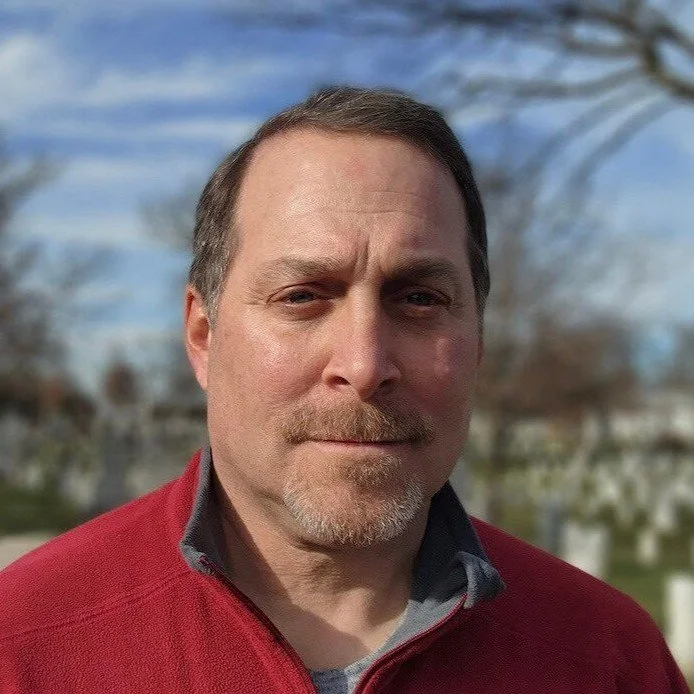
WHO IS ERIC HOMMEL?
Hommel grew up in Queens, New York, with a police sergeant father and a public school teacher mother. After an unsuccessful first attempt at college, he enlisted in the Navy and served aboard a submarine.
He later returned to education, studying historic preservation and city and regional planning before becoming an Air Force officer. His assignments included Pentagon work, reconstruction responsibilities in Iraq, and service as a legislative liaison on Capitol Hill.
In Afghanistan, he commanded a provincial reconstruction team in Panjshir Province. He discusses these experiences in his book, The Losing Game: How to Lose a War and Fail Veterans.
Military Success Needs a Political Objective
Hommel’s central argument is that military operations must serve an understandable political objective. Removing a threat or defeating an opposing force is not enough if leaders cannot explain what comes next.
He recalls uncertainty after September 11 and describes missions that expanded without sufficient clarity. In his assessment, shifting objectives made it harder to determine what success required or whether progress was meaningful.
Carpenter connects that concern to the experiences of troops carrying out assignments far from strategic decisions. Clear objectives matter because they establish what service members are working toward and what their leaders must deliver.
Stability Operations: What Happens After Combat?
During the interview, Hommel uses five stages to explain his approach: shape, clear, hold, build, and transition. His emphasis falls on the responsibilities involved in holding gains, strengthening institutions, and transferring responsibility.
He describes stability operations as work involving governance, security, economic development, and public trust. These tasks require different skills from combat and depend on understanding local conditions.
For Hommel, reconstruction teams should help connect practical projects with broader political goals. The question is whether their efforts enable local institutions to function independently, rather than simply producing visible activity during an individual deployment.
Why Buildings Alone Cannot Measure Progress
One of the clearest examples in the discussion concerns schools. Constructing a school building, Hommel argues, does not establish that children are receiving an education. Teachers and functioning systems are necessary too.
Carpenter extends that criticism to reports emphasizing money spent or facilities completed. Those figures may describe activity without explaining whether daily life improved or institutions became sustainable.
The distinction matters for military strategy and public accountability. Leaders need evidence that connects resources to outcomes. Otherwise, an impressive presentation can conceal weaknesses that the people living with those projects experience every day.
Local Trust and Reconstruction in Panjshir
Hommel illustrates the challenge through a road project in Afghanistan. He recounts discovering that road expansion was taking residents’ property without compensation and stopping contracts while seeking a solution.
According to his account, the decision brought pressure from superiors who believed he was slowing progress. He saw it differently: a project intended to strengthen government legitimacy could undermine that goal if residents experienced it as unfair.
His story highlights a practical tension in reconstruction. More pavement does not necessarily mean more trust. How a project treats people can matter as much as what the project physically delivers.
Careerism and Leadership Accountability
Throughout the conversation, Hommel questions institutional incentives that reward favorable reporting and career advancement. He argues that leaders must be willing to acknowledge mistakes rather than protect their reputations.
He includes himself in that demand. Although he describes accomplishments by his team, he also accepts responsibility for his part in a wider effort that did not achieve its intended result.
Carpenter explores how difficult speaking up can become when careers and professional standing are at stake. Their exchange presents accountability as a leadership obligation, especially for people with the authority to shape missions and assess their outcomes.
Respect, Empathy, Humility, and Accountability
After retirement, Hommel spent years training government personnel and military members preparing for advisory assignments. He identifies four priorities in that work: respect, empathy, humility, and accountability.
Respect must be mutual. Empathy requires understanding counterparts rather than assuming their priorities are identical to American expectations. Humility means recognizing gaps in knowledge and admitting errors. Accountability applies both to partners and to oneself.
Together, these principles describe an approach based on relationships and responsibility. Advisers should help counterparts develop the ability to act, while remaining honest about what outside assistance can accomplish and where it falls short.
Supporting Veterans Through Honest Conversations
For Hommel, debates about strategy are inseparable from responsibility toward veterans. He wants senior leaders to explain what went wrong, what they learned, and how they are supporting those who served.
He describes giving tours at Arlington National Cemetery as another way to remain connected with veterans and the meaning of service. Carpenter also encourages involvement in local organizations and community relationships.
The discussion distinguishes the value of individual service from the outcome of a military campaign. Hommel’s call is for leaders to recognize that service while answering difficult questions about the decisions made above their troops.
WATCH FULL EPISODE HERE
What Would Winning the Peace Require?
Hommel’s perspective invites a broader definition of success: clear political objectives, capable institutions, local legitimacy, and an achievable transfer of responsibility. It also requires leaders willing to assess results honestly.
For readers, useful questions follow: What outcome is being promised? Who will maintain the systems being built? How will local people participate? What happens when the original assumptions prove wrong? Asking those questions brings the discussion back to responsibilities that continue long after a combat operation ends.
The interview does not offer a simple formula for every conflict. Instead, it asks whether planning, training, and incentives reflect the full task that intervention creates. Watch or listen to Eric Hommel’s conversation with Theresa Carpenter on S.O.S. Stories of Service for more on military strategy, stability operations, and accountability after war.
Editor’s Note
This article summarizes Eric Hommel’s interview on S.O.S. Stories of Service. Assessments of military strategy, leadership, and reconstruction reflect his perspective and personal accounts shared during the conversation.
Learn More
👥 Connect with Stories of Service Podcast
📚 Book: https://www.lionsixpress.com/
Arlington Tours: https://www.vigilancetours.com/
📖 Articles: https://smallwarsjournal.com/author/e...