From Combat Cockpit to Congress with Rebecca Bennett
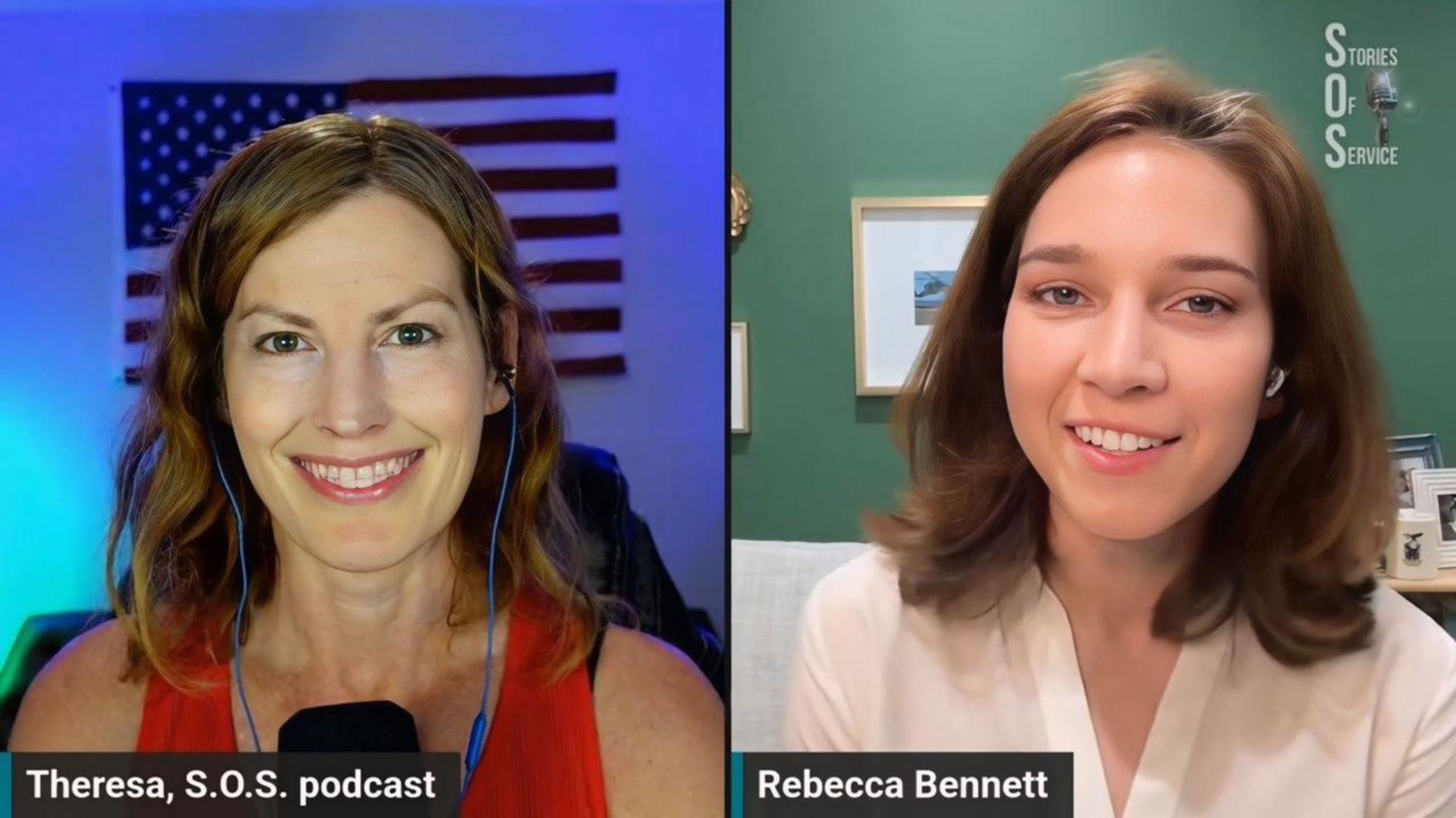
In a political climate dominated by outrage, viral clips, and partisan warfare, meaningful conversations about service and leadership can feel increasingly rare. That is what made a recent conversation on the Stories of Service podcast so refreshing. Hosted by Theresa Carpenter, the episode featured Rebecca Bennett, a Navy veteran, helicopter pilot, healthcare executive, and congressional candidate whose approach to politics centers less on ideology and more on accountability, problem-solving, and service.
The discussion explored everything from military life and healthcare reform to the realities of running for office as an ordinary American. More importantly, it highlighted a growing desire among voters for leaders who value mission over messaging.
A Foundation Built on Service
Rebecca Bennett’s story begins in a small Texas town that resembled the world of Friday Night Lights more than the polished corridors of Washington, D.C. Raised in a rural community where service and faith played central roles, she grew up understanding both the value of hard work and the importance of helping others.
The events of 9/11 deeply influenced her generation, and like many Americans who came of age during that time, she felt called to serve. Although she explored options like AmeriCorps, she ultimately chose the military. For Bennett, joining the Navy was not simply about career opportunity; it was about contributing to something larger than herself.
Her path to the Navy also reflected the realities many young Americans face. College was expensive, and ROTC provided both an education and a mission. She earned a Navy ROTC scholarship and attended Cornell University, where she studied chemical engineering.
When it came time to choose a military specialty, Bennett intentionally stepped outside her comfort zone. At the time, women were not permitted to serve on submarines, leaving aviation and surface warfare as primary options. She chose aviation because it intimidated her.
That decision eventually led her to become a helicopter pilot flying missions from aircraft carriers like the USS Nimitz. She later became a test pilot, serving in demanding operational environments that required precision, adaptability, and teamwork.
Throughout the conversation, one theme remained constant: military service shapes leaders differently. In uniform, success is not determined by political affiliation or personal branding. The mission comes first.

GUEST BIO: WHO IS REBECCA BENNETT
Rebecca Bennett is a Navy veteran, former helicopter pilot, healthcare executive, and political candidate featured on the Stories of Service podcast hosted by Teresa Carpenter.
Raised in a small town in Texas, Bennett joined the Navy through an ROTC scholarship after 9/11 inspired her commitment to public service. She studied chemical engineering at Cornell University and later became a Navy helicopter pilot, deploying aboard aircraft carriers including the USS Nimitz. She eventually served as a test pilot and remained connected to military service through the Navy Reserve and Air National Guard.
After transitioning from active duty, Bennett earned an MBA from the Wharton School and moved into healthcare leadership. She worked at Johnson & Johnson and later in healthcare startups focused on improving patient access and women’s health initiatives.
Bennett later entered politics, running as a Democrat for Congress in New Jersey. Her campaign emphasizes service-oriented leadership, accountability, healthcare reform, and bipartisan problem-solving rather than partisan conflict. She has also spoken publicly about reducing the influence of special interests in politics by relying on grassroots fundraising instead of corporate PAC money.
Her story is often framed around the idea that military leadership and public service can bring a more mission-focused approach to government.
Leadership Beyond the Military
After more than a decade on active duty, Bennett transitioned into civilian life while remaining connected to service through the reserves and later the Air National Guard.
Like many veterans, she faced the difficult question of identity after leaving active duty. The military provides structure, purpose, and community, and transitioning away from that environment can be emotionally challenging.
Her next chapter took her into healthcare and corporate leadership.
After earning her MBA from Wharton, Bennett joined Johnson & Johnson through a veteran-focused leadership development program. The role allowed her to rotate through different parts of the business while learning how major healthcare organizations operate.
What stood out to her was the company’s mission-driven culture. In the military, leaders often refer to “commander’s intent,” the guiding principle behind every mission. Bennett saw similarities in healthcare organizations that genuinely prioritize patient outcomes.
Still, she quickly discovered how fragmented the American healthcare system has become.
The conversation touched on familiar frustrations many Americans experience daily: disconnected systems, inconsistent care, rising costs, and a healthcare model that often rewards treatment over prevention.
Bennett emphasized that many healthcare professionals genuinely want to improve lives, but the system itself creates barriers. Information does not always transfer smoothly between providers. Preventative care often receives less attention than reactive treatment. Patients can struggle to navigate complicated networks and programs.
The discussion became especially personal when the topic shifted to women’s healthcare.
Bennett spoke candidly about working in the women’s health startup space, particularly around menopause care and broader gaps in healthcare access for women. Historically, women have been underrepresented in clinical research, and many conditions affecting women remain underdiagnosed or misunderstood.
For women veterans, the challenges can be even greater. Issues involving infertility, toxic exposure, and long-term service-related health complications often receive insufficient attention.
The broader takeaway was clear: healthcare reform is not simply about spending more money. It is about building systems that reward better outcomes, preventative care, and long-term wellness.
Why Run for Office?
Perhaps the most compelling part of the conversation centered on Bennett’s decision to run for Congress.
Unlike career politicians who often spend years climbing political ladders, Bennett entered politics through volunteer work. After leaving active duty, she began phone banking, canvassing, and supporting campaigns because she felt compelled to contribute.
The 2024 election became a turning point.
Bennett described feeling an overwhelming sense that she could no longer remain on the sidelines. For her, the decision to run was not rooted in ambition or celebrity. It was rooted in responsibility.
That distinction matters.
Modern politics increasingly rewards performance over substance. Viral moments, partisan attacks, and social media outrage often dominate public discourse. Congressional hearings sometimes resemble entertainment more than governance.
Both Bennett and Carpenter expressed frustration with the performative nature of modern politics, especially when lawmakers appear more focused on creating clips for social media than solving real problems.
What makes veteran candidates unique is that they are often trained in environments where collaboration is not optional.
In the military, people from different backgrounds and political beliefs work together because the mission demands it. Personal differences become secondary to accomplishing objectives and protecting teammates.
That mindset appears to resonate with many voters.
Bennett’s congressional district in New Jersey is politically divided almost evenly among Democrats, Republicans, and independents. Rather than leaning heavily into partisan rhetoric, she has focused on leadership, accountability, and practical problem-solving.
According to Bennett, many independent voters feel politically homeless. They are exhausted by constant outrage and want leaders who prioritize solutions over tribal loyalty.
Her approach reflects a broader belief that Americans have more in common than political media often suggests.
Most people want safe communities, economic stability, affordable healthcare, and better opportunities for their children. While disagreements over policy will always exist, Bennett argues that leaders must first recognize shared goals before debating how to achieve them.
WATCH FULL EPISODE HERE
The Realities of Running as an Ordinary Person
One of the most eye-opening parts of the discussion involved campaign fundraising.
Running for office is extraordinarily expensive, especially for candidates without personal wealth or institutional backing.
Bennett openly acknowledged how difficult it is for normal working Americans to launch viable campaigns. Between fundraising demands, childcare costs, and stepping away from full-time employment, the system often discourages people with real-world experience from entering politics.
Her campaign chose not to rely on corporate PAC money, instead focusing on grassroots support.
That decision created additional challenges but also reinforced her commitment to accountability. Rather than depending on special interests, her campaign depends on individual supporters who believe in her message.
To launch her campaign, Bennett literally created a spreadsheet of every person she had ever known and started making calls.
Friends from high school, former military colleagues, classmates, and professional connections all became part of the effort.
It was not glamorous. It was not polished. But it reflected something increasingly uncommon in politics: authenticity.
A Different Kind of Political Conversation
The conversation between Teresa Carpenter and Rebecca Bennett offered something many Americans are craving — nuance.
There was disagreement without hostility, political discussion without personal attacks, and policy conversation without performative outrage.
Perhaps that is why veteran voices continue to resonate across party lines.
Military service does not eliminate political differences, but it often creates a shared understanding of responsibility, sacrifice, and teamwork. Those qualities can bring a different tone to public leadership.
At a time when trust in institutions continues to decline, Americans may not be searching for perfect politicians. They may simply be searching for leaders who remember that public office is supposed to be an act of service.
And in a political environment increasingly driven by noise, that kind of leadership stands out.
Editor’s Note
At a time when political conversations are often reduced to headlines, outrage, and division, Rebecca Bennett offers a different perspective — one rooted in service, accountability, and leadership. From flying Navy helicopters aboard the USS Nimitz to navigating the complexities of healthcare leadership and now running for Congress, Bennett’s journey reflects a commitment to solving problems rather than amplifying them.
This conversation on Stories of Service explores more than politics. It highlights the experiences that shape leaders: military service, family sacrifice, healthcare challenges, and the difficult transition from uniformed service to civilian life. Most importantly, it reminds us that respectful dialogue and bipartisan cooperation are still possible in America.
Whether readers agree with Bennett politically or not, her story underscores a larger truth: many veterans entering public service are motivated less by party loyalty and more by a desire to leave the country better than they found it.