Power, Propaganda, and the Consequences of American Empire
There’s a quiet frustration many Americans are feeling right now. A desire to support the country, to contribute to something meaningful, to be part of positive change—but without getting pulled into the exhausting gravity of partisan politics. When headlines feel overwhelming and trust in institutions seems shaky, it raises a fundamental question: What does it actually mean to be a good citizen today?
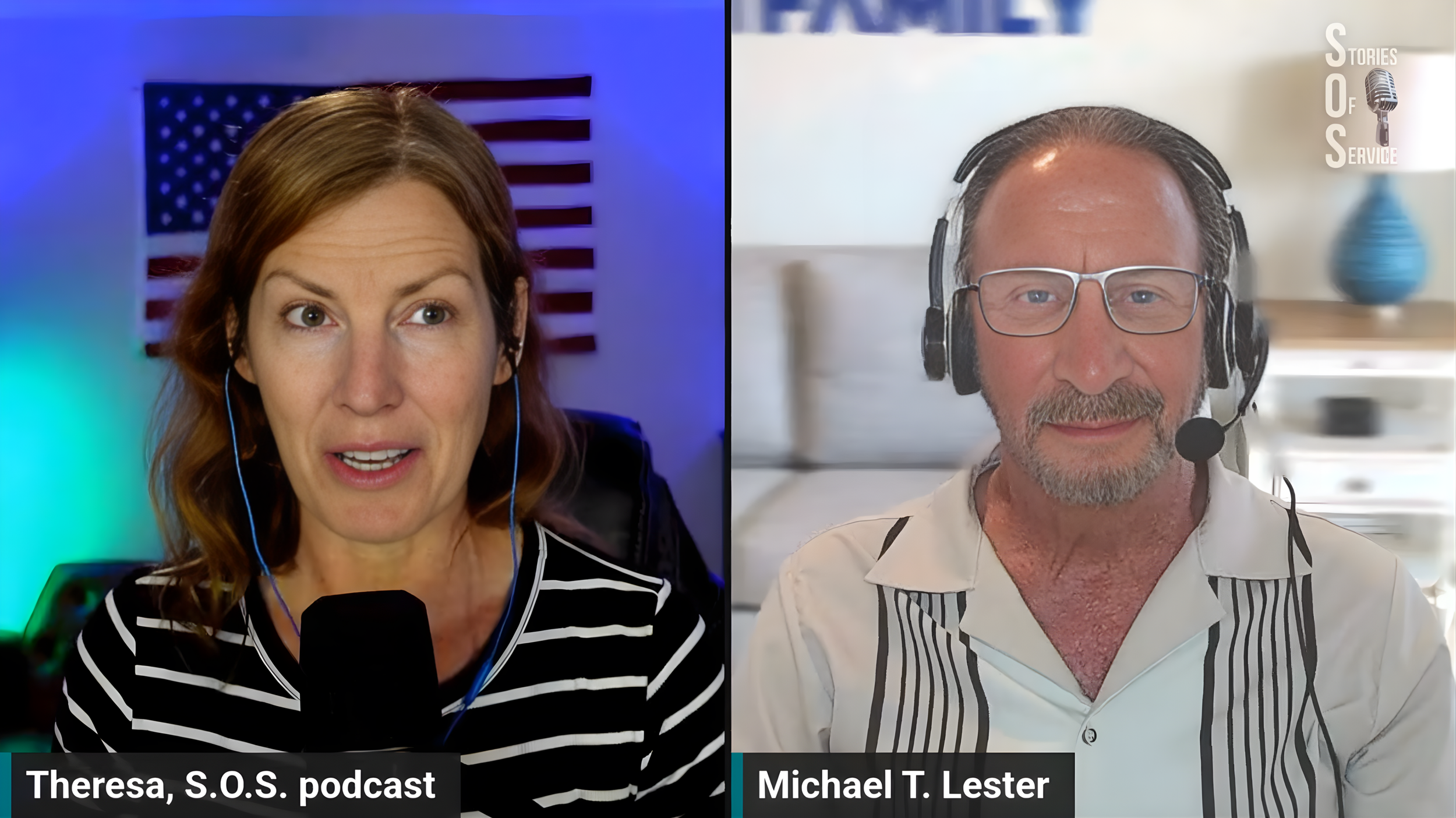
That question sits at the heart of a compelling conversation between Theresa Carpenter and Michael T. Lester, a Naval Academy graduate, combat veteran, and author of We Are the Bad Guys. Their discussion doesn’t aim to provide easy answers. Instead, it invites listeners to examine uncomfortable truths about patriotism, perception, and the systems that shape what we believe.
Patriotism vs. Performance
One of the central tensions explored is the difference between performative patriotism and active citizenship. In modern American culture, patriotism is often expressed through visible symbols—flags, slogans, public declarations of loyalty. These gestures are easy, familiar, and widely accepted.
But according to Lester, real patriotism demands more. It requires engagement, critical thinking, and a willingness to question authority. It’s not about blind agreement—it’s about informed participation. The founding principles of the United States weren’t built on passive support; they were rooted in accountability and civic responsibility.
This distinction matters because when patriotism becomes purely performative, it risks losing its substance. Citizens may feel like they are contributing simply by aligning with a narrative, without ever examining whether that narrative holds up under scrutiny.
GUEST BIO: WHO IS MICHAEL T. LESTER?
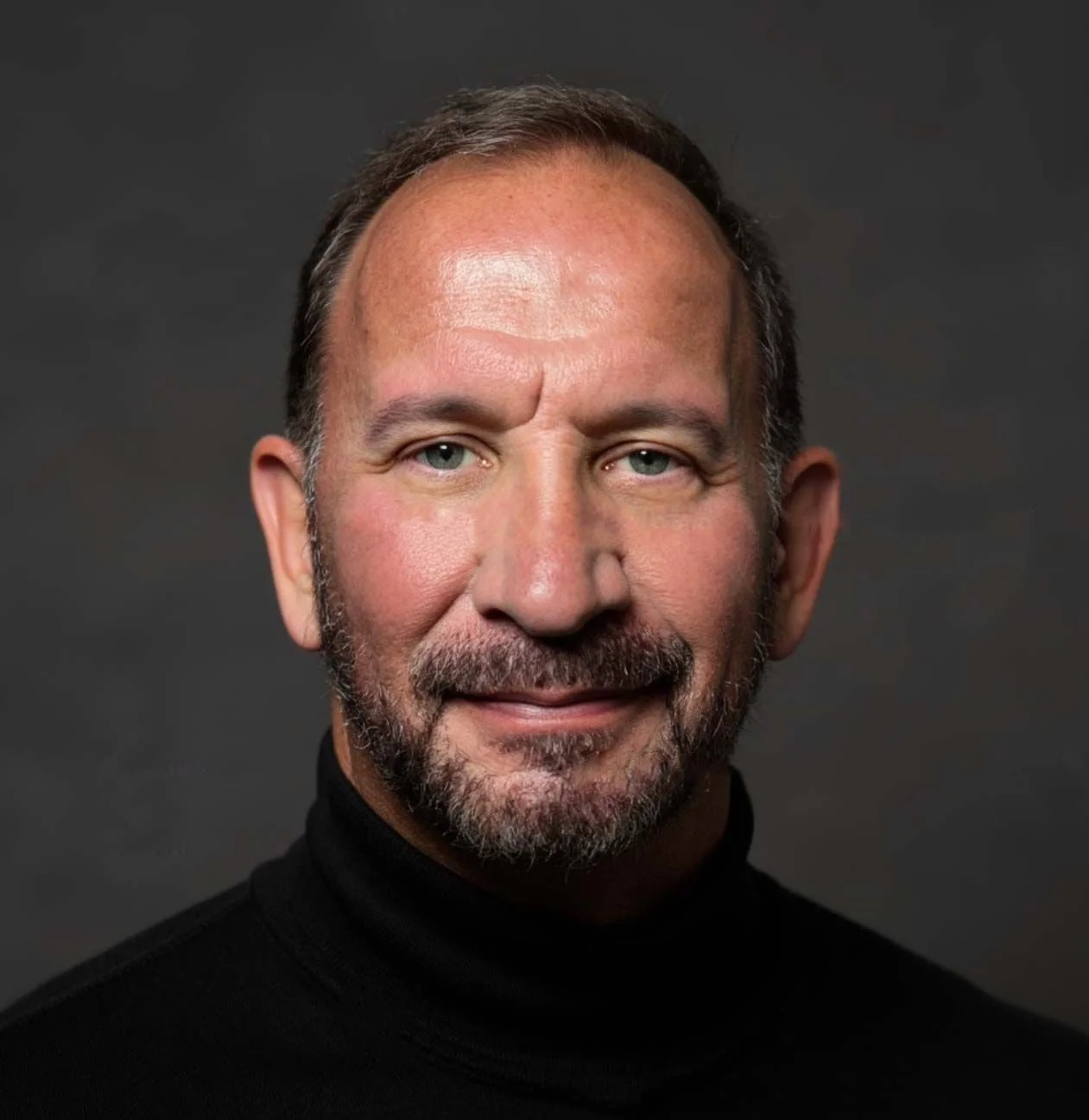
Michael T. Lester is a U.S. Naval Academy graduate, former Marine Corps helicopter pilot, and author known for his work on U.S. foreign policy and civic engagement.
He flew CH-53E Super Stallion helicopters and served in combat operations during Desert Shield and Desert Storm. After leaving the military, he transitioned into the tech world, building a career in cybersecurity and engineering, with a strong focus on understanding complex systems at a deep level.
Lester is best known for his book We Are the Bad Guys, where he examines how U.S. actions—especially in foreign policy—are perceived by other countries. His central argument isn’t that Americans are inherently bad, but that the United States is often viewed negatively abroad due to historical interventions and policy decisions that aren’t widely understood domestically.
He also speaks and appears on podcasts (like Sean Ryan’s show and others) discussing topics such as:
The difference between patriotism and nationalism
How information shapes public belief
The role of media and “manufactured consent”
Government accountability and civic responsibility
His work tends to challenge conventional narratives and encourages people to look more critically at both domestic systems and international relations.
How Beliefs Are Shaped
A key insight from Lester’s work is that most people don’t knowingly support harmful policies or flawed systems. Instead, beliefs are shaped subtly—through selective information, repetition, and trusted sources. Over time, these influences create a curated version of reality.
People tend to consume information that aligns with their existing views. They follow certain news outlets, trust specific influencers, and build networks that reinforce their perspectives. This isn’t necessarily intentional—it’s human nature. But it creates an environment where opposing viewpoints feel not just incorrect, but incomprehensible.
The result is a society where individuals are confident in their beliefs, yet often operating with incomplete information. This phenomenon, sometimes referred to as “manufactured consent,” highlights how authority, consistency, and social proof can be more persuasive than truth itself.
Seeing Ourselves from the Outside
The provocative title We Are the Bad Guys isn’t meant as an accusation against individuals. Instead, it reflects how U.S. actions are often perceived internationally. While many Americans believe their country promotes democracy and freedom, other nations may interpret those same actions very differently.
To explore this disconnect, Lester takes a country-by-country approach in his book, examining historical events through a global lens. This method reveals a pattern: actions that are framed domestically as protective or benevolent can appear coercive or self-serving from the outside.
For example, interventions in Central America, the annexation of Hawaii, and the 1953 coup in Iran are often absent or simplified in mainstream narratives. Yet in the regions affected, these events remain deeply influential, shaping attitudes toward the United States for generations.
This gap in perception isn’t just academic—it has real consequences. When Americans don’t fully understand how their country’s actions are viewed abroad, they may struggle to make sense of international tensions that seem to arise “out of nowhere.”
The Long Shadow of History
One of the most striking themes in the conversation is how historical actions continue to echo decades later. Political instability, distrust, and conflict often have roots that stretch far into the past.
Take Iran as an example. The overthrow of a democratically elected government in 1953, supported by U.S. and British intelligence, set off a chain of events that ultimately led to the 1979 revolution. To many Americans, the revolution may seem sudden or inexplicable. But in context, it becomes part of a longer narrative of intervention and response.
This pattern isn’t unique to Iran. Across the globe, past decisions—particularly those driven by economic or strategic interests—continue to shape present-day relationships. Understanding this continuity is essential for anyone trying to make sense of current events.
Following the Money
Another layer of complexity lies in how resources are allocated, both domestically and internationally. Government spending often involves massive figures—billions or even hundreds of billions of dollars. These numbers can feel abstract, making it difficult for citizens to evaluate their impact.
But as Lester points out, every financial decision carries an opportunity cost. Money spent in one area is money not spent elsewhere. The challenge is that these trade-offs are rarely presented clearly to the public.
This issue extends into campaign financing as well. Data consistently shows that candidates who spend the most money win the vast majority of elections. With the rise of super PACs and the implications of the Citizens United ruling, financial influence in politics has grown significantly.
When corporations and wealthy donors can contribute at levels far beyond what individuals can match, it raises questions about representation. Who are elected officials באמת accountable to—the voters, or the entities funding their campaigns?
Structural Challenges in Democracy
Beyond funding, systemic factors also shape political outcomes. Closed primaries limit participation to specific party members, reducing broader voter influence. Gerrymandering allows districts to be drawn in ways that favor particular parties, often predetermining election results. The absence of ranked-choice voting encourages negative campaigning, as candidates focus on eliminating opponents rather than building consensus.
Individually, each of these issues might seem technical. Together, they form a system that can feel inaccessible and, at times, unresponsive to the public.
This complexity contributes to a broader sense of disconnection. Many Americans feel detached from the political process, unsure how decisions are made or how to influence them effectively.
WATCH FULL EPISODE HERE
Reclaiming Civic Responsibility
Despite these challenges, the conversation ultimately points toward a path forward—one grounded in awareness and engagement. Being an informed citizen doesn’t require expertise in every policy area, but it does require curiosity and effort.
It means asking questions: Why was this decision made? Who benefits from it? What are the long-term consequences? It means seeking out diverse perspectives, even when they challenge existing beliefs.
Most importantly, it means recognizing that democracy is not a passive system. It depends on participation—not just during elections, but in ongoing dialogue and accountability.
A More Honest Patriotism
At its core, this discussion isn’t about diminishing pride in one’s country. It’s about redefining what that pride looks like. A more honest form of patriotism embraces complexity. It acknowledges both strengths and shortcomings. It values truth over comfort.
This kind of patriotism isn’t always easy. It requires confronting difficult histories and questioning familiar narratives. But it also creates space for growth, improvement, and a more inclusive understanding of what it means to serve a nation.
In a time when division often dominates public discourse, conversations like this offer something different—a chance to step outside entrenched positions and engage with ideas that challenge, inform, and ultimately strengthen the collective understanding of citizenship.
Because supporting a country isn’t just about believing in it. It’s about being willing to examine it, question it, and help shape what it becomes next.
Editor’s Note
The following piece explores complex and often uncomfortable questions about patriotism, U.S. foreign policy, and civic responsibility. Michael T. Lester’s perspectives are intended to challenge readers to think critically about widely accepted narratives and to consider how history, perception, and information shape our understanding of the world.
This blog is not meant to provide definitive answers or promote a singular viewpoint. Instead, it offers a framework for deeper reflection and informed discussion. Readers are encouraged to approach the content with curiosity, seek out additional sources, and engage thoughtfully with differing perspectives.
At a time when public discourse can feel increasingly polarized, conversations like this serve as an opportunity to move beyond surface-level understanding and toward a more nuanced view of what it means to be an engaged and responsible citizen.