Healing ❤️🩹 The Hidden Wounds - The Restored Heart Collective
In conversations about military strength, the focus almost always lands on strategy, technology, and the service member. Rarely does it center on the family—the emotional infrastructure that quietly sustains the force. Yet behind every deployment, every homecoming, and every uniform is a network of spouses and loved ones absorbing the impact of service in ways that often go unrecognized.
That gap is more than cultural—it’s consequential.
As awareness grows around mental health and retention challenges in the military, one truth is becoming harder to ignore: when families are unsupported, service members struggle to perform, to stay, and to thrive. And within that reality, military spouses often carry an invisible burden—one that doesn’t end when deployment does.
The Aftermath of Service Doesn’t End at Homecoming
Public narratives tend to highlight emotional reunions—families embracing on the tarmac, children running into a parent’s arms. These moments are real and meaningful. But they are also incomplete.
For many families, the return home marks the beginning of a different kind of challenge. Trauma, stress, and the psychological weight of combat don’t disappear with distance from the battlefield. Instead, they follow service members home, reshaping relationships and daily life. And often, spouses become the primary support system navigating that transition.
What makes this especially complex is that many spouses enter these roles without preparation. They are not trained caregivers or therapists. Yet they find themselves trying to understand trauma responses, manage emotional volatility, and maintain stability for their families—all while suppressing their own needs.
Over time, that imbalance can take a toll.

GUEST BIO: WHO IS CATHY TURNER AND JACKIE WOJTAK?
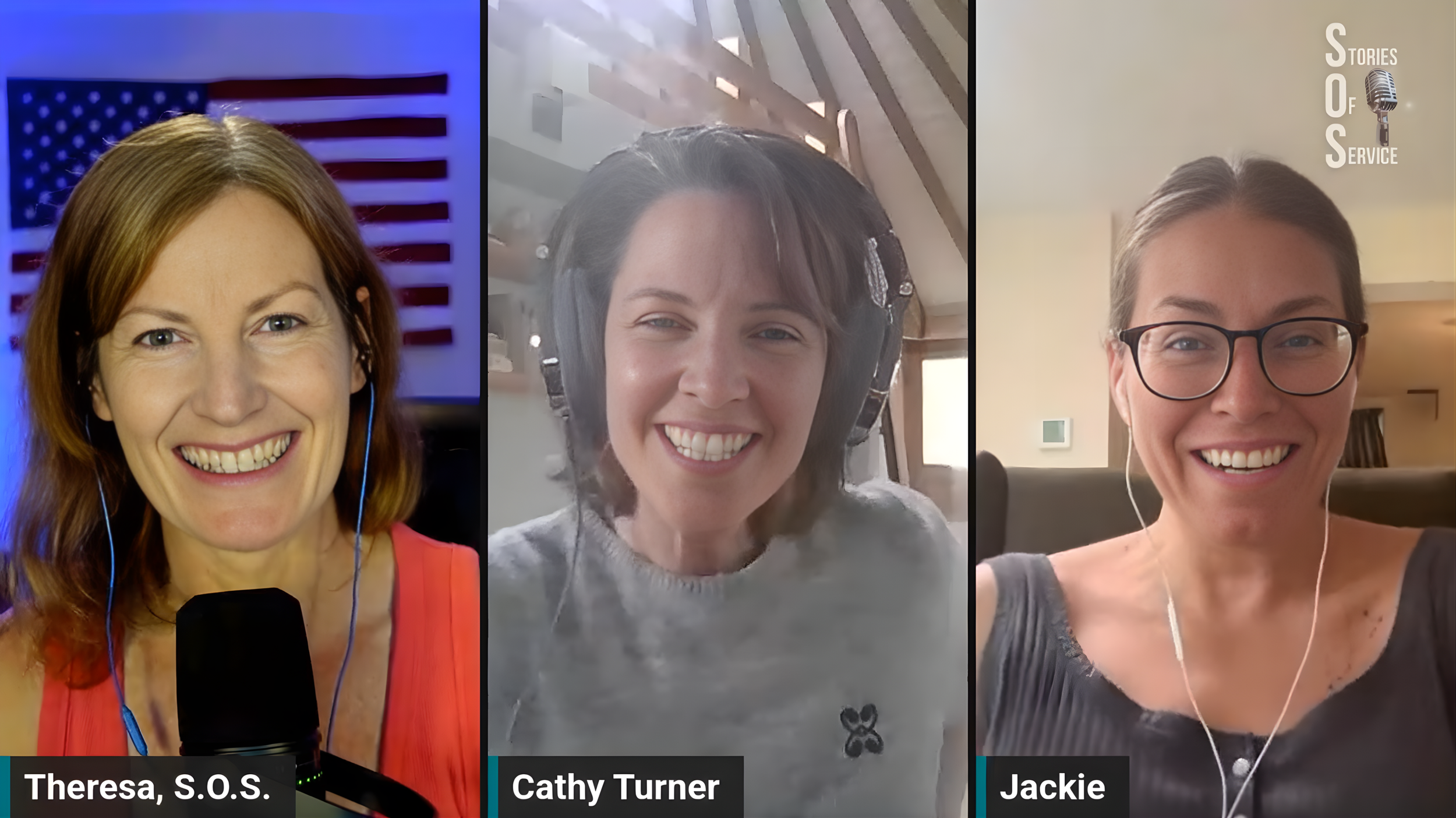
Cathy Turner and Jackie Wojtak are military spouses and co-founders of the Restored Heart Collective, a nonprofit organization focused on supporting spouses of combat veterans.
Both women came into the military community through their marriages and experienced firsthand the emotional challenges that often follow service—especially the impact of trauma, reintegration, and the pressure to prioritize their partner’s needs over their own. Over time, each recognized a gap in support specifically for spouses, who are often expected to hold families together without having space to process their own experiences.
They met during a spouse retreat connected to the Heroes and Horses program in Montana, an immersive healing experience for veterans. That shared experience became the catalyst for building something of their own. Drawing from what helped them—and what they felt was missing—they launched the Restored Heart Collective to create intentional, in-person spaces where military spouses can focus on their own healing, identity, and growth.
Their work centers on community, emotional wellness, and providing tools like mindfulness, connection, and shared experience to help spouses navigate life alongside—and beyond—the challenges of military service.
The Quiet Cost of Putting Yourself Last
For many military spouses, support becomes synonymous with self-sacrifice. Prioritizing a partner’s healing can feel necessary—even instinctive. But when that dynamic persists unchecked, it can lead to something more subtle and dangerous: the erosion of one’s own identity.
Some spouses describe this as “losing themselves.” From the outside, everything may appear stable—a functioning household, a career, a family. But internally, there’s a growing disconnect. Personal needs are sidelined. Emotional exhaustion builds. And without spaces to process those experiences, isolation deepens.
This isn’t a failure of resilience. It’s a structural gap.
Military culture emphasizes strength, adaptability, and mission focus. Those values serve service members well—but they can unintentionally leave spouses without the support systems they need to sustain themselves.
The Missing Piece: Community and Connection
One of the most consistent themes among military spouses is the need for genuine connection—not just online, not just surface-level interactions, but real, in-person spaces where they can be honest about their experiences.
While digital communities and social platforms have expanded access to information and connection, they don’t always provide the depth required for healing. What many spouses are seeking is something more intentional: environments where they can step away from their roles, reflect, and reconnect with themselves.
That’s where initiatives like the Restored Heart Collective come in.
Building Space for Healing
Founded by military spouses who lived these challenges firsthand, the Restored Heart Collective was created to address a simple but overlooked need: giving spouses a place to process their own experiences.
Their approach is grounded in immersion and shared understanding. Through retreats and small-group settings, they create environments where participants can step outside their daily responsibilities and focus inward. These aren’t large conferences or networking events—they’re intentionally designed to foster vulnerability, reflection, and connection.
The philosophy is straightforward: healing doesn’t happen in isolation, and it doesn’t happen by ignoring your own needs.
For many participants, these experiences introduce practices they may have previously dismissed—things like breathwork, meditation, journaling, and cold exposure. At first glance, these tools can seem abstract or even unnecessary. But for those who engage with them, the impact can be significant.
What begins as skepticism often turns into recognition: slowing down, being present, and processing emotions isn’t a luxury—it’s essential.
Redefining Strength
There’s a cultural shift happening within parts of the military community—one that redefines what strength looks like.
Traditionally, strength has been associated with endurance, pushing through, and maintaining composure under pressure. Those qualities remain important. But they are no longer seen as sufficient on their own.
True resilience also includes self-awareness, emotional regulation, and the ability to ask for help. It means recognizing when something isn’t working and being willing to approach it differently.
For spouses, this shift can be transformative. It allows them to move away from the idea that they must carry everything silently and toward a model where their well-being is equally important.
The Ripple Effect on Families
When spouses are supported, the benefits extend far beyond the individual.
Healthier spouses contribute to healthier relationships. Communication improves. Emotional reactivity decreases. Children observe more stability and adaptability in the home. And service members, in turn, are better positioned to focus on their responsibilities without the added strain of unresolved tension at home.
In this way, family support isn’t separate from mission readiness—it’s foundational to it.
Challenging Outdated Expectations
Part of the challenge lies in long-standing expectations within military culture. Ideas about what a “good spouse” looks like—always supportive, always present, always adaptable—can create pressure to conform to roles that may not align with individual needs or realities.
Add to that the complexities of rank structures, social dynamics, and frequent relocations, and it becomes even harder for spouses to build authentic, lasting connections.
Breaking away from those expectations isn’t always easy. It requires both cultural change and individual courage. But it’s necessary if the military community wants to retain not just service members, but the families who support them.
WATCH FULL EPISODE HERE
A Path Forward
The conversation around military readiness is evolving. Increasingly, leaders and advocates are recognizing that supporting families isn’t a secondary concern—it’s a strategic priority.
That means investing in resources that go beyond traditional support programs. It means creating spaces for spouses to connect, reflect, and grow. And it means acknowledging that the well-being of the force is directly tied to the well-being of those who stand beside it.
Organizations like the Restored Heart Collective are part of that shift. They represent a move toward more holistic support—one that values the emotional health of the entire military ecosystem.
Final Thoughts
Military spouses have long been described as the “backbone” of the force. But that metaphor, while well-intentioned, can be misleading. It implies strength without vulnerability, support without need.
The reality is more complex.
Spouses are not just supporters—they are individuals navigating their own challenges, growth, and healing. Recognizing that doesn’t diminish their role; it strengthens it.
Because when the people behind the uniform are supported, the entire system becomes more resilient—not just in theory, but in practice.
Editor’s Note
This piece draws from a candid conversation on the Stories of Service podcast, where military spouses Cathy Turner and Jackie Wojtak share their lived experiences navigating life alongside combat veterans. Their insights highlight a critical but often overlooked reality: the well-being of military families—especially spouses—is deeply connected to the strength and readiness of the force itself. This article has been adapted for clarity and length while preserving the integrity of their stories and the broader message about healing, identity, and support within the military community.