Command in Crisis with Thomas B. Modly
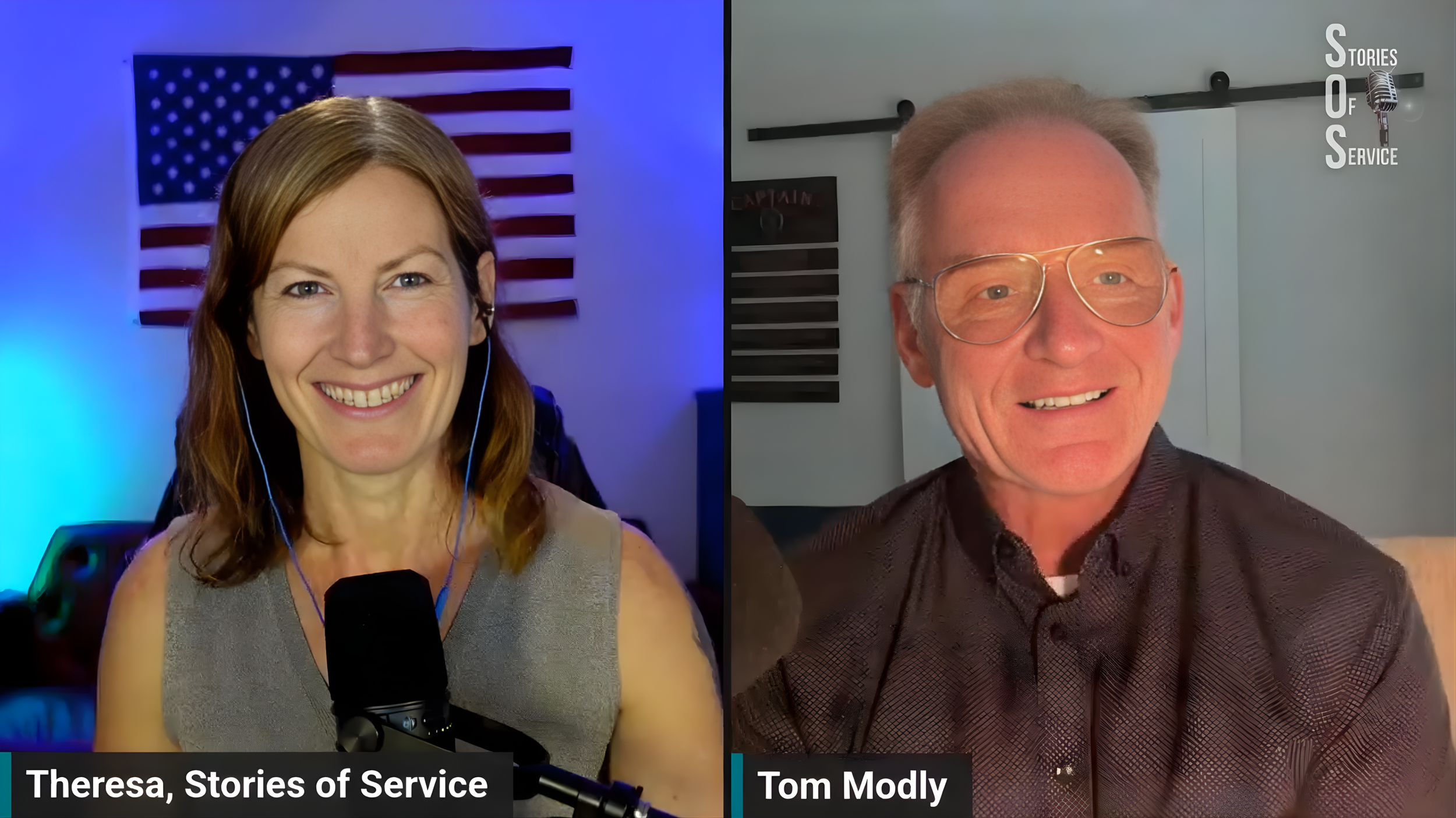
Very few roles test leadership the way senior positions in the United States Navy do. The stakes are immense, the margin for error is razor thin, and decisions often unfold under intense scrutiny. In a recent episode of the Stories of Service podcast, host Theresa Carpenter sat down with former Acting Secretary of the Navy Thomas Modly to explore what it truly means to lead in such an environment—where uncertainty is constant and consequences are far-reaching.
This conversation goes far beyond titles and résumés. It’s about the human side of leadership: how decisions are made when information is incomplete, how leaders navigate institutional resistance, and how they carry the weight of those decisions long after the moment has passed.
A Foundation Built on Gratitude and Service
Thomas Modly’s path to leadership began in an unlikely place for a future naval officer: Cleveland, Ohio. Raised by parents who immigrated from Eastern Europe after World War II, Modly grew up with a deep sense of gratitude for the opportunities the United States provided.
His father, who fled Hungary during Soviet control, instilled in him a strong sense of patriotism and appreciation for freedom. That influence would later shape Modly’s decision to pursue a life of service, even though his early years gave little indication he would join the Navy.
It wasn’t until a visit to the U.S. Naval Academy in Annapolis that something clicked. At just 17 years old, Modly found himself drawn to the institution’s sense of purpose and mission. That moment set him on a trajectory that would eventually lead to the highest levels of military and government leadership.

GUEST BIO: WHO IS THOMAS B. MODLY?
Thomas B. Modly is a former U.S. Navy officer, business executive, and senior government official who served as Acting Secretary of the Navy from 2019 to 2020. He oversaw the Navy and Marine Corps, managing operations, personnel, and strategic initiatives at one of the highest civilian levels in the Department of Defense.
A graduate of the U.S. Naval Academy, Modly served as a helicopter pilot before earning an MBA from Harvard and building a career in aviation and consulting, including leadership roles at PricewaterhouseCoopers. He later returned to government service, holding key Pentagon roles before becoming Under Secretary and then Acting Secretary of the Navy.
He is currently the CEO of Bellaroc Ventures and remains active in leadership and national security discussions.
Early Career: Blending Education and Experience
Modly’s time at the Naval Academy reflected both discipline and curiosity. While the curriculum emphasized science and engineering, he chose to major in political science to broaden his perspective. That decision would prove valuable later, as his career bridged both military operations and strategic policy.
An early opportunity allowed him to begin graduate studies at Georgetown University while still completing his undergraduate work. By the time he graduated, he was already halfway through a master’s degree—an experience that positioned him uniquely for future roles.
After serving as a helicopter pilot and later as an instructor at the Air Force Academy, Modly made a pivotal decision: to leave active duty and pursue business education. He earned an MBA and transitioned into the private sector, where he gained hands-on experience in aviation and corporate strategy.
That blend of military discipline and business acumen would later become a defining feature of his leadership style.
From Private Sector to Public Service
Like many who serve in government, Modly’s return to public service wasn’t part of a long-term plan—it was driven by circumstance and a sense of duty. Following the events of September 11, 2001, he felt compelled to contribute.
An unexpected opportunity arose to lead the Defense Business Board under Secretary of Defense Donald Rumsfeld. The role required someone who understood both military structure and business operations—an uncommon combination that Modly happened to possess.
From there, he moved into senior roles within the Department of Defense, including Deputy Undersecretary of Defense for Financial Management. These positions placed him at the intersection of policy, operations, and large-scale organizational change.
His journey highlights a recurring theme in leadership: sometimes the most significant opportunities come not from careful planning, but from being prepared when the moment arrives.
Leading Through Complexity and Resistance
One of the most candid parts of the discussion centers on the realities of driving change within large institutions. According to Modly, the Department of Defense—like many massive organizations—is inherently resistant to change.
He describes this resistance as “inertia,” a force so powerful that it can overwhelm even well-intentioned reform efforts. Leaders who attempt to push too aggressively often find themselves sidelined, while those who succeed learn to navigate the system strategically.
This creates a difficult balance. Leaders must be persistent and innovative, yet pragmatic enough to understand the limits of what can be achieved within a given timeframe.
Complicating matters further is the cyclical nature of political leadership. Frequent transitions in administration can disrupt long-term initiatives, causing promising reforms to stall or disappear entirely. Modly points out that even well-developed programs can be abandoned overnight when leadership changes.
Decision-Making Under Pressure
The conversation also touches on one of the most scrutinized periods in recent Navy history: the early days of the COVID-19 pandemic and the situation aboard the USS Theodore Roosevelt. While not the central focus, the discussion frames this moment as an example of the broader challenges leaders face.
In high-pressure situations, decisions must often be made with incomplete or rapidly evolving information. There is rarely a perfect answer—only the best possible choice given the circumstances.
What sets effective leaders apart, Modly suggests, is not just their ability to make decisions, but their willingness to take responsibility for the outcomes. Leadership is not judged in theory, but in action—and often in hindsight.
Innovation vs. Tradition
A recurring tension in the discussion is the balance between tradition and innovation. The military, by design, relies on established structures and proven methods. However, modern challenges—ranging from technological advancements to evolving geopolitical threats—demand new ways of thinking.
Modly emphasizes the importance of fostering innovation, particularly through education. One of his key initiatives, the Education for Seapower program, aimed to better prepare naval officers for an unpredictable future.
The goal was to shift the focus from rote learning to critical thinking, enabling leaders to adapt to rapidly changing environments. This approach reflects a broader shift in leadership philosophy: success is no longer defined solely by operational strength, but by intellectual agility.
WATCH FULL EPISODE HERE
The Human Side of Leadership
Beyond strategy and policy, the conversation reveals something more personal: leadership is deeply human. It involves judgment calls, imperfect information, and the constant pressure of accountability.
It also requires resilience. Leaders must navigate criticism, manage conflict, and make decisions that may not be universally understood—or appreciated—in the moment.
Perhaps most importantly, leadership involves a commitment to service. Whether in uniform or in the private sector, the underlying motivation remains the same: to contribute to something larger than oneself.
Looking Ahead
As the nature of global challenges continues to evolve, so too must the approach to leadership. The insights shared in this conversation underscore the need for adaptability, collaboration, and long-term thinking.
They also highlight a critical reality: meaningful change within large institutions is difficult, often slow, and sometimes অসমplete. But that does not diminish its importance.
If anything, it reinforces the need for leaders who are willing to engage with complexity, challenge the status quo, and remain committed even when progress is uncertain.
In the end, leadership at the highest levels is not about having all the answers. It’s about asking the right questions, making the best possible decisions, and standing by them when it matters most.
Editor’s Note
This blog is based on a conversation from the Stories of Service podcast, hosted by Theresa Carpenter, featuring former Acting Secretary of the Navy Thomas B. Modly. The discussion explores leadership at the highest levels of the U.S. military, focusing on decision-making under pressure, institutional challenges, and the evolving demands placed on today’s leaders.
The content has been edited for clarity, length, and readability while preserving the intent and key insights of the original conversation.