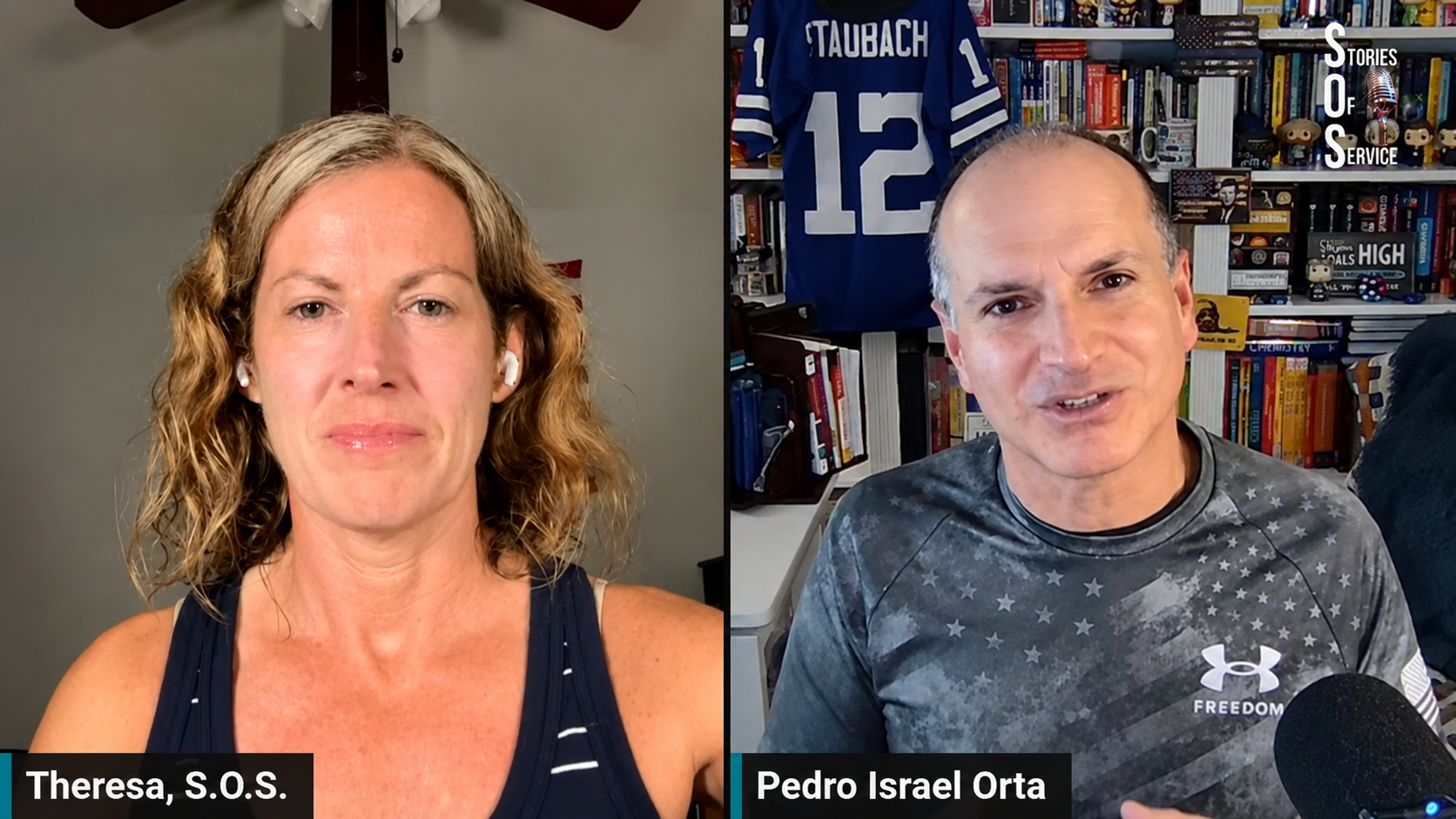
What happens when an intelligence officer reports wrongdoing through official channels and believes those same channels turn against him? For CIA whistleblower Pedro Israel Orta, that question became the defining struggle of his career.
On Stories of Service, host Theresa Carpenter speaks with Orta about his intelligence work, allegations of retaliation, and the experiences behind his book, The Broken Whistle: A Deep State Run Amok. Their conversation explores a difficult question: Can government employees safely report problems when their careers depend on the institutions they are challenging?
Orta’s account offers a personal perspective on whistleblower protection, leadership, and government accountability.

WHO IS PEDRO ISRAEL ORTA?
Pedro Israel Orta grew up in Miami in a family of Cuban immigrants who fled after Castro’s revolution. He describes a childhood shaped by family loyalty, hard work, and keeping promises.
Before joining the CIA, he worked in the grocery industry and attended college while holding a full-time job. That experience, he explains, taught him to value results and personal responsibility.
He joined the CIA through a graduate studies fellowship while studying at George Washington University. According to the interview, his career included assignments in Iraq, Afghanistan, and the Middle East, alongside eight Exceptional Performance Awards.
From Iraq Operations to Leadership Conflicts
Orta recalls his assignment in Baghdad as demanding but professionally rewarding. Working alongside experienced officers, he helped coordinate communication between the CIA station and military organizations during a dangerous period in Iraq.
What began as a temporary assignment became two years of operational work. He describes constant availability, interrupted sleep, and decisions involving immediate risks to human life.
Those experiences shaped his expectations of leadership. However, he says subsequent assignments exposed him to management practices that undermined morale and distracted employees from their mission.
In his account, professional success did not prevent career roadblocks. He describes disputed performance assessments and difficulties moving between analytical and operational roles.
Becoming an Accidental Whistleblower
Orta does not describe whistleblowing as a career goal. Instead, he presents it as the consequence of trying to address problems while doing his job.
During a later Afghanistan assignment as deputy chief of base, he says he became concerned about leadership decisions, personnel treatment, and operational safety. He describes raising those concerns with a visiting psychiatrist and through his chain of command.
The conflict intensified, he alleges, when a superior pressured him to support punitive action against a subordinate whom he believed had done nothing wrong.
Orta says he refused and reported the situation to additional officials, including Equal Employment Opportunity personnel. Rather than resolving his concerns, he alleges, the response increasingly focused on him.
When Reporting Channels Become Part of the Problem
A central theme of the interview is the gap between having a complaint process and trusting that process to work.
Orta says he repeatedly sought assistance through internal channels but encountered delays, barriers to records, and unsuccessful efforts to obtain an investigation. After returning from Afghanistan, he describes months without a substantive assignment before beginning work at the Intelligence Community Inspector General’s office.
Carpenter connects parts of his experience with pressures she observed during her Navy career. Both discuss the professional isolation that can follow a complaint, particularly when colleagues offer private encouragement but avoid public support.
Their conversation highlights how fear of career consequences can discourage employees from sharing information that leaders need to hear.
Whistleblower Protections on Paper
While working at the inspector general’s office, Orta says he participated in evaluating the implementation of Presidential Policy Directive 19 across intelligence agencies.
His account distinguishes written commitments from practical enforcement. He alleges that the team’s findings did not support the positive assessment some officials wanted and that efforts followed to change the work or limit its conclusions.
Orta says he was eventually removed from that assignment over a claimed independence issue, which he disputes.
The broader question is institutional: If employees believe oversight bodies cannot independently examine complaints, where can they turn? In Orta’s telling, that uncertainty followed him even as he contacted increasingly senior officials.
The Personal Cost of Speaking Up
Orta alleges that the dispute escalated into investigative scrutiny, an insider-threat referral, security warnings, and ultimately the loss of his employment and clearance.
He describes challenging those actions through appeals and disclosures to officials and Congress, without obtaining the outcome he sought.
The consequences extended beyond his professional identity. He says his dismissal came shortly before he expected to qualify for a retirement milestone when accounting for prior military service.
To rebuild, he relocated to Tulsa, Oklahoma, drawing on savings and other personal resources. He also discusses his background as an ordained Christian minister and the financial adjustments that helped him establish a different life.
Writing The Broken Whistle
For Orta, writing The Broken Whistle became a way to document his experiences and explain why he believes institutional reform is necessary.
He says the manuscript went through prepublication review and was approved with redactions. He also describes mixed reactions from former colleagues: appreciation from some and distance from others concerned about their continuing careers and security clearances.
His stated objective is to improve the institution. That distinction matters throughout the conversation. He presents speaking up as an expression of commitment to the mission, even when doing so creates conflict with leadership.
WATCH FULL EPISODE HERE
Why Government Accountability Matters
The interview closes by connecting individual complaints with national security. Orta argues that ignoring internal warnings can have consequences for the wider public far beyond a workplace dispute.
He also offers his interpretation of why Edward Snowden chose disclosure outside official channels, pointing to distrust of internal protections. That discussion reflects Orta’s perspective rather than an independently established account of Snowden’s reasoning.
Ultimately, this Stories of Service conversation asks whether institutions can accept uncomfortable information without punishing the messenger. For employees, veterans, and leaders, Orta’s story raises questions about trust, responsibility, and whether oversight systems protect the people who rely on them.
Editor’s Note
This article is based on Pedro Israel Orta’s interview on Stories of Service. Allegations and disputed events are presented as his account and have not been independently verified for this article.
Learn More
👥 Connect with Stories of Service Podcast
📕 Get the book: https://a.co/d/06CDkshn
🌐 Learn more: https://www.pedroisraelorta.com