The Day Due Process Died in the Military with Clarence Anderson III
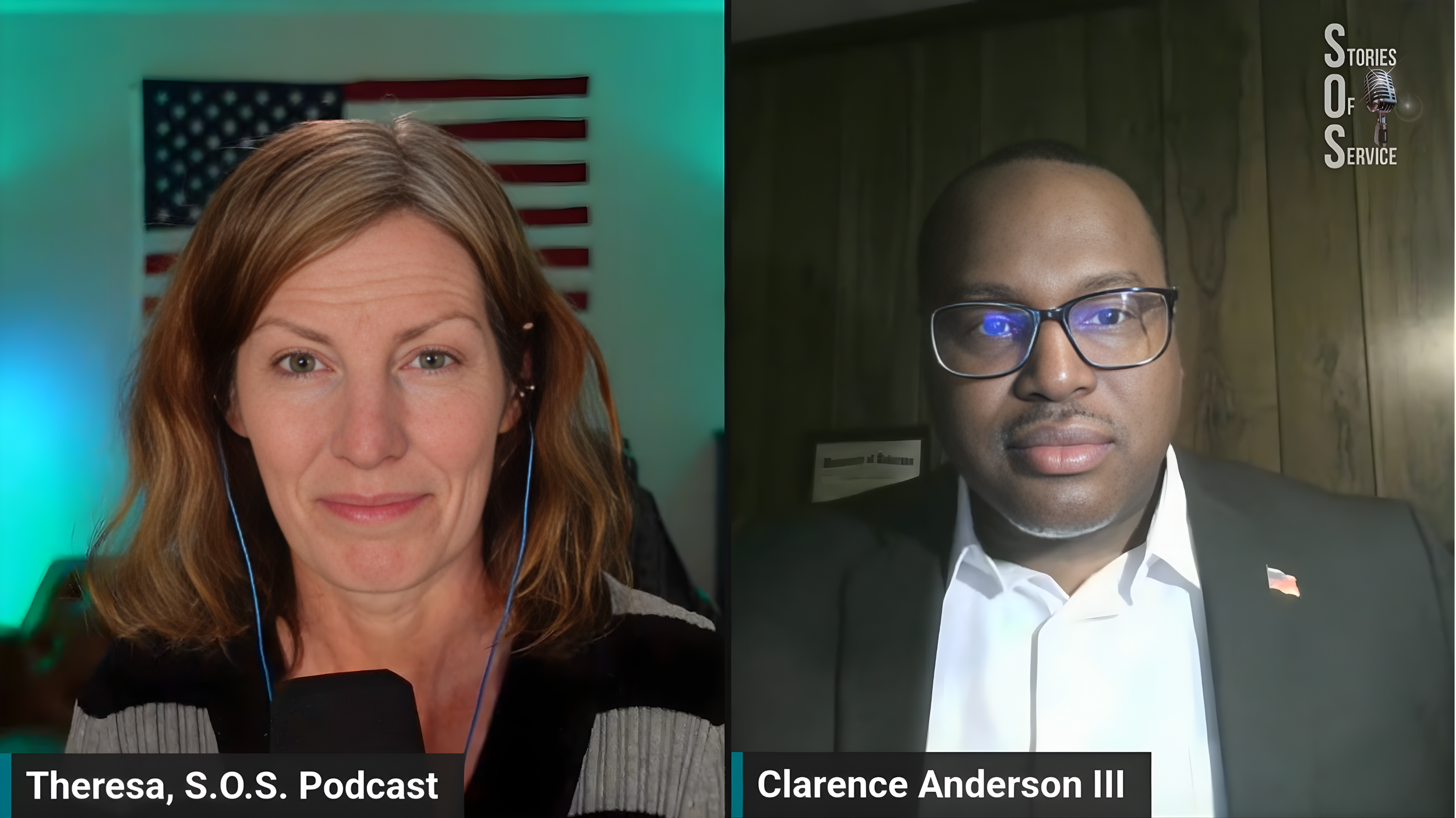
For more than two decades, Major Clarence Anderson did exactly what the U.S. Air Force asked of him. He led. He deployed. He commanded. He moved people and equipment through some of the most complex operational environments in modern warfare. By every visible metric, his career was a success story—one built on trust, responsibility, and sustained performance in high-pressure roles.
What ultimately ended that career had nothing to do with logistics, leadership, or mission failure. It came down to an accusation—and a military justice system that, in his case, treated accusation as outcome.
A Career Marked by Responsibility
Anderson entered the Air Force in 2001, just as the United States transitioned into an era of continuous war. Initially commissioned as a supply officer, he later became a logistics readiness officer after the Air Force merged multiple career fields into one. His work spanned everything from fuel operations and transportation to contingency planning and flight-line support.
Early in his career, Anderson was pulled into the special operations community—a move that would shape much of his professional trajectory. Embedded alongside Army units and Air Force Special Operations Command, he supported rapid deployments, unconventional missions, and time-sensitive movements across Central and South America, the Middle East, and beyond.
That experience propelled him forward. Over time, he served two command tours, deployed five times, and held senior logistics roles supporting U.S. Special Operations Command Central. He directed what he describes as the largest logistical movement in the history of U.S. special operations during Operation New Dawn. By his early forties, he was widely viewed as an officer on a fast track, competitive for promotion to lieutenant colonel.
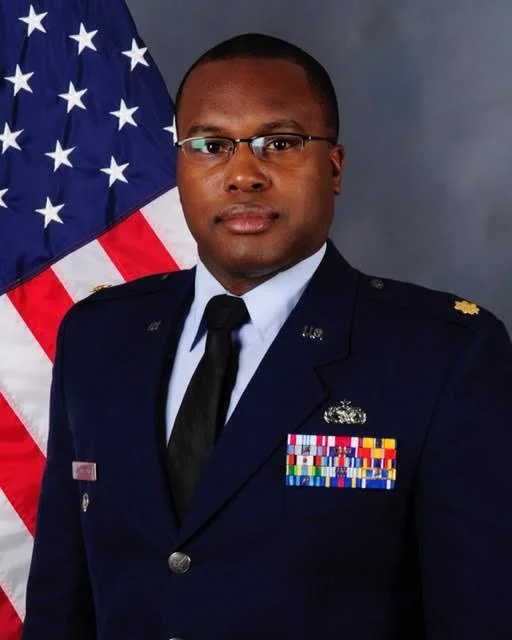
GUEST BIO: WHO IS MAJOR CLARENCE ANDERSON III?
Major Clarence Anderson III is a former U.S. Air Force logistics readiness officer whose more than 20-year career included multiple deployments, two command tours, and senior roles supporting U.S. Special Operations forces. Commissioned in 2001, he served across fuel operations, transportation, contingency planning, and large-scale logistical movements, earning a reputation for competence in high-pressure, complex environments. His career ended following a court-martial stemming from a domestic accusation that civilian authorities declined to prosecute, raising broader questions about due process, command pressure, and the handling of sexual assault cases within the military justice system. Since his conviction, Anderson’s case has been cited in discussions about institutional accountability, readiness, and the balance between victim advocacy and the rights of the accused.
The Personal Unraveling
The collapse of Anderson’s career did not begin at work—it began at home.
After a rapid courtship, Anderson married a woman he had known from college. Early warning signs emerged during a security clearance reinvestigation, when previously undisclosed criminal allegations involving his wife surfaced. Though the clearance was ultimately granted, the incident marked the beginning of growing mistrust.
Over time, the marriage deteriorated. Arguments escalated. Law enforcement was occasionally called—not resulting in arrests, but leaving documentation of volatile domestic disputes. Anderson says he made those calls himself, seeking a record in case matters worsened.
Eventually, he filed for divorce and sought full custody of their daughter, citing concerns rooted in past behavior he had only recently discovered. Though the couple briefly reconciled before a permanent separation, the relationship continued to unravel. During a later assignment, Anderson learned his wife was having an affair and had become pregnant by another man.
By that point, divorce proceedings were back on the table—and custody became the central issue.
An Accusation Without Arrest
In 2013, Anderson was summoned by his commander and told to report to the Air Force Office of Special Investigations (OSI). There, he was informed that his estranged wife had accused him of sexual assault, alleging an incident during their marriage.
Civilian law enforcement investigated first. No arrest was made. The local district attorney declined to prosecute, citing insufficient evidence. Family court proceedings also moved forward, with Anderson receiving temporary full custody of his daughter.
Despite those outcomes, the military proceeded with its own investigation.
For nearly ten months, Anderson remained in command under a cloud of uncertainty. OSI investigated. No corroborating evidence emerged. Law enforcement officers who had responded to prior domestic calls testified that they had never observed criminal behavior or signs of assault. By conventional standards, the case appeared stalled.
Then the ground shifted.
“All Accusations Go to Court-Martial”
After his OSI interview, Anderson met with an Area Defense Counsel—an Air Force defense attorney. What he was told stunned him.
According to Anderson, his attorney explained that recent guidance had changed the calculus entirely: sexual assault accusations would proceed to court-martial regardless of evidentiary strength. The system, once criticized for failing victims, had swung hard in the opposite direction.
The timing mattered. National attention on military sexual assault was intensifying. Political pressure was mounting. Commanders were being scrutinized not for wrongful convictions—but for cases that didn’t move forward.
Anderson also points to the role of his former mother-in-law, a local city council member familiar with military culture and influence. He believes repeated pressure and the threat of media exposure ultimately forced the command’s hand.
From Command to Conviction
What followed was a court-martial process that Anderson argues bore little resemblance to justice.
Evidence previously reviewed and dismissed by civilian authorities was resurrected. Prior police reports—once neutral—were reframed. Context collapsed into allegation. Despite the absence of physical evidence, contemporaneous reporting, or criminal charges outside the military, the case advanced.
Anderson was convicted and sentenced to 42 months in prison.
The conviction stunned those who knew his record—and even law enforcement officers who had interacted with the family over the years. As Anderson notes, the legal threshold for arrest is far lower than that for conviction. Yet he was convicted without ever having met that initial bar.
The Larger Question of Due Process
This story is not an argument against prosecuting sexual assault. Nor is it a denial that such crimes occur within the military. Anderson himself is explicit on this point: legitimate victims deserve justice.
The problem, he argues, is what happens when due process becomes collateral damage.
When investigations are driven by optics rather than evidence. When pressure flows downward, not truth upward. When commanders fear headlines more than miscarriages of justice.
In attempting to correct past failures, the system may have created a new one—where accusation alone is enough to destroy careers, families, and lives.
WATCH FULL EPISODE HERE
A Readiness Issue Hiding in Plain Sight
Beyond the personal toll, Anderson believes cases like his represent a broader national security concern. Experienced officers are sidelined or removed. Trust erodes. Silence becomes safer than integrity.
If leaders believe the process is arbitrary—or politically motivated—confidence in command evaporates. And when confidence disappears, readiness soon follows.
Why This Story Matters
Clarence Anderson’s case forces uncomfortable questions. Can a justice system designed to protect victims also protect the accused? Can institutions correct course without overcorrecting? And how many careers must be sacrificed before balance is restored?
These are not abstract questions. They shape who serves, who leads, and who stays.
Until the military reconciles accountability with due process—rather than choosing one at the expense of the other—stories like this will continue to surface. Quietly. Tragically. And at great cost.
Editor’s Note
This story is part of an ongoing effort to examine how due process functions—and sometimes fails—inside large institutions tasked with national defense. Sharing these accounts is not about denying harm or dismissing victims. It is about insisting that justice requires evidence, transparency, and fairness for everyone involved.
If you or someone you know has experienced retaliation, investigative overreach, or a breakdown of due process within the military, we invite you to share your story. Silence protects systems; sunlight improves them.
Learn More
More on Clarence and his case - https://www.majorandersoniii.com/Full...
👥 Connect with Stories of Service Podcast