Torched - What really happened with the Palisades Fires with Jonathan Vigliotti
Wildfires are often described as unavoidable acts of nature — devastating but inevitable consequences of dry seasons, heat, and wind. But what if the real story is far more complicated? What if many of the disasters dominating headlines today are not simply environmental tragedies, but failures of leadership, preparation, and public policy?
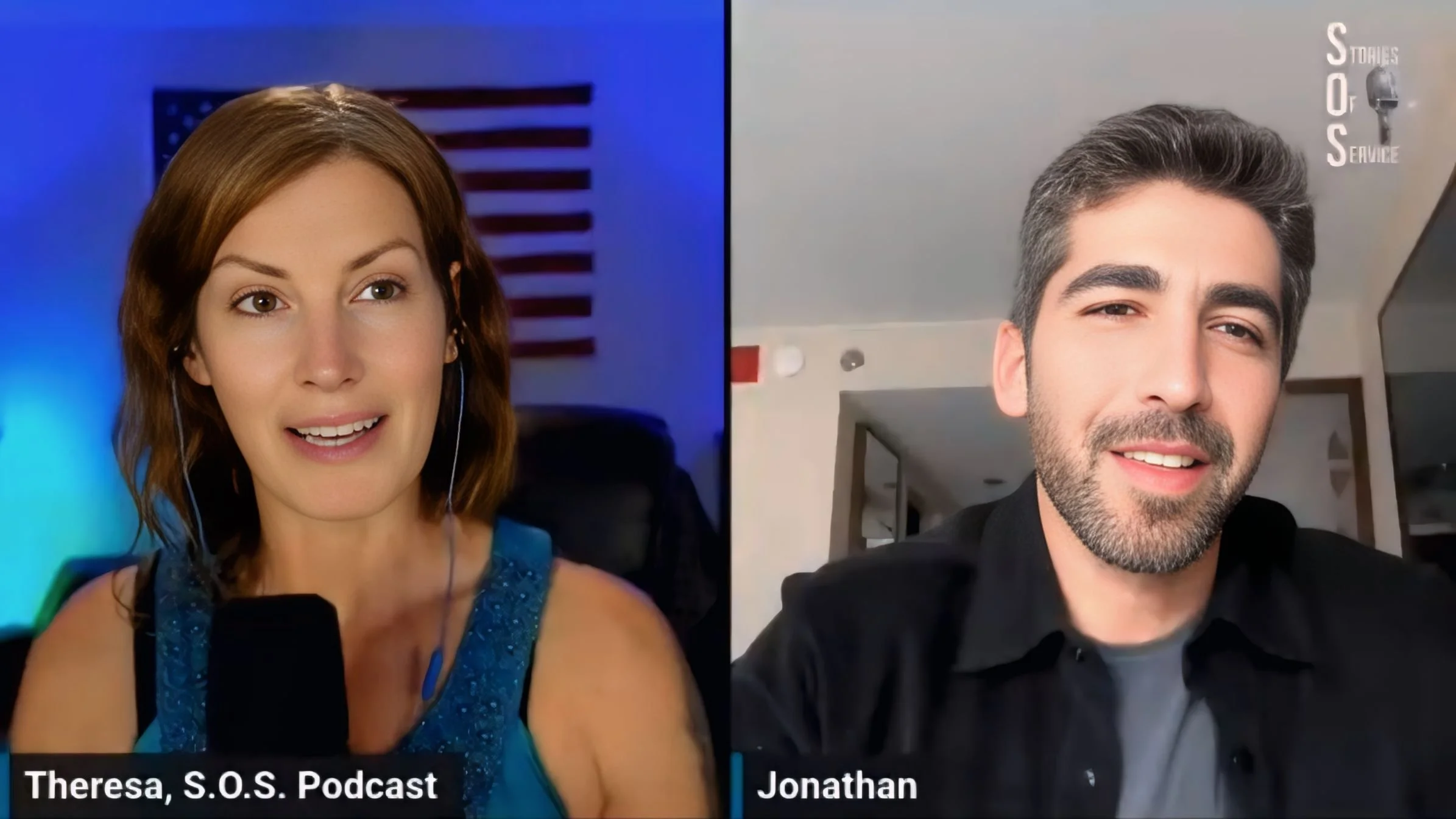
That was the central focus of a recent conversation on Stories of Service hosted by Theresa Carpenter, featuring CBS News correspondent Jonathan Vigliotti, author of the gripping investigative book Torched. The discussion peeled back the layers of California’s catastrophic wildfire crisis and challenged the public narrative surrounding these disasters.
Rather than reducing wildfires to “natural disasters,” Vigliotti’s reporting highlights how political decisions, communication failures, ignored warnings, and inadequate preparation can turn dangerous conditions into historic catastrophes.
A Journalist Drawn to the Front Lines
Jonathan Vigliotti’s journey into journalism began in Mount Kisco, New York, where curiosity about other people’s lives first sparked his passion for storytelling. Initially interested in photography, his career path changed dramatically during his freshman year at Fordham University when the September 11 attacks unfolded.
The local NPR affiliate at Fordham, WFUV, urgently needed student reporters to assist with coverage. Vigliotti volunteered, and that moment launched a journalism career that has now spanned more than two decades.
Since joining CBS News in 2015, Vigliotti has reported from around the globe, including five years stationed in London before relocating to Los Angeles — a city increasingly defined by extreme wildfire events.
His work covering evacuation zones, destroyed neighborhoods, firefighters, and survivors ultimately became the foundation for Torched, a book that combines firsthand reporting with deep investigative analysis.
GUEST BIO: WHO IS JONATHAN VIGLIOTTI?
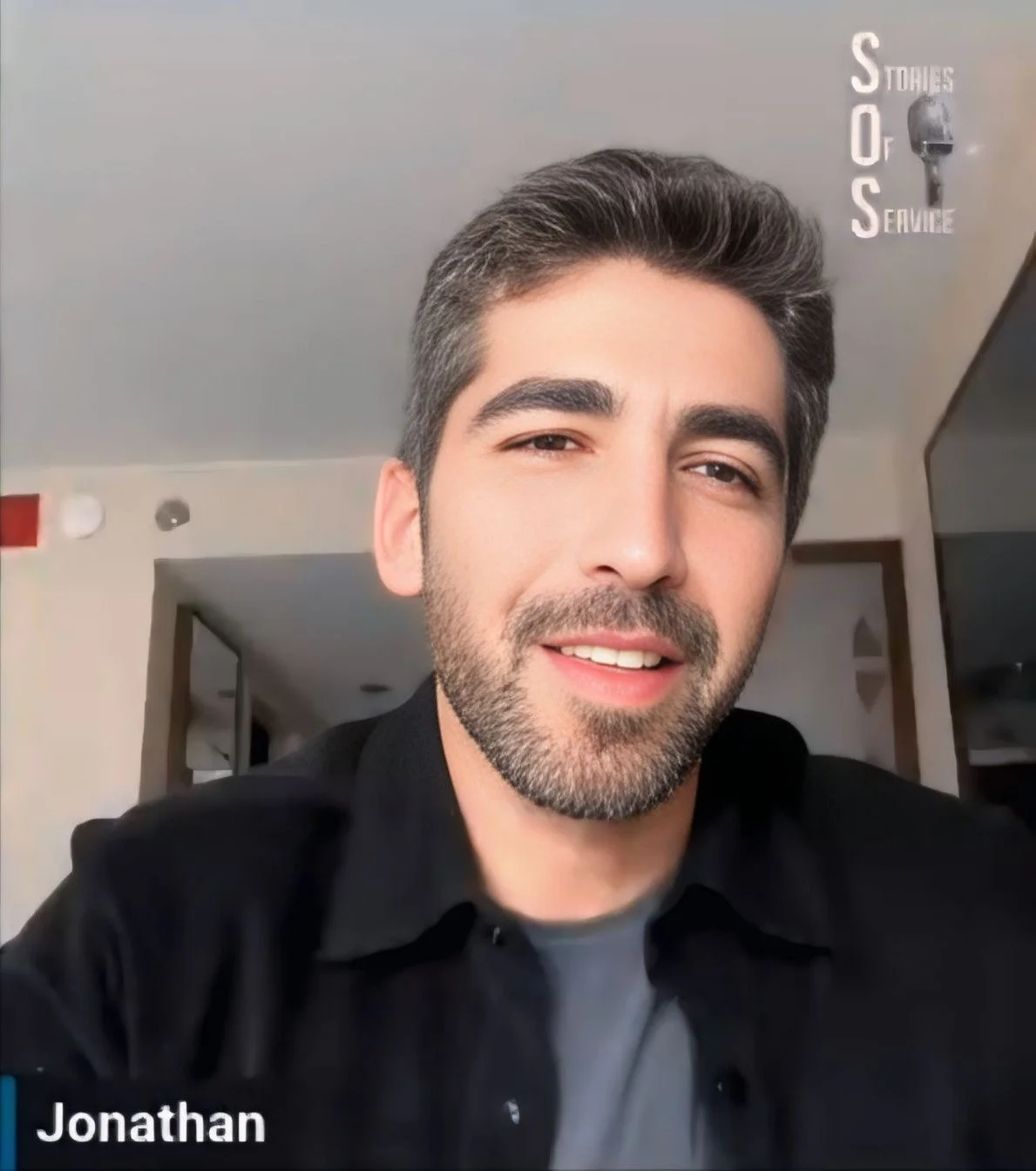
Jonathan Vigliotti is an award-winning CBS News correspondent and investigative journalist known for covering major disasters, global events, and climate-related crises. Raised in Mount Kisco, New York, he began his journalism career while attending Fordham University during the 9/11 attacks, reporting for the school’s NPR affiliate, WFUV.
Since joining CBS News in 2015, Vigliotti has reported from around the world, including several years based in London before relocating to Los Angeles. His frontline coverage of devastating California wildfires inspired his book Torched, which explores how policy failures, climate conditions, and leadership decisions contribute to catastrophic fire disasters.
The Dangerous Myth of “Natural” Disasters
One of the most important themes in the conversation was the idea that many wildfire disasters are not entirely unpredictable.
California’s wildfire conditions are shaped by climate realities, but they are also intensified by human choices. One major issue discussed was the lack of controlled or prescribed burns.
Controlled burns are intentional fires set by officials to safely eliminate excess vegetation before it becomes fuel for catastrophic wildfires. While states like Mississippi routinely conduct these burns, California has struggled to keep pace with the massive accumulation of combustible vegetation.
According to Vigliotti, decades of fire suppression, expanding housing developments in wildfire-prone regions, environmental concerns, legal battles, and resource shortages have all contributed to the growing crisis.
“The ground was primed,” Vigliotti explained when discussing the January 7, 2025 Palisades Fire.
Areas that had not burned in decades became overloaded with dry vegetation after years of drought conditions. When extreme winds arrived, those landscapes became explosive.
The Palisades Fire: A Preventable Disaster?
The Palisades Fire became one of the most devastating wildfire disasters in modern U.S. history. But as Torched reveals, the warning signs appeared long before flames tore through neighborhoods.
The fire’s origins trace back to New Year’s Day 2025, when a smaller blaze known as the Lachman Fire ignited in the wildland-urban interface near Los Angeles.
Firefighters initially responded quickly and successfully contained the fire within hours. However, the critical failure appears to have occurred during the “mop-up” phase — the process where crews remain on scene to identify hidden hotspots and lingering embers.
According to Vigliotti’s reporting, firefighters observed smoke continuing to rise from the area and warned supervisors that the fire may not have been fully extinguished. Despite those concerns, crews eventually left the scene.
Investigators later determined that underground embers continued smoldering beneath the surface for days, feeding on vegetation roots until powerful Santa Ana winds reignited the fire on January 7.
The result was catastrophic.
Warnings Were Issued — But Were They Ignored?
Perhaps the most alarming revelation from the interview involved the National Weather Service.
As early as January 1, meteorologists began tracking what appeared to be a major Santa Ana wind event. By January 5, forecasts projected wind gusts exceeding 100 miles per hour — potentially historic conditions for Los Angeles.
The National Weather Service issued increasingly urgent warnings through briefings, forecasts, and social media alerts.
But according to Vigliotti’s investigation, the warnings did not trigger the level of emergency response many experts believe was necessary.
“There was no conductor in Los Angeles getting everybody in tune,” Vigliotti said.
Emergency systems that should have been activated ahead of the storm reportedly remained underprepared. Critical coordination between agencies broke down, resources were not fully mobilized, and leadership communication appeared fragmented.
Leadership Under Scrutiny
One of the most controversial aspects of the disaster involved Los Angeles Mayor Karen Bass.
At the time the fires erupted, Bass was in Ghana as part of a presidential delegation.
Vigliotti’s reporting revealed that while city officials were aware of the worsening weather forecasts, there was no major public-facing emergency response effort comparable to previous severe weather events.
The book details how city leadership had previously demonstrated aggressive preparation for less dangerous storms, including Hurricane Hilary in 2023, when officials held press conferences, activated emergency declarations, and staged crews in advance.
By contrast, the response ahead of the January 2025 fire event appeared significantly less urgent despite far more dangerous conditions.
According to sources interviewed by Vigliotti, Bass believed the worst-case scenario was unlikely to occur.
That assumption may have shaped the city’s delayed response.
When the fires exploded, confusion reportedly followed. Officials struggled to determine leadership roles, communication chains became inefficient, and emergency operations ramped up only after the disaster was already underway.
The interview paints a troubling picture of “normalcy bias” — the tendency for people to assume things will continue functioning as they always have, even when warning signs suggest otherwise.
The Human Cost of Delayed Action
One of the strongest takeaways from both the book and the interview is that wildfire disasters are not solely about flames.
They are about systems.
They are about communication.
They are about whether warnings are treated with urgency.
And they are about whether leaders are willing to prepare for worst-case scenarios before disaster strikes.
As Vigliotti emphasized, California has experienced multiple devastating fires in recent years under similar weather conditions. The Woolsey Fire, the Franklin Fire, and the Camarillo Fire all provided warnings about how quickly fires can spiral out of control.
In some cases, rapid preparation and aggressive staging of firefighters successfully limited destruction. In others, delayed coordination proved disastrous.
The difference often came down to preparation.
WATCH FULL EPISODE HERE
Why Torched Matters
What makes Torched so compelling is that it goes beyond headlines and political talking points.
The book examines how climate change, urban development, infrastructure strain, government bureaucracy, and human psychology all intersect during disasters.
It asks uncomfortable but necessary questions:
Who is accountable when warnings are ignored?
Why do the same failures repeat after every major fire?
How much of this destruction is truly unavoidable?
And what happens when systems designed to protect the public fail under pressure?
These questions matter not only for California, but for communities across the country increasingly facing extreme weather disasters.
A Warning for the Future
Wildfires are becoming more frequent, more destructive, and more expensive.
Climate conditions are creating longer fire seasons and more volatile environments. At the same time, population growth continues pushing communities deeper into wildfire-prone regions.
That means the stakes are only getting higher.
The conversation between Teresa Carpenter and Jonathan Vigliotti serves as a powerful reminder that disasters rarely happen in isolation. They are shaped by decisions made long before the first spark appears.
Torched ultimately challenges readers to rethink what accountability looks like in an era of escalating climate disasters.
Because sometimes the most dangerous part of a wildfire is not the flame itself — it is the belief that catastrophe could never happen here.
Editor’s Note
Wildfires are often framed as unavoidable natural disasters, but the conversation surrounding Jonathan Vigliotti’s book Torched challenges that narrative. This interview explores the intersection of climate realities, emergency preparedness, leadership, and accountability during some of California’s most devastating wildfire events. Through firsthand reporting and investigative insight, Vigliotti examines the decisions and systemic failures that can turn dangerous conditions into catastrophic loss.
Learn More
👥 Connect with Stories of Service Podcast
Read the book - https://www.amazon.com/Torched-City-O...