Are Disability Benefits Backfiring with Army Lt. Col (ret) Daniel Gade
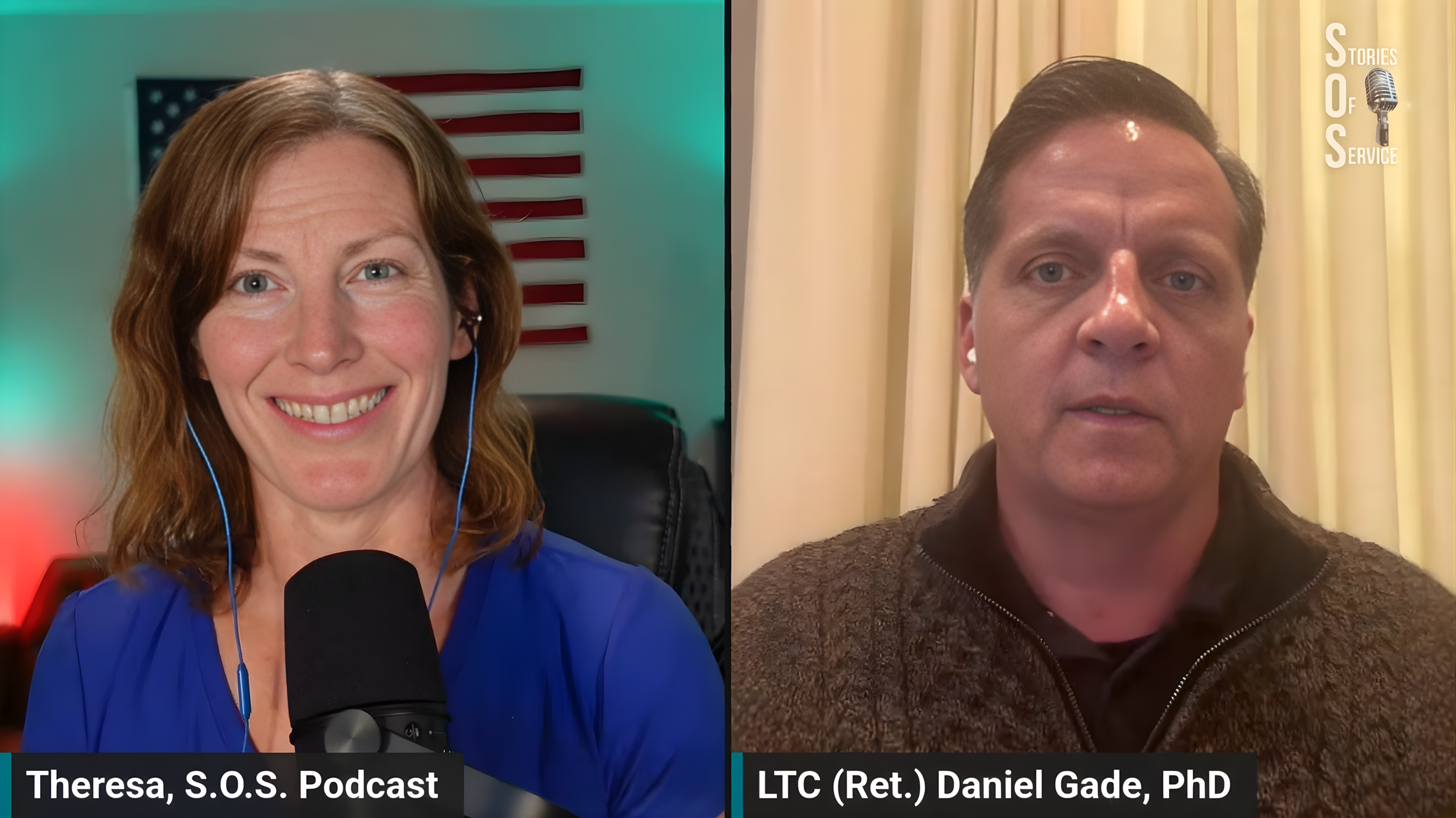
Veterans’ disability benefits are one of the most emotionally charged topics in American public life. For some, the VA represents a lifeline—long overdue recognition for sacrifice and injury. For others, it has become a symbol of bureaucratic excess, moral confusion, and political dysfunction. Few people are as qualified—or as willing—to step into this uncomfortable debate as retired Army Lieutenant Colonel Daniel Gade.
In a recent episode of Stories of Service, hosted by Theresa Carpenter, Gade offered a deeply personal, data-driven critique of the VA disability system—one shaped not by ideology, but by lived experience inside every layer of the system he now challenges.

GUEST BIO: WHO IS DANIEL GADE?
Daniel Gade was born in Minot, North Dakota, into a family where service was part of the fabric of life. His father was an Army veteran; his mother, a committed patriot. His middle name—MacArthur—was no accident. Gade enlisted in the Army Reserve at 17, attended basic training while still in high school, and was later accepted to West Point, graduating in 1997.
The Army was not merely a job for Gade; it was a vocation. He thrived as a platoon leader and company commander, ultimately deploying to Iraq, where he would be wounded twice in combat and lose his right leg. Yet even after catastrophic injury, Gade chose to remain on active duty. He went on to serve more than a decade longer—teaching at West Point, shaping policy at the White House, advising the VA, and eventually serving as Commissioner of the Virginia Department of Veterans Services.
By the time he retired, Gade had spent over 25 years in uniform. He had seen the military and veterans’ systems from the inside out.
The Moment the System Revealed Itself
Gade’s critique of the disability system didn’t begin in a think tank or policy office—it began in a hospital bed. While recovering from his wounds, he was repeatedly approached by well-meaning advocates urging him to pursue disability benefits. Their language troubled him.
“You’re disabled now,” they told him.
“You need to maximize your disability.”
To Gade, there was a critical distinction being ignored: having a disability is not the same as being disabled. He had lost a leg, but he had not lost his agency, his ambition, or his desire to serve. Yet the system seemed designed to encourage wounded veterans to adopt an identity rooted in incapacity.
What disturbed him most was how aggressively the system incentivized this mindset—not just emotionally, but financially.
From Compensation to Identity
Through years of research, interviews, and data analysis—later captured in his book Wounding Warriors, coauthored with journalist Daniel Huang—Gade came to believe the VA disability system has drifted far from its original intent.
What began as compensation for clear, service-connected functional loss has evolved into something else: a sprawling benefits structure that increasingly rewards veterans for cataloging every ailment, no matter how minor, age-related, or common among civilians.
The numbers tell part of the story. World War II veterans claimed an average of about two disabilities. Vietnam veterans claimed five or six. Post-9/11 veterans now average seven to nine. Yet modern warfare has not become more lethal on average, nor have casualty rates eclipsed earlier conflicts. In fact, fewer than 10% of Global War on Terror veterans experienced direct combat.
To Gade, this disconnect raised a fundamental question: If the wars weren’t more injurious, why are the disability claims so much higher?



Politics, Pressure, and “Disability Creep”
Gade points to political pressure as a key driver. Large veterans’ organizations—often acting with good intentions—continuously lobby Congress and the VA to expand the list of compensable conditions. Over time, the VA Schedule for Rating Disabilities has grown to include conditions like sleep apnea, tinnitus, and certain forms of hypertension.
Gade is careful to clarify: these are real medical conditions that deserve treatment. But treatment is not the same as disability.
Sleep apnea, for example, is rated at 50%—the same level as losing a leg below the knee—despite being largely treatable and often unrelated to military service. Erectile dysfunction, tinnitus, and minor joint pain may be inconvenient or uncomfortable, but they do not necessarily limit a person’s ability to work, care for themselves, or live independently.
Meanwhile, true functional disabilities—conditions that prevent activities of daily living—are diluted within an ever-expanding system.
The Cultural Cost
Beyond the fiscal impact—more than $160 billion annually in disability payments—Gade worries about the cultural consequences. Over decades, public perception of veterans has shifted. Once seen as disciplined, capable, and resilient, veterans are now often portrayed as broken, unstable, or permanently damaged.
Gade argues this shift is not imposed solely by civilians—it is reinforced by a system that encourages veterans to define themselves by diagnoses rather than potential.
In the book, one veteran describes feeling like “discarded government waste.” That, Gade says, is not compassion. It is abandonment disguised as support.
Where Responsibility Lies
Gade does not place all blame on individual veterans. The system invites misuse, and medical professionals—particularly in mental health—face enormous pressure to diagnose generously. Nor does he deny that trauma, injury, and moral injury are real.
But he does argue that moral agency still matters.
He proposes what he calls the “10 Citizen Test”: if you can explain your claimed disabilities to ten random taxpayers without embarrassment—and without them responding, “I have that too”—then your claim is probably legitimate.
Legal does not always mean ethical, he insists. And a system that eliminates shame entirely risks encouraging behavior that quietly erodes trust and purpose.
WATCH FULL EPISODE HERE
A Path Toward Reform
Gade is not calling for abandonment of veterans. He proposes practical reforms:
Link mental health compensation to treatment, ensuring veterans receiving benefits are actively supported in recovery.
Redefine disability around functional limitation, aligning VA standards with those used in other federal programs.
Reallocate resources from cash payments toward effective transition programs that support employment, entrepreneurship, and purpose after service.
The goal is not to punish veterans—but to restore dignity, self-efficacy, and long-term outcomes.
An Uncomfortable but Necessary Conversation
The debate around VA disability is not about gratitude versus ingratitude. It is about whether a system built to help wounded warriors is unintentionally trapping them in a permanent identity of brokenness.
Daniel Gade’s argument is uncomfortable precisely because it challenges both political convenience and emotional reflex. But as the population of disabled veterans continues to grow—and as outcomes worsen—it is a conversation that can no longer be avoided.
Support that undermines independence is not support at all. And honoring service may require more than writing checks—it may require restoring the expectation that veterans are capable of far more than the system currently assumes.
Learn More:
Washington Post Series on VA Fraud (3-part series): https://www.washingtonpost.com/investigations/interactive/2025/veterans-affairs-fraud-fake-disability-cases/ Veterans of Foreign Wars (VFW) podcast response to WP expose: https://youtu.be/NJzw7Dq-r70?si=lMAWWAQAo88x63TY
Senate hearing on WP article with testimony from VFW legislative lead Ryan Gallucci and Daniel Gade: https://youtu.be/WmvnVPjObdY?si=YW1XT7VsJu56mgOV
CivDiv podcast with Daniel Gade: https://www.youtube.com/live/mBhiWSx2_p8?si=CD13UTQ20YLe2goL
Wounding Warriors Book: https://woundingwarriors.com/
My podcast with CivDiv: https://www.theresatapestries.com/blog-s-o-s/are-veterans-getting-too-much-disability-with-clay-simms
👥 Connect with Stories of Service Podcast