Flordia Tech, DEI and Rick Addante’s Fight
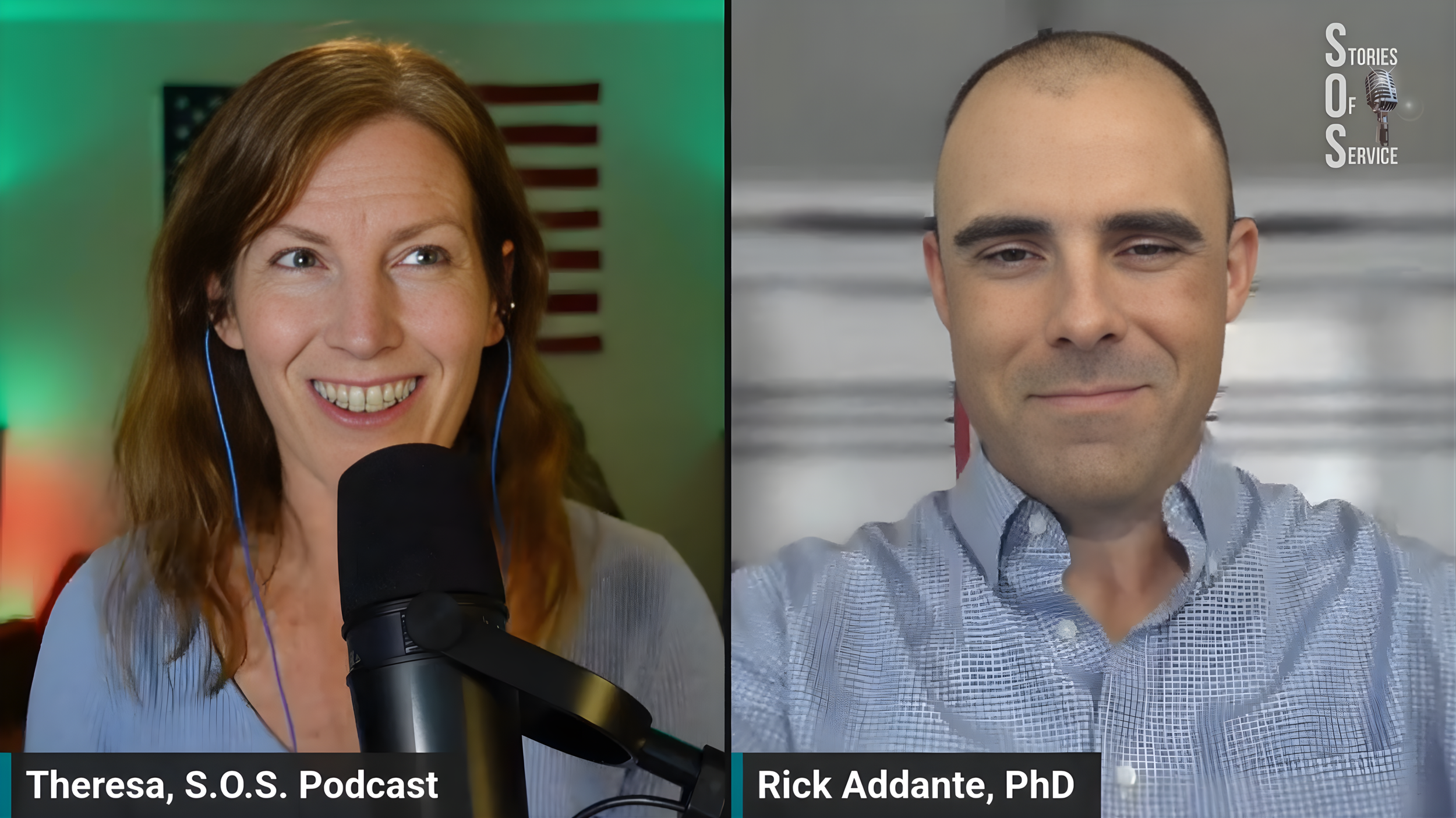
“DEI — what is it, really?”
That’s where the conversation starts, and honestly, it’s the question almost everyone is wrestling with right now. Depending on who you ask, DEI is either a noble effort to create opportunity… or a deeply politicized machine that’s drifting far from fairness. And like a lot of things that start out as good intentions, the further it spreads across institutions — the military, academia, government — the messier it gets.
Dr. Rick Adante has lived that mess firsthand.
You may have seen his interview with James O’Keefe — the one that blew up for exposing millions in alleged federal fraud tied to DEI programs. But his bigger story is about what DEI looks like on the ground, how it mutates inside institutions, and what happens when someone tries to challenge it.
This is how he explained it on the Stories of Service podcast.
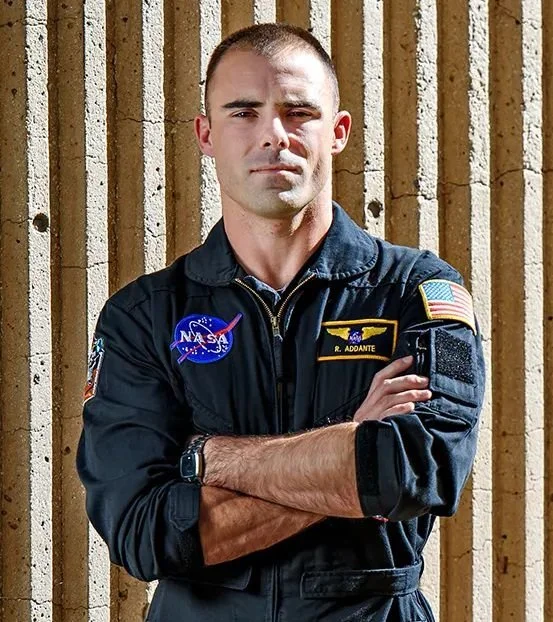
GUEST BIO: WHO IS DR. RICK ADANTE?
Dr. Rick Adante is a cognitive neuroscientist and former university professor whose 25-year career includes federally funded research on memory, human performance, and team behavior in extreme environments, including work connected to NASA’s NEEMO and HERA analog space missions. A first-generation college graduate who rose from a turbulent childhood to become a respected teacher and scientist, he has published peer-reviewed research, mentored graduate students, and earned national awards for his work. In recent years, he became more widely known as a whistleblower after exposing concerns about DEI-related practices and alleged federal funding misuse at Florida Tech, sparking national conversations about ethics, accountability, and the direction of modern academia.
From Chaos to Courage
Rick didn’t come from privilege, connections, or some kind of elite pipeline. He grew up near Chicago in a home that was, in his words, “tumultuous.” By sixteen, he had escaped an abusive household, tracked down his mother across the country, and rebuilt his life from scratch. Not the typical origin story you expect from someone who would later lead NASA missions and discover a new form of human memory.
But those early experiences shaped him in a very specific way: he learned what right and wrong look like when the stakes are painfully real. When adults fail. When systems fail. When people look away.
By the time he was a teenager, he was already testifying in court to protect his younger siblings. He didn’t plan to become a whistleblower — but life was already training him for it.
Finding Science — and Purpose
Against all odds, Rick thrived. Captain of his high school wrestling team. Dean’s list. Recruited by Princeton. Eventually he earned his psychology degree at The College of New Jersey, won awards for integrity, and then headed into neuroscience.
At UC Davis he became a pre-doctoral fellow, earned a National Research Service Award, and dove headfirst into research on memory and cognition. He got his pilot’s license. He learned scientific diving. He built a reputation as a teacher and researcher who expected excellence from himself and his students.
He didn’t go looking for NASA — NASA came looking for him.
Space Missions and Serious Science
Rick’s work eventually placed him inside one of the most fascinating environments imaginable: underwater habitats designed to mimic long-duration space missions. NASA’s NEMO and HERA programs put small crews into isolation, confinement, and real physical risk — the closest thing we have to rehearsing a trip to Mars.
Rick became a principal investigator studying how astronauts think, cooperate, and survive psychologically under extreme conditions. His students later earned their own spots on these missions, something he describes as one of the proudest moments of his career.
This was the height of what academia is supposed to be: curiosity, innovation, mentorship, service.
And yet, behind the scenes, another force was growing — one that had nothing to do with science.

When DEI Becomes Something Else
DEI as a concept isn’t new. It evolved from older ideas like affirmative action and diversity initiatives — ideas that were originally meant to prevent discrimination, not create new forms of it. But as Rick describes it, the culture shifted slowly… and then all at once.
Policies that were meant to protect people started being used to prefer some people and exclude others. And once DEI hardened into dogma, disagreeing with its methods became taboo.
Rick noticed it early. He’d been a diversity fellow himself — something he’s very open about — but he also saw how “diversity” had been fused with newer ideas: “equity” and “inclusion.” Not all three concepts mean the same thing, and when they get mashed together, the results can get ethically muddy fast.
His concern wasn’t theoretical. It was practical: DEI was starting to change hiring decisions, grant proposals, promotions, and classroom dynamics in ways that were no longer about fairness. Real discrimination — against any group — is both illegal and unethical. But DEI was now being used to justify it.
And that’s where Rick’s story veers sharply.
A Promise, a Switch, and a Cover-Up
When Florida Tech recruited Rick, they sold him a dream: a university positioned at the center of the aerospace world, with connections to Buzz Aldrin, a thriving space psychology program, and support for groundbreaking research.
Almost immediately, the cracks showed.
He discovered the school’s relationship with Buzz Aldrin was in legal turmoil. Promises made during recruitment evaporated. And behind closed doors, administrators were holding meetings about how to respond to federal DEI mandates — not to improve fairness, but (as Rick later exposed) to “cover up” how they had already misused government funds tied to DEI compliance.
Those meetings would later become the subject of a high-profile exposé.
When Rick refused to go along with any program he believed was discriminatory or fraudulent, he didn’t get quiet cooperation. He got retaliation — the kind that ultimately ended his 25-year academic career.
DEI’s Real-World Cost
This is the part of Rick’s story that resonates far beyond academia.
Because what he describes isn’t just a campus problem.
It’s happening in the military.
In government agencies.
In private corporations.
Even in science and medicine.
People who support fairness (and there are many of them) often still don’t realize what DEI has morphed into: a system that often pushes certain groups forward solely because of identity, and pushes others back for the same reason. A system that can create fraud, false reporting, and fear. A system where disagreement — even principled, well-informed disagreement — becomes dangerous.
Rick puts it simply:
If a policy causes discrimination, it doesn’t matter what you call it. It’s wrong.
And that principle is exactly what he stood on, even when the blowback cost him his job.
WATCH FULL EPISODE HERE
Why His Story Matters
Rick Adante didn’t set out to become a whistleblower at twelve. He didn’t intend to expose misconduct in higher education. He didn’t plan to challenge a cultural movement that had taken over academia.
But he did know the difference between right and wrong — a moral compass sharpened in childhood, reinforced in science, and tested in adulthood.
His story isn’t about politics. It’s about integrity.
It’s about what happens when an institution forgets why it exists.
And it’s a reminder that fairness — true fairness — doesn’t need qualifiers.
DEI began as an idea about including everyone. Somewhere along the way, it became something else. Rick’s story forces us to ask whether we’re ready to face that honestly.
Because if we can’t talk about it openly, we definitely can’t fix it.
Learn More:
📍Rick's Substack: https://substack.com/@rickaddante
👥 Connect with Stories of Service Podcast