From Kicked Out to Cleared of 19 Federal Charges with Forrest Mize

What does it take to stand up for your beliefs, hold the line on ethics, and lead with integrity—especially when doing so comes at a personal cost?
On the Stories of Service podcast, those are the kinds of stories that surface again and again. Some are inspiring. Some are unsettling. Most are complicated. Forrest’s story is all three.
He never followed a traditional path. In fact, his career began where many would assume it had already ended: he walked away from high school without a diploma. Yet somehow, that detour became the starting point for a 20-year career as a U.S. Navy Naval Flight Officer and mission commander flying the E-2C Hawkeye—one of the most complex aircraft in the fleet. His service took him across five aircraft carriers, multiple continents, and into conflicts that most people only encounter in history books.
But Forrest’s story isn’t just about where he served. It’s about how he served—and what happens when integrity collides with bureaucracy.
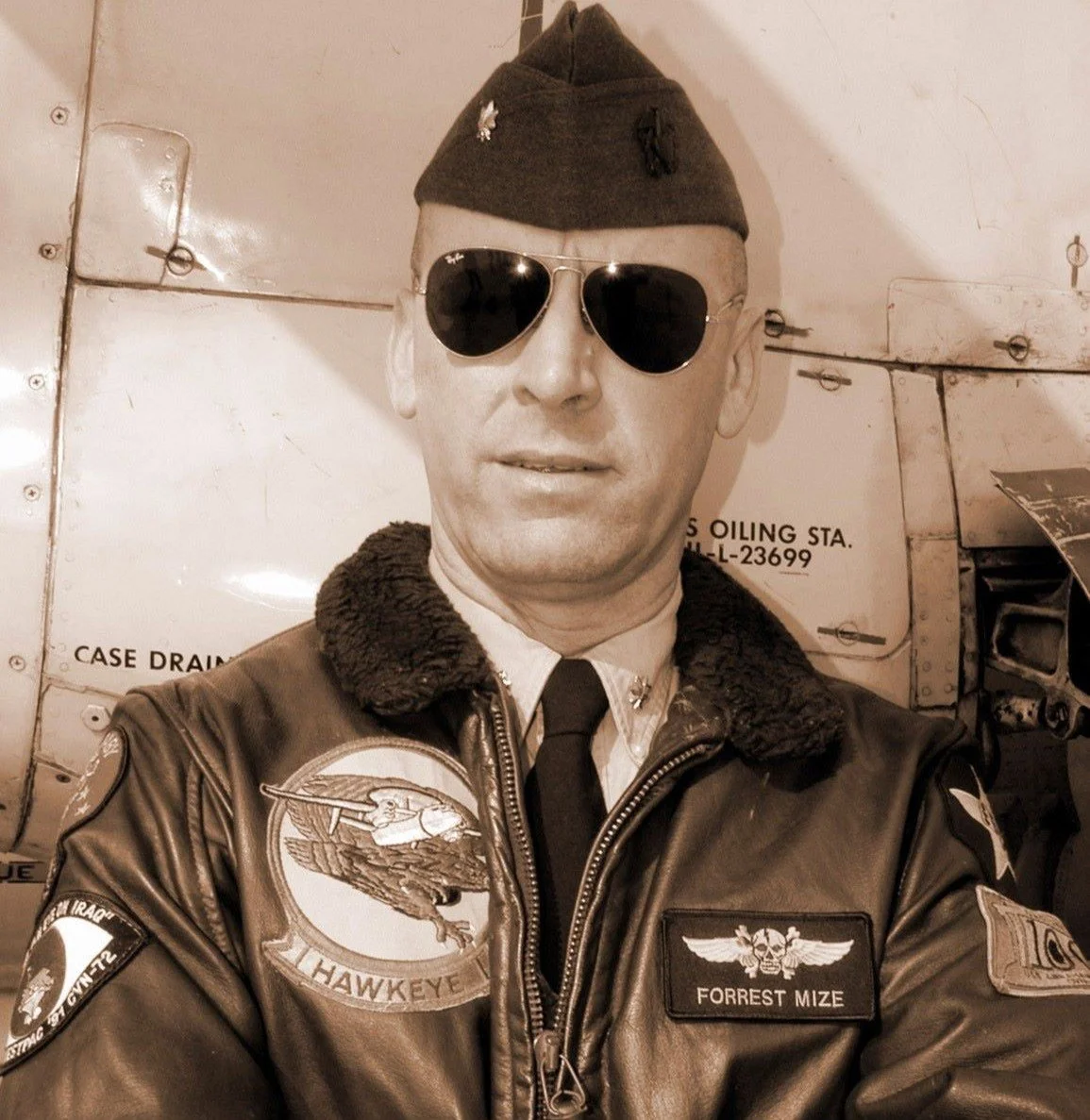
GUEST BIO: WHO IS FORREST MIZE?
Forrest Mize is a retired U.S. Navy Naval Flight Officer whose unconventional path took him from high school dropout and construction worker to a 20-year career flying and commanding missions aboard the E-2C Hawkeye, one of the Navy’s most complex aircraft. He served on five aircraft carriers and across some of the world’s most demanding assignments, including combat operations during Desert Storm and Kosovo, counter-narcotics missions in Central America, counter-terrorism in Africa, and disaster response and recovery efforts. Known for taking hard, unpopular duty stations and for speaking up when others stayed silent, Mize’s career included being involuntarily separated from the Navy, recalled to active duty a month later, and later confronting corruption at his final duty station—an ordeal that led to investigations and charges that were ultimately dropped. He is the author of Hard Fills: Sea Stories from a High School Dropout Career Naval Flight Officer, where he chronicles leadership, accountability, and the cost of integrity in military service.
From Dropout to Naval Aviator
Forrest grew up in Camp Lejeune, North Carolina, the son of a career Marine. After his family relocated to Virginia Beach, his life took an unexpected turn: he dropped out of high school and went to work in construction. By most measures, that should have been the end of the aviation dream.
But living near Naval Air Station Oceana changed things. Forrest watched jets scream overhead. He met pilots. He stood on the flight line mesmerized by the Blue Angels. Somewhere in that noise and motion, a question took hold: What if?
Against the odds, he was accepted into Navy flight school—despite being, in his words, “pretty much a high school dropout.” The Navy was recruiting aggressively during the Cold War, and a few ROTC instructors saw something in him that transcripts didn’t capture. With their support, he earned a four-year degree in three years and reported to Pensacola almost immediately after graduation.
Overnight, he went from driving nails to wearing wings.
Learning the Navy—The Hard Way
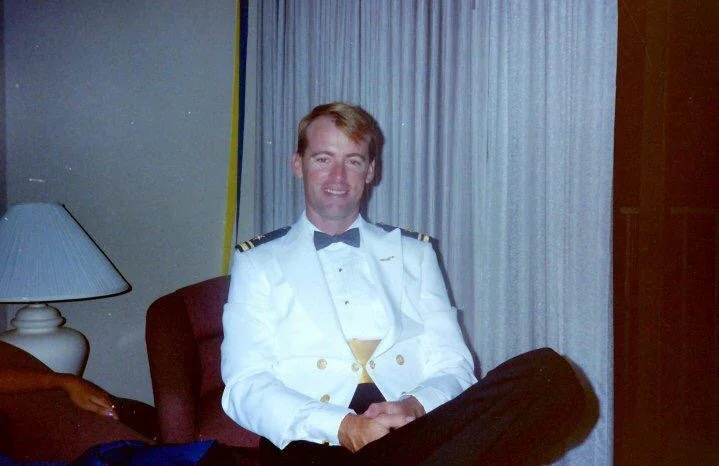
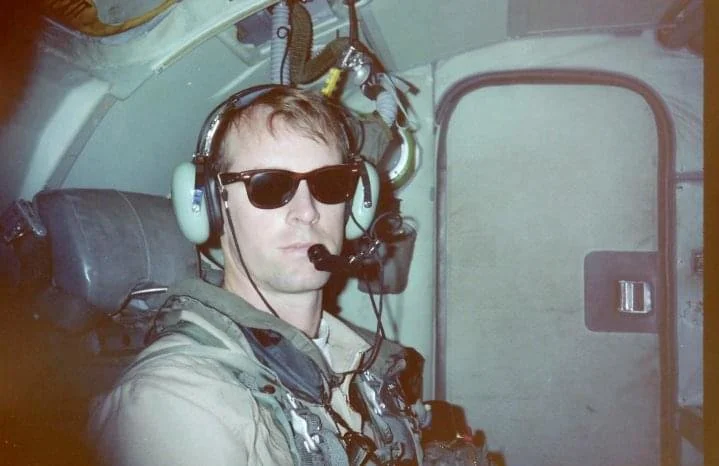
Forrest’s first fleet assignment was with VAW-117 at Miramar, flying Hawkeyes. He deployed aboard the USS Abraham Lincoln, participated in Desert Storm operations, and completed a demanding “around-the-horn” cruise. By his own account, the flying and the work were challenging—but manageable.
The trouble came from speaking his mind.
After writing a newspaper column about the Rodney King riots, Forrest was falsely accused by a jailed sailor of being a member of the Ku Klux Klan. The accusation was baseless, but in an era of rising political sensitivity, the mere claim was enough to stain his record. That shadow followed him for years, affecting fitness reports and promotion boards.
It was an early lesson in a reality many service members eventually confront: truth doesn’t always protect you.
Kicked Out—Then Called Back
After failing to promote twice, Forrest was separated from the Navy in 1999 while stationed in Korea. Just like that, an 11-year career was over.
Or so it seemed.
One month later, NATO began the air war over Kosovo. The Navy suddenly needed officers with strike-planning experience. Forrest got a call asking if he’d return to active duty.
His answer wasn’t immediate. After all, the Navy had just kicked him out. But the mission mattered. He accepted a presidential recall, returned as a Lieutenant Commander, and found himself writing air tasking orders coordinating aircraft from more than a dozen nations—including classified missions involving stealth bombers, submarines, and Tomahawk strikes.
That one-year recall turned into nearly another decade of service. Forrest stayed for 20 years total—not because it was easy, but because he loved the people and the mission.



Hard Fills and Hard Choices
Throughout his career, Forrest consistently took the jobs others avoided: Korea, Okinawa, Kyushu, Italy, isolated islands with limited support. When detailers asked where he wanted to go next, his answer was simple: “Surprise me.”
That mindset is the heart of Hard Fills, the book he later wrote. Each chapter is a vignette—a self-contained story capturing the strange, funny, dangerous, and sometimes infuriating moments that define military life. It’s not a victory lap or a self-congratulatory memoir. It’s a collection of lived experiences from someone willing to go where he was needed.
That willingness ultimately brought him to his final duty station: San Nicolas Island, a remote and often overlooked Navy installation off the California coast.
Whistleblowing at the Edge of the Map
Forrest loved San Nicolas Island. When he took command, morale was low and leadership was lax. He rebuilt recreational programs, restored order, and turned the base into a sought-after assignment.
Then he did what leaders are supposed to do.
After catching a civilian smuggling a pistol and ammunition onto the island aboard a military aircraft—a serious federal offense—Forrest filed a mandatory report. The civilian was connected to environmental officials, and his commanding officer feared the political fallout.
Forrest was ordered to make the report “go away.”
He refused.
What followed was swift and brutal: he was fired, investigated by NCIS, stripped of his clearance, threatened with prison, and hit with 19 federal charges ranging from theft of Navy property to poaching. He was warned he could lose his pension and face a dishonorable discharge.
Instead of folding, Forrest demanded a court-martial.
One by one, the charges collapsed.
The Cost of Integrity
While Forrest was removed from command, two sailors died after being allowed to kayak in dangerous conditions—something he said he would never have permitted. The loss haunted him, especially as leadership attempted to shift blame onto him after the fact.
For nearly two years, he lived in limbo, fighting allegations while watching the institution he’d served turn its back. Letters to senior leaders went unanswered. Due process, he learned, is fragile when power is concentrated.
What sustained him was certainty: he knew he was right.
WATCH FULL EPISODE HERE
Telling the Story
After retirement, Forrest’s life remained anything but quiet—charter boats, rescues, high-profile incidents, and even national headlines after a self-defense shooting involving a wolf in Idaho. Eventually, friends convinced him to write his story down.
Hard Fills came together organically: short stories, then chapters, then a full autobiography. He self-published it with no expectations. The response surprised him. Readers from across the world—especially naval aviation communities in Europe—connected deeply with the honesty of the book.
The reason is simple: Forrest doesn’t pretend the system is perfect, but he also refuses to paint it as irredeemable. He writes about great leaders and bad ones. About loyalty and betrayal. About the cost of silence—and the cost of speaking up.
Why His Story Matters
Forrest’s story isn’t unique—but that’s exactly why it matters.
Across the military, people face moments where doing the right thing puts them at odds with the system they serve. Hard Fills is a reminder that integrity is rarely rewarded in the moment—but it’s the only thing that lasts.
And sometimes, choosing the harder road is the most important service of all.