Killing Busywork and Reclaiming Your Brainpower with Juliet Funt
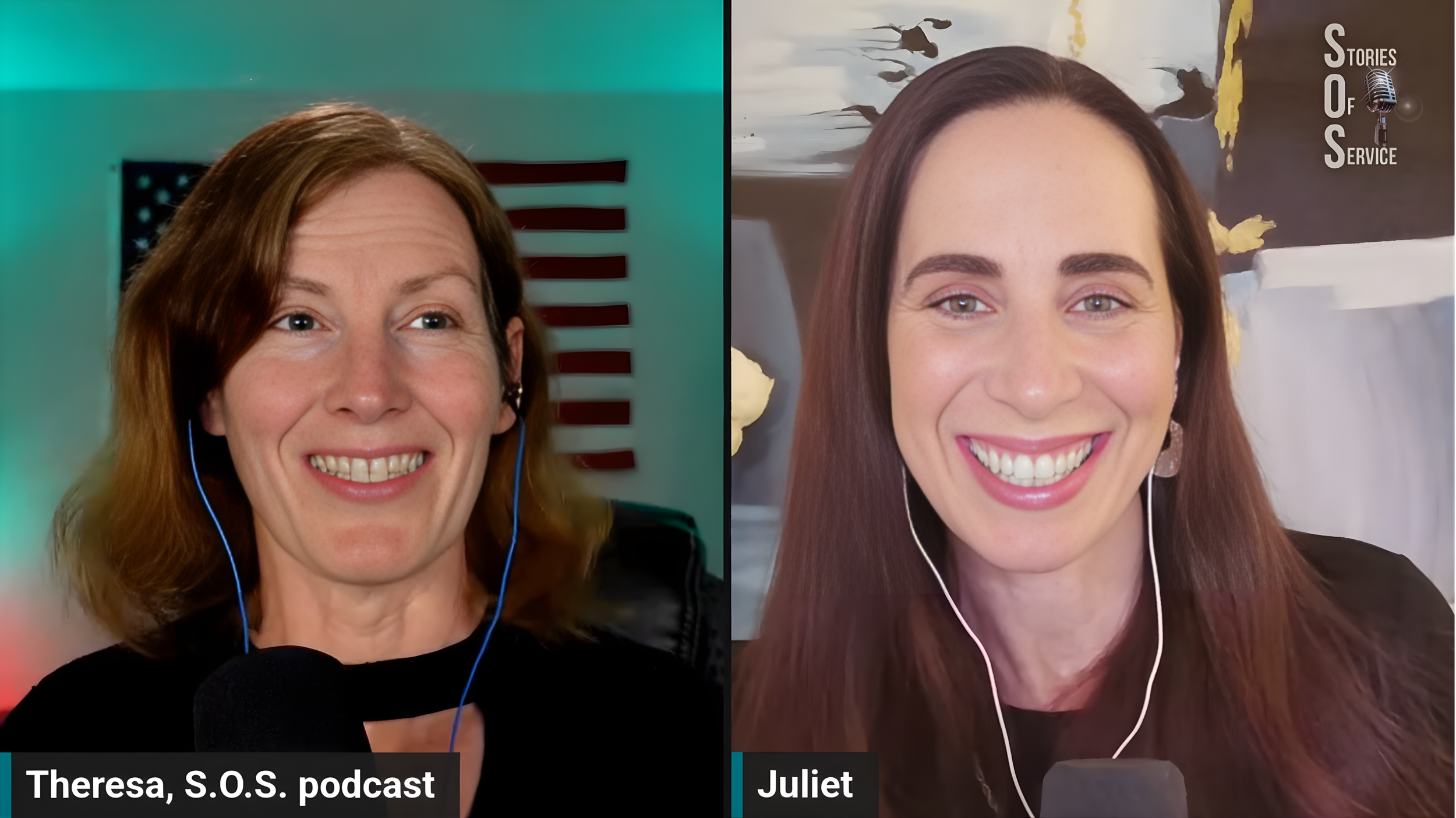
What if you could look back on your life and know that the time you spent actually mattered—that it was used with intention, clarity, and purpose? Most of us suspect we’re too busy to ever answer that question honestly. Meetings stack on meetings, inboxes refill as fast as they’re cleared, and long days are worn like a badge of honor. Productivity becomes confused with endurance.
On a recent episode of the Stories of Service podcast, leadership expert Juliet Funt offered a powerful challenge to that mindset. Her work—spanning Fortune 500 companies, global organizations, and increasingly, the U.S. military—focuses on reclaiming what she calls our most undervalued asset: bandwidth. Not more tools. Not bigger budgets. But space to think.

GUEST BIO: WHO IS JULIET FUNT?
Juliet Funt is a leadership and productivity expert, keynote speaker, and CEO of the Juliet Funt Group, best known for her work on eliminating organizational “busywork” and helping leaders reclaim time for higher-value thinking. She is the author of A Minute to Think, which introduces the concept of “white space”—intentional time for reflection, prioritization, and decision-making—as a critical leadership tool. Working with Fortune 500 companies, government agencies, and military organizations, Funt focuses on practical methods to improve efficiency, decision quality, and workplace culture by reducing unnecessary meetings, emails, and low-value tasks.
From Motion to Meaning
Juliet Funt is the founder and CEO of the Juliet Funt Group and one of the most respected voices in operational efficiency and leadership effectiveness. Her message is deceptively simple: organizations are drowning in activity while starving for impact.
“We confuse movement with progress,” she explains. “And we reward busyness without asking whether the work actually matters.”
Her concept of white space—time intentionally left unscheduled for thinking, processing, and prioritizing—has become central to her work. Importantly, white space is not about laziness or disengagement. It is a strategic business tool. Without it, even the most talented teams lose their ability to think clearly, innovate, and make sound decisions.
Teaching What You Need to Learn
Juliet’s passion for this work is deeply personal. A self-described high-energy, fast-moving thinker, she openly acknowledges that her fascination with time management comes from trying to solve her own challenges.
“I’m the sickest rat in the experiment,” she jokes.
Like many high performers, she’s driven, restless, and prone to constant activity. Over time, her curiosity about why slowing down felt so difficult—and why it mattered so much—turned into a decades-long study of how individuals and organizations misuse time.
What she discovered was critical: individuals cannot fix this problem alone.
You can’t tell people to “manage their time better” inside a culture that rewards overwork, endless meetings, and instant responsiveness. White space only becomes possible when organizational norms support it.
Why the Military Conversation Matters
Juliet’s work has increasingly taken her into military spaces—Army, Air Force, Special Operations, and engineering units—where the stakes of exhaustion and inefficiency are especially high.
What struck her immediately was a contradiction.
When service members are in the field—flying aircraft, executing missions, conducting operations—they are extraordinarily intentional. Precision, clarity, and discipline dominate every action. But when those same professionals return to office environments, that rigor often disappears.
Emails become bloated. Meetings are over-invited and under-focused. Taskers multiply without prioritization. The same people capable of executing life-or-death missions suddenly tolerate waste as if it’s inevitable.
This split personality, Juliet argues, isn’t just inefficient—it’s dangerous.
Millions of service-member hours are lost to administrative clutter, leaving less time for readiness, training, and strategic thinking. The result is burnout, declining retention, and diminished effectiveness.
The Hidden Cost of Heroic Acquiescence
One of the most powerful ideas Juliet raises is what she calls heroic acquiescence—the cultural expectation to say yes to everything, no matter the cost.
In many military and corporate environments, working 16- or 17-hour days is normalized. Leaders may admire the sacrifice without questioning whether it’s necessary—or even counterproductive.
Physically, people adapt. Mentally and creatively, they erode.
Sleep deprivation, constant pressure, and lack of reflection don’t just harm individuals; they degrade decision-making. In organizations responsible for national security, innovation, and long-term strategy, that should concern everyone.
White Space Is Not About Rest Alone
A common misconception is that white space is about rest. Rest matters—but it’s only part of the equation.
White space is also about digestion.
If meetings are meals, then many leaders are binge-eating information without ever digesting it. Briefings happen. Decisions are made—or postponed. Then everyone rushes to the next meeting without asking the most important question: So what?
Without time to process, apply, and connect ideas, even high-quality information loses its value. White space turns input into insight.
White Space Is Not About Rest Alone
A common misconception is that white space is about rest. Rest matters—but it’s only part of the equation.
White space is also about digestion.
If meetings are meals, then many leaders are binge-eating information without ever digesting it. Briefings happen. Decisions are made—or postponed. Then everyone rushes to the next meeting without asking the most important question: So what?
Without time to process, apply, and connect ideas, even high-quality information loses its value. White space turns input into insight.
WATCH FULL EPISODE HERE
Efficiency Is Only the First Win
Reducing waste—fewer meetings, shorter emails, clearer tasking—is not the finish line. It’s the starting point.
The real question is what leaders do with the time they reclaim.
Do they sleep more? Train better? Think strategically? Improve readiness? Increase lethality? Develop their people?
Saving ten hours a week is meaningless unless those hours are reinvested with intention. Otherwise, organizations simply refill the space with new forms of busy work.
The Leadership Shift We Need
At its core, this conversation isn’t about calendars. It’s about courage.
It takes courage to challenge a culture that equates exhaustion with commitment. It takes courage to protect thinking time. It takes courage to value outcomes over appearances.
The leaders who succeed in the future—military and civilian alike—will be the ones who understand that time is not the enemy. Misuse of time is.
White space is not a luxury. It is a force multiplier.
And in a world that demands sharper thinking, faster adaptation, and stronger leadership, we can no longer afford to treat it as optional.
Learn More:
👥 Connect with Stories of Service Podcast