The Cost of Integrity: COL (ret) Tony Bianchi on False Accusations

There are moments in military service that test a leader’s resolve, judgment, and courage. But for Colonel Anthony Bianchi—an officer who spent nearly three decades serving across combat units, academic institutions, and senior leadership at West Point—the moment that changed everything wasn’t a battlefield decision, a deployment crisis, or even a policy dispute.
It was a stop sign.
Or rather, an allegation that he blew past one.
That single accusation triggered a chain of events that not only ended a distinguished career, but also exposed once again how the military justice system can fail to protect due process for the accused. Bianchi’s story forces us to examine how quickly assumptions become accusations—and how vulnerable even the highest-performing service members are to institutional overreach.
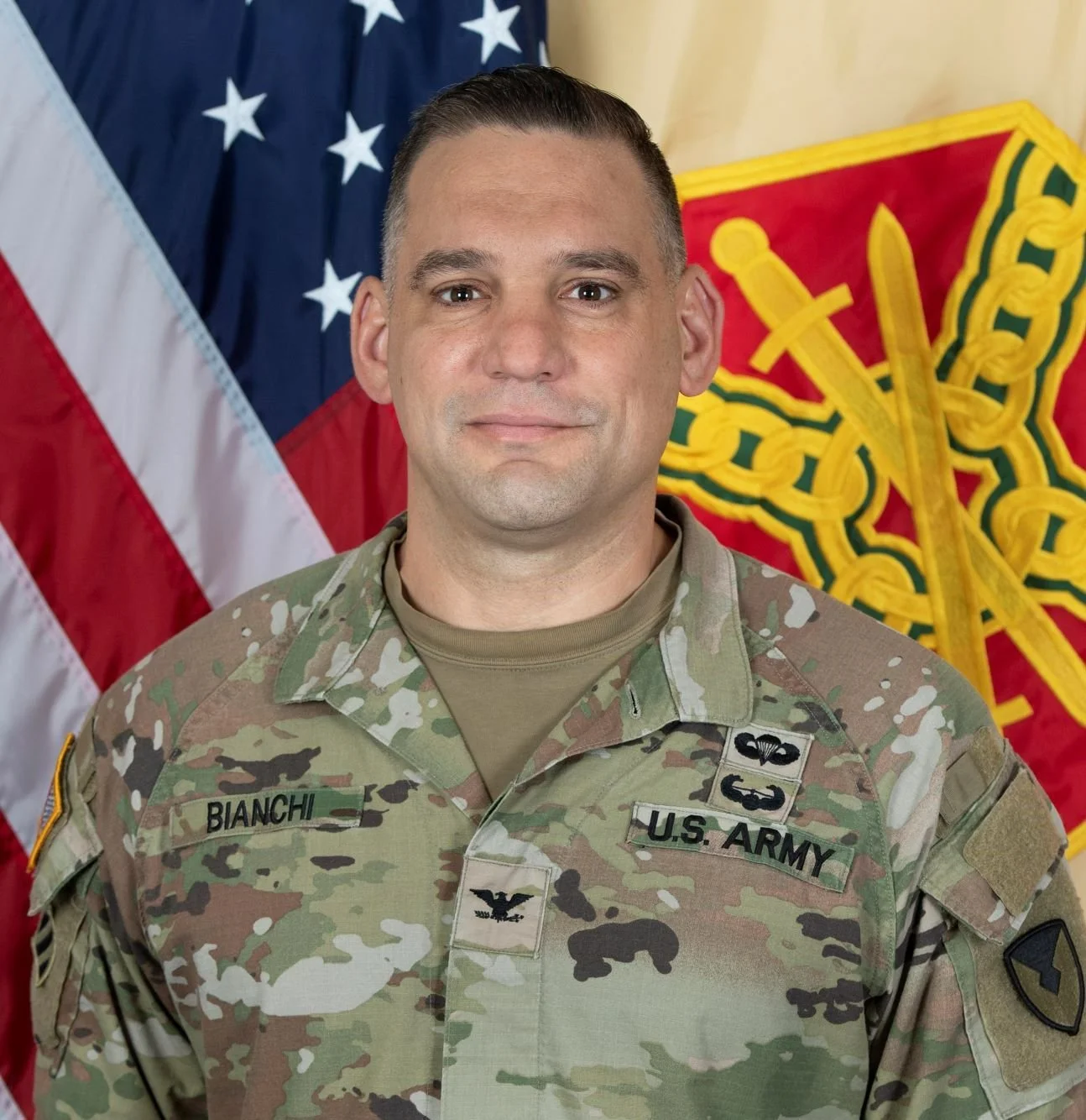
GUEST BIO: WHO IS ANTHONY BIANCHI?
Colonel Anthony “Tony” Bianchi is a retired U.S. Army officer and West Point graduate who served 27 years in field artillery, talent management, and senior leadership roles, including two tours as a West Point instructor and, most prominently, as the Garrison Commander of the U.S. Military Academy. A former Army football player known for his disciplined leadership and ability to fix entrenched problems, he oversaw major installation operations and led West Point’s response to a historic flood disaster. His career ended following a controversial misconduct case in which he was acquitted of the major allegations, leaving only a stop-sign violation, a situation that has since fueled broader conversations about due process and systemic flaws in the military justice system.
A Career Defined by Service and Standards
Before that night, Bianchi’s professional life was the picture of achievement. A West Point graduate and former Army football player, he served as a field artillery officer, commanded at both battalion and brigade levels, taught twice at the Academy, attended National War College, and held influential talent management roles in the Pentagon. When he became the garrison commander of West Point—effectively the installation’s city manager—he was known for discipline, fairness, and a reputation for fixing what was broken rather than tolerating dysfunction.
And dysfunction was exactly what he encountered at West Point.
When he assumed responsibility for the garrison in 2022, he inherited long-standing friction between the installation’s support enterprise and the U.S. Military Academy—the tenant organization most people simply call "West Point." The tension centered on everything from food and catering rules to gate operations and military police practices. These issues sound small from the outside, but inside an institution as complex and tradition-bound as West Point, they were powder kegs.
Bianchi, true to form, addressed the problems head-on. He pushed for policy clarity, demanded consistency, and challenged practices that didn’t align with Army regulations. Some appreciated the accountability. Others resented it.
And then came the 100-year storm.
Two Weeks of Crisis Response
In July, a catastrophic flash flood tore through the Hudson Valley, hammering West Point with more than $350 million in damages. Barracks were destroyed. Roads collapsed. Homes—including Bianchi’s—flooded, and one local resident lost her life.
In the emergency response that followed, Bianchi and his garrison staff became the center of gravity. For two weeks, they worked nearly around the clock coordinating repairs, assisting residents, and briefing senior leaders. The governor toured the damage with him. Senators boarded helicopters with him. At that moment, he and his team were indispensable.
And exhausted.
Still, as the scheduled Army Football Club weekend approached—a long-standing reunion event for former players—Bianchi agreed to attend the Saturday evening dinner. He skipped the earlier social events and the golf outing, spending the day instead ensuring facilities were safe and the venue’s air conditioning was repaired in time for the event.
By the time he arrived—with an old college teammate who had been helping him all day—he had earned a rare moment of recognition. During his remarks, the superintendent publicly praised Bianchi multiple times for his leadership during the storm response. Guests applauded. His peers congratulated him.
It was the high point of the night.
And the moment before everything unraveled.
The Carving Station Confrontation
What happened next has been twisted, magnified, and misrepresented. But the basic facts are straightforward and undisputed:
At the buffet line’s carving station, Bianchi noticed the staff member trimming fat from the meat for every guest ahead of him. When Bianchi stepped up, the server deliberately placed the discarded fatty trimmings onto Bianchi’s plate.
That may seem trivial—unless you understand the existing rift between the garrison and the Directorate of Cadet Activities (DCA), the non-appropriated organization responsible for catering operations. Bianchi had spent months trying to reconcile DCA’s practices with Army policies, and the relationship was strained.
So when the server slapped the unwanted meat onto his plate and responded to a lighthearted question with, “I’ll give you whatever I want,” Bianchi pushed back—verbally, not aggressively. He asked whether the action was intentional or a misunderstanding, and when the server continued to be defiant, Bianchi simply asked to speak to the manager.
A brief exchange. No yelling. No confrontation. No intoxication. No scene.
Yet this mundane moment became the opening chapter of a narrative later used to justify extraordinary actions against him.
The Stop Sign Allegation
After the event, Bianchi drove home. Hours later, military police arrived at his house with senior leaders in tow. They claimed he had “run a stop sign while intoxicated” on base.
That allegation—based solely on an MP’s interpretation—set off a chain of escalating decisions:
MPs and senior personnel entered his home, a move later ruled unjustified.
He was escorted out.
The incident quickly morphed from a minor traffic allegation into something far more serious.
His career trajectory came to a sudden halt.
When the case finally reached court, a judge examined the evidence and found him not guilty of both disorderly conduct and drunk driving. The only offense sustained was the original stop sign violation.
An administrative review later determined that the home entry lacked legal basis.
But by then, the damage to his reputation and career was already done.
WATCH FULL EPISODE HERE
Why This Story Matters
Colonel Anthony Bianchi’s experience isn’t just a story about a misinterpreted traffic incident. It is a story about:
How quickly perceptions become “facts” in a closed system.
How administrative processes can be weaponized against those who challenge entrenched practices.
How due process can fail—even for seasoned leaders with spotless records.
The military justice system remains one of the few legal frameworks in America where the accused can lose everything before ever seeing a courtroom. When leadership acts first and investigates later, the consequences are devastating.
Bianchi’s story isn’t unique—but it is important. It reminds us that integrity, service, and a lifetime of leadership cannot always protect someone from systemic breakdowns. And until the military justice system ensures equal protection for the accused and accuser, stories like his will continue.
Learn More:
👥 Connect with Stories of Service Podcast