Guns and Mental Heath with Walk the Talk America Michael Sodini
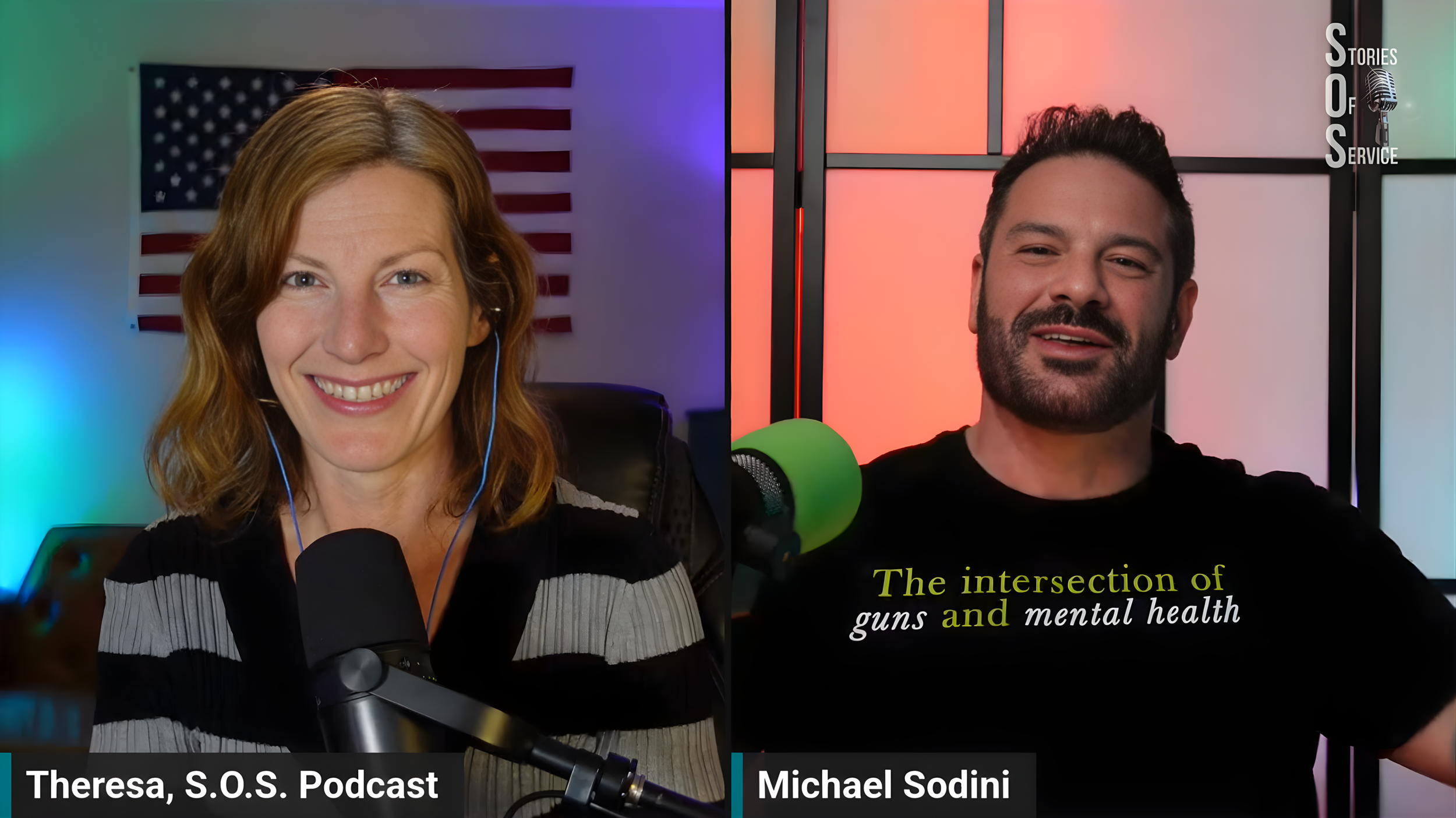
For decades, the national conversation around firearms has followed a predictable—and deeply unproductive—pattern. After a tragedy, the debate narrows almost immediately to one question: Should Americans be allowed to own guns? The discussion hardens into opposing camps, voices get louder, and nuance disappears. Meanwhile, the underlying issues that actually drive harm—mental health, isolation, stigma, and lack of trust—are left largely untouched.
Michael Sodini believes that framing is exactly why progress has stalled.
As the founder and CEO of Walk the Talk America (WTTA), Sodini has spent years working in the uncomfortable space between gun ownership and mental health advocacy. His approach doesn’t ask people to abandon their beliefs about the Second Amendment, nor does it dismiss the very real consequences of firearm misuse. Instead, it starts with a radical premise in today’s climate: people with different values can work together to reduce harm—if they’re willing to listen.
Seeing the Problem from the Inside
Sodini’s credibility comes from experience. He spent 27 years in the firearms industry, ultimately serving as president of Eagle Imports and co-founding Avidity Arms. He didn’t approach the issue as an outsider looking to regulate or criticize gun culture—he lived inside it.
What he noticed wasn’t political rhetoric, but absence.
Within the firearms community, suicide—particularly among veterans, first responders, and industry professionals—was an unspoken constant. People disappeared from trade shows. Colleagues quietly died. Yet the industry rarely addressed it openly, in part because acknowledging negative outcomes around firearms was often weaponized against gun owners themselves.
That silence became impossible to ignore when a close friend and colleague took his own life using one of their company’s firearms. The tragedy forced a hard reckoning: if suicide by firearm disproportionately affects this community, why wasn’t anyone meaningfully addressing it?
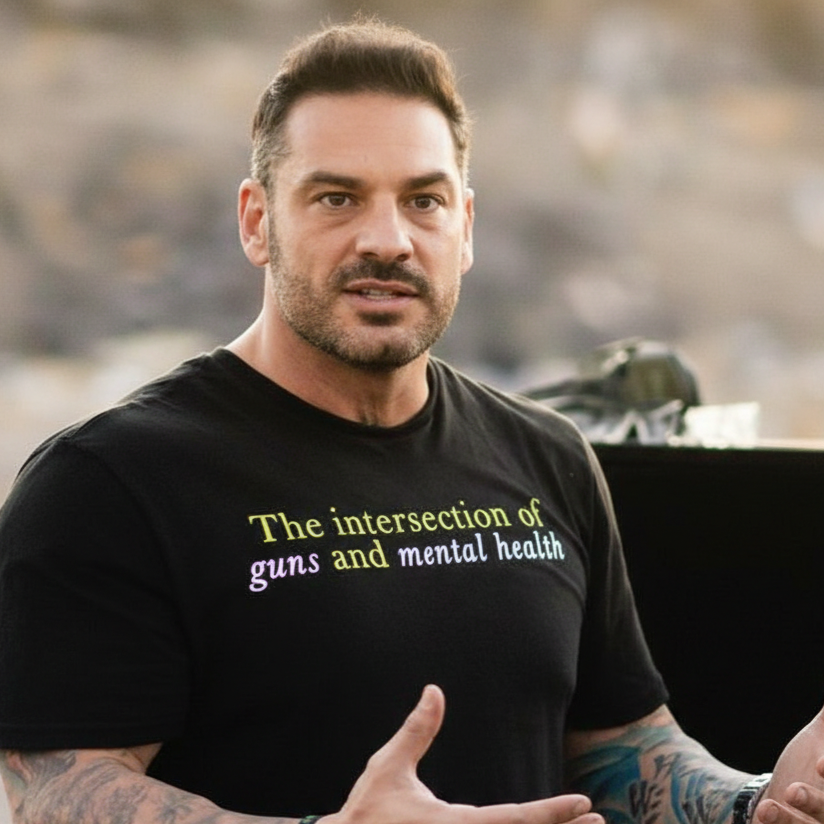
GUEST BIO: WHO IS MICHAEL SODINI?
Michael Sodini is a firearms industry executive turned mental-health and suicide-prevention advocate best known as the founder and CEO of Walk the Talk America (WTTA). Drawing on decades of leadership within the firearms industry, Sodini works at the intersection of gun ownership, public health, and cultural trust, focusing on reducing firearm-related harm without politicization or rights-based framing. He is recognized for advancing practical, nonpartisan solutions—such as culturally competent mental-health education and community-driven prevention strategies—that bridge historically polarized groups and prioritize early intervention, personal responsibility, and access to care.
Seeing Fraud Up Close—and Refusing to Look Away
During deployments to Kuwait, Iraq, and Afghanistan, Rick Lamberth observed what he describes as widespread contracting abuses: inflated costs, substandard equipment passed off as mission-ready, and government funds treated as limitless. Major contractors, shielded by scale and political influence, operated with little fear of consequences.
Lamberth refused to sign off on false reports or misrepresent equipment readiness, even when pressured by senior officers or contractors. That refusal earned him reassignment, isolation, and hostility—but he persisted. To him, lying to the Army or taxpayers was not an option.
Those experiences shaped his belief that accountability in defense contracting was already fragile—and growing worse.
A Question That Changed Everything
The idea for Walk the Talk America didn’t emerge from a policy debate or think tank. It came from a single question posed at a dinner table by someone with no stake in gun politics:
“If you can’t agree with the mental health community on restrictions, how do you work together on what you do agree on?”
That question reframed the entire problem. Instead of fighting over where lines should be drawn, Sodini began searching for ways to collaborate without compromising values. The result was WTTA—a nonpartisan organization focused on reducing firearm-related harm through education, trust-building, and culturally competent mental health access.
Meeting Gun Owners Where They Are
One of WTTA’s earliest—and most impactful—initiatives was deceptively simple: free, anonymous mental health screenings placed directly into gun boxes.
The screenings allow individuals to privately assess conditions like depression, anxiety, PTSD, or substance use without providing identifying information—and without being asked whether they own firearms. That detail matters. For many gun owners, fear of losing their rights is a significant barrier to seeking help. WTTA removed that barrier entirely.
The response was immediate. Gun owners didn’t reject the effort—they welcomed it. Messages poured in thanking the organization for acknowledging a reality the community already understood but rarely discussed. The screenings didn’t blame firearms; they treated gun owners as capable adults who deserve access to care without stigma or surveillance.
Building Trust on Both Sides
If earning trust within the firearms community was difficult, gaining credibility within the mental health world was initially even harder. Many clinicians lacked cultural understanding of gun ownership, while some openly feared association with it.
That began to change when WTTA partnered with clinicians willing to challenge their own biases. Together, they created the first cultural competency training for mental health professionals focused on firearms ownership, offering continuing education credits while teaching providers how to work with gun-owning clients without judgment.
The impact was twofold: gun owners became more willing to seek care, and clinicians became better equipped to provide it. Instead of treating firearms as a red flag in every context, providers learned to assess risk thoughtfully—understanding that, in some cases, removing a firearm without addressing underlying trauma can make a situation worse.
Why Policy Alone Isn’t Enough
Sodini is clear-eyed about legislation: some laws are well-intentioned, but many fail to address the core problem. Suicide accounts for the majority of firearm deaths in the U.S., yet policy responses often focus on highly visible but statistically rare events.
He warns that certain laws—particularly those that remove firearms without providing treatment—can unintentionally discourage people from seeking help. When individuals fear losing their rights, they may choose silence over support.
WTTA advocates for a different approach: policies that incentivize responsibility rather than punish vulnerability. Examples include insurance benefits for gun shops that promote suicide prevention, legal protections for shops that offer temporary firearm storage during crises, and funding for peer-based, community-level support.
These measures don’t rely on fear or force. They rely on trust.
Expanding the Vision
Over time, WTTA’s work has expanded beyond screenings and clinician training. The organization now develops suicide prevention curricula for firearms instructors, educates researchers about modern firearm safety technology, and supports innovative programs like Kids of Kings, which introduces inner-city youth to firearms through mentorship, discipline, and education rather than fear or misinformation.
The unifying theme is consistent: knowledge reduces harm. Isolation increases it.
WATCH FULL EPISODE HERE
Walking the Talk
What makes Walk the Talk America different isn’t just its programs—it’s its posture. The organization refuses to caricature anyone as the enemy. It doesn’t assume bad intent. And it doesn’t ask people to surrender their identity to be part of the solution.
Everything WTTA offers is free. The organization is funded largely by the firearms industry itself—a fact that challenges the assumption that gun manufacturers and distributors don’t care about outcomes. According to Sodini, if they didn’t care, the organization wouldn’t exist.
Progress, he argues, doesn’t start with louder arguments. It starts when people stop talking past each other and begin addressing reality as it is.
In a debate defined by extremes, Walk the Talk America offers something rare: a middle ground rooted not in compromise of values, but in shared responsibility. And in a country desperate for solutions, that may be the most radical idea of all.
Learn More
More on Walk the Talk America - https://walkthetalkamerica.org/
👥 Connect with Stories of Service Podcast