Military Stories You Are Not Told with Jennifer Barnhill

Who gets to tell the story of the U.S. military—and who bears the cost when those stories are simplified, filtered, or ignored? For decades, public narratives about military service have focused on missions, weapons, and battlefield sacrifice. Far less attention has been paid to the lives that unfold off base: the families who absorb the uncertainty, the spouses who shoulder invisible labor, and the children who grow up inside an institution that rarely centers them in its storytelling.
Journalist and researcher Jennifer Barnhill has spent years changing that imbalance. A Navy spouse herself, Barnhill is best known for Military Dinner Table Conversations, a reverse town hall project that captures what military families actually talk about when the uniforms are off and the cameras are gone. Those candid conversations, she argues, shape the future of recruitment and retention more than any glossy marketing campaign ever could.
Her work culminates in the book The Military Stories You’ve Been Told—and the Ones You Need to Hear, a deeply researched examination of military family life, institutional blind spots, and the human cost of policies that look tidy on paper but fracture in practice.
Entering an Institution, Not Just a Marriage
Like many military spouses, Barnhill did not plan this path. She walked away from a fully funded PhD trajectory after falling in love with a Navy service member, discovering only later that she had married not just a person, but an institution. Early on, she found community, resilience, and mutual care among military families. She also encountered a harder truth: when systems fail, families are often expected to compensate quietly and without complaint.
Rather than turning away, Barnhill leaned in. She earned a master’s degree in public administration, returned to journalism with sharper tools, and began asking uncomfortable questions about how military family support actually works—or doesn’t.
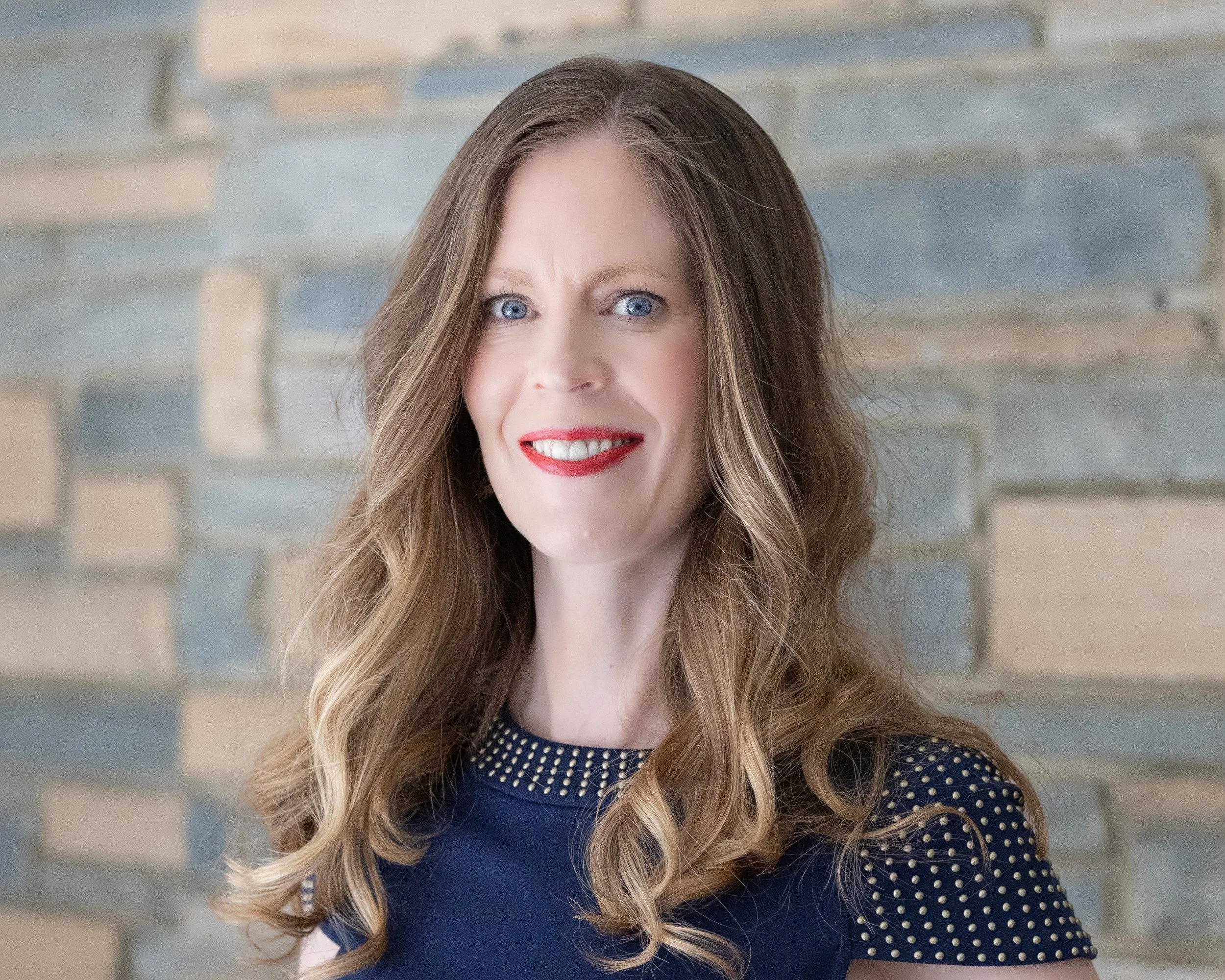
GUEST BIO: WHO IS JENNIFER BARNHILL?
Jennifer Barnhill is a journalist and public administration researcher whose work focuses on how military policies affect families in practice, not just in theory. A Navy spouse, she specializes in uncovering the gaps between official support systems and lived experience, using qualitative research, data analysis, and long-form reporting to surface issues that are often overlooked in military coverage. Barnhill is the author of The Military Stories You’ve Been Told—and the Ones You Need to Hear and the creator of Military Dinner Table Conversations, a project designed to capture unfiltered insights from military families and translate them into actionable understanding for leaders, policymakers, and the public.
Why the Stories Matter
Barnhill’s central argument is simple but challenging: stories shape policy. What we choose to amplify determines what gets fixed and what gets ignored. Yet military families remain largely absent from coverage of military life. In one content analysis Barnhill conducted, only a handful of stories across major military outlets meaningfully addressed family experiences. Officers were quoted far more frequently than enlisted members or spouses, reinforcing a top-down narrative that often misses lived reality.
This imbalance has consequences. When families are framed as resilient by default—strong, adaptable, endlessly supportive—their need for assistance is easier to dismiss. Resilience becomes a performance rather than a condition, and those who appear “fine” are often denied help precisely because they look composed.
Invisible Labor and Fragile Support
One of the book’s recurring themes is unpaid, expected labor. While no longer formally required, volunteerism remains culturally embedded in military life, especially for spouses of senior leaders. That expectation persists even as most military households now rely on two incomes, face frequent relocations, and struggle with professional licensure barriers that vary by state.
The result is widespread underemployment and, in some cases, food insecurity—an uncomfortable reality for families serving within a national defense apparatus. Barnhill documents how support systems designed for a different era have not fully adapted to modern economic realities.
When Systems Break—and Who Pays
Throughout the book, Barnhill pairs individual stories with structural analysis. A mother navigating two childhood cancer diagnoses is denied a caseworker because she appears outwardly capable. Families living in unsafe housing confront privatized contracts that base leaders cannot easily terminate. Policies exist, memos are issued, but enforcement is inconsistent and accountability diffuse.
The pattern is familiar: when systems fail, the burden of escalation falls on the very people least equipped to carry it. Families must document, persist, and advocate—often at personal and professional risk—just to access basic support.
Lessons from History
Barnhill also situates modern challenges within historical context. One of the book’s most powerful chapters revisits the League of Wives during the Vietnam War—spouses of prisoners of war who uncovered evidence of torture through coded correspondence and ultimately forced public acknowledgment by going to the media.
Their advocacy was not ideological; it was born of necessity. And it worked. Public exposure led to improved treatment for POWs and changed the course of accountability. The lesson is not that media should be the first stop—but that silence rarely produces reform.
Speaking Up Without Burning Down the System
Barnhill is careful not to romanticize whistleblowing or public escalation. She emphasizes proportional response: exhausting internal remedies, documenting failures, and understanding where authority actually lies. Media attention, she argues, should be strategic—not reactive.
At the same time, she is clear-eyed about reality. Some problems are systemic. Some incentives reward silence over integrity. And in those cases, stories told publicly can force movement where closed doors have failed.
Disability, Identity, and Uneven Standards
Another underexplored area Barnhill examines is disability—particularly the inconsistencies between recruitment standards and active-duty realities. Conditions that disqualify potential recruits may coexist with decorated service among those already in uniform. The process, she found, is often opaque, subjective, and unevenly applied, leaving families confused and frustrated.
Disability is not just a medical designation; it reshapes identity, careers, and family dynamics. Yet these experiences remain largely absent from mainstream military narratives.
WATCH FULL EPISODE HERE
What She Wants Readers to Take Away
Barnhill does not present her work as an indictment of the military. She presents it as an act of care. Institutions improve when they are willing to examine their blind spots. Families deserve to be seen not as supporting characters, but as stakeholders whose wellbeing directly affects readiness, retention, and trust.
Her call to action is modest but powerful: tell the stories. Not all of them need to become headlines. But without lived experience in the public record, policies drift further from reality.
Military families are not a monolith. Their stories are messy, complex, and often uncomfortable. That is precisely why they matter.
Until we listen to them—fully, honestly, and without sanitizing—we will continue to misunderstand the true cost of service.
Learn More
More on Jennifer - https://www.jenniferbarnhill.com/?m=1
Her book - https://a.co/d/1VHq9aW
👥 Connect with Stories of Service Podcast