He Advised the Pentagon and They ignored him with Donald Vandergriff

Many veterans reach a point—after twenty or thirty years in uniform or supporting the force—when a hard truth becomes unavoidable: the system is not broken because of a lack of talent, effort, or sacrifice. It is broken because of incentives.
That realization sits at the heart of the conversation with Don Vandergriff, a retired Marine, former Army armor officer, military historian, and one of the most persistent critics of the U.S. military’s promotion and personnel system. Vandergriff has spent decades inside the machinery of reform—advising senior leaders, writing extensively, and challenging orthodoxy at personal and professional cost. His conclusion is blunt but well-supported: the way the military selects, educates, and promotes leaders actively undermines adaptability, honesty, and battlefield effectiveness.

GUEST BIO: DONALD VANDERGRIFF?
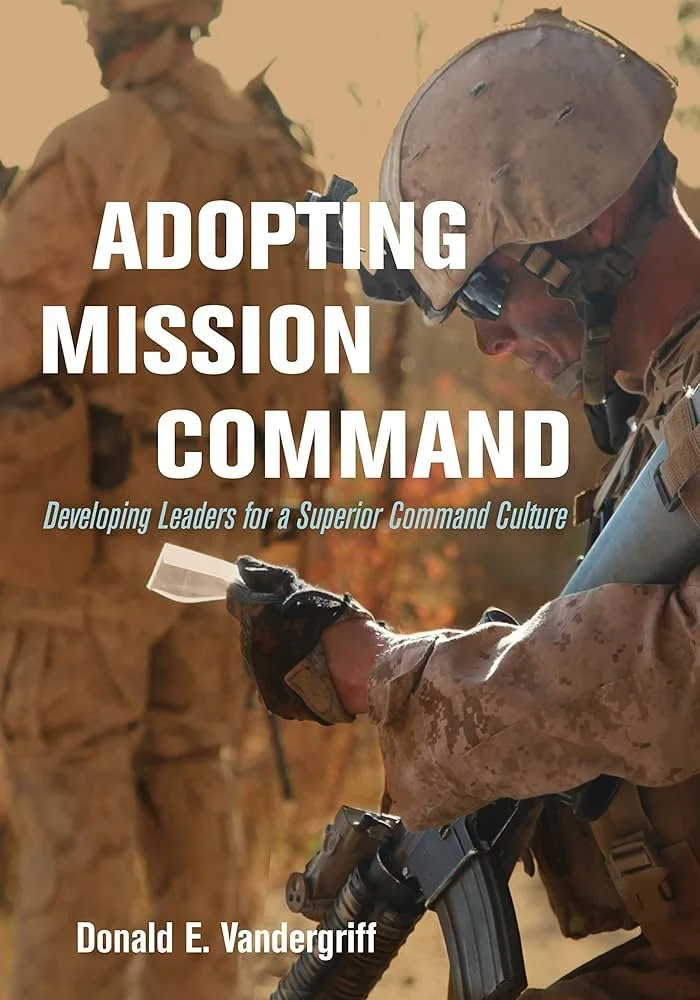
Donald “Don” Vandergriff is a retired U.S. Marine Corps officer, former U.S. Army armor officer, military historian, and prominent critic of the U.S. military’s personnel, promotion, and leadership development systems. After serving in both the Marine Corps and the Army, including operational and training assignments, he became known for challenging the military’s industrial-era, zero-defect culture and its reliance on metrics, scripted training, and PowerPoint-driven assessments. Vandergriff has advised senior military leaders, worked as a historian and contractor in Iraq and Afghanistan, and spent decades advocating for outcome-based training, mission command, and adaptive leadership. He is the author of several influential books, including The Path to Victory series, which argue that meaningful military reform must begin with changing how leaders are selected, educated, and promoted.
A System That Repeats Itself
Those who have served long enough recognize the pattern. The Department of Defense diagnoses the same problems every decade—lack of accountability, poor adaptability, toxic command climates, performative leadership—yet responds with the same solutions: new slogans, new metrics, new checklists. The outcomes never change because the incentives never change.
According to Vandergriff, the root problem lies in how the institution defines “success.” Promotions are tied not to outcomes, judgment, or learning, but to optics, compliance, and the appearance of flawlessness. The result is a culture where avoiding mistakes matters more than making good decisions.
This is not a new phenomenon. Vandergriff traces it back to the early 20th century, when the U.S. military adopted industrial-era business practices to align with American society’s expectations. Influenced by thinkers like Frederick Taylor, whose “scientific management” principles revolutionized factory production, the military embraced standardization, metrics, and zero-defect thinking. Those ideas worked well for manufacturing cars. They worked terribly for developing leaders in chaotic, human-centered environments like war.

Zero Defects, Infinite Damage
The “zero defects” culture—imported wholesale from corporate management—created perverse incentives. When mistakes are career-ending, honesty becomes dangerous. Leaders learn to shape narratives, manage slides, and manipulate metrics rather than confront reality. Over time, this produces a force that looks efficient on paper but performs poorly when conditions deviate from the script.
Vandergriff saw this firsthand at the National Training Center (NTC), one of the Army’s most ambitious attempts to align training with battlefield reality. NTC introduced professional opposing forces, free-play exercises, and after-action reviews designed to expose weaknesses honestly. On paper, it was revolutionary.
In practice, something else happened.
The same officers identified as “fast trackers”—those earmarked early for promotion—often performed poorly in realistic, unscripted environments. Yet their careers continued unimpeded. Poor performance at NTC did not meaningfully affect promotion prospects, undermining the very purpose of the exercise. Training became theater: challenging enough to claim rigor, but insulated enough to protect careers.
Outcomes vs. Optics
Vandergriff contrasts this with the Prussian-German model under Helmuth von Moltke the Elder in the 19th century. Moltke rejected rigid control and process-driven command in favor of outcome-based judgment. Officers were evaluated on results, decision-making, and adaptability during large-scale, free-play exercises. Careers rose—or ended—based on demonstrated competence under stress.
The difference was cultural. Moltke understood that war is uncertain and nonlinear. Success depends on judgment, initiative, and moral courage, not flawless execution of a checklist.
The U.S. military, by contrast, evaluates leaders largely through scripted exercises, controlled scenarios, and quantitative metrics. Red-light/green-light charts replace nuanced assessments. PowerPoint becomes a proxy for understanding. Leaders are trained to succeed within the system, not in combat.
War Reduced to Numbers
This obsession with metrics has had devastating consequences. In Vietnam, body counts replaced strategy. In Iraq and Afghanistan, progress was measured through slide decks filled with statistics disconnected from reality on the ground. Vandergriff’s time in Afghanistan—both as a historian and a contractor embedded at senior levels—reinforced the pattern.
Statistical goals drove behavior, not outcomes. Programs were judged successful because numbers went up, not because conditions improved. When Vandergriff introduced critical thinking and problem-solving instruction—without PowerPoint—it was embraced by Afghan partners but resisted by Western bureaucracies. The system could not tolerate approaches that disrupted established reporting structures.
Even innovation that worked was unwelcome if it challenged the narrative.
Promotion Without Accountability
At the center of the problem is the promotion system itself. Leaders advance not because they demonstrate superior judgment, but because they avoid controversy, conform to expectations, and maintain the appearance of competence. Risk-taking—essential in combat—is punished in garrison. Moral courage becomes a liability.
This creates a self-reinforcing cycle. Those promoted under these conditions replicate the system that rewarded them. Dissent is marginalized. Reformers are sidelined. Institutional memory favors comfort over correction.
Vandergriff argues that true reform does not start with Congress or the Pentagon. It starts with changing how leaders are evaluated. Promotion must be tied to demonstrated performance in realistic, stressful, unscripted environments. Exercises should test judgment, not rehearsed answers. Failure—when rooted in intelligent risk-taking—must be tolerated, even valued.
WATCH FULL EPISODE HERE
Where Change Actually Begins
Despite decades of frustration, Vandergriff is not cynical. He believes leverage still exists—just not where most people look. Cultural change begins in classrooms, unit training, mentorship, writing, and honest conversation. Veterans and serving leaders can challenge bad incentives by refusing to normalize performative leadership.
Educating younger service members, mentoring critical thinking, and documenting failures honestly all matter. So does intellectual courage: the willingness to question systems that reward compliance over competence.
The military does not lack talent. It lacks a system that recognizes and cultivates it.
Until promotions are based on outcomes, character, and decision-making under pressure—not slide decks and spotless records—the institution will continue to produce leaders optimized for bureaucracy rather than war.
And history suggests that when the next real test comes, reality will not be impressed by appearances.
Learn More:
More on Donald - He can be reached at vandergriffdonald@usa.net or by subscribing for free to his Substack at https://substack.com/@donvandergriff?utm_source=user-menu.
👥 Connect with Stories of Service Podcast