The Military Failed my Son with Heather Baker

Some stories are hard to tell not because they lack clarity, but because they expose truths many would rather avoid. Heather Baker’s story is one of them.
A Gold Star mother, longtime educator, artist, and advocate, Heather never expected to become a public voice challenging the U.S. military. Like many families, she believed deeply in service, sacrifice, and patriotism. She supported her son, Private First Class Caleb Smither, when he decided—at just 17—to join the Army. He had a plan. He had drive. He had heart. And he believed, as so many young service members do, that the institution he served would take care of him.
It didn’t.
Six years after Caleb’s death, Heather continues to speak not only for her son, but for countless service members whose suffering never makes headlines. Her advocacy isn’t rooted in anger alone—it’s rooted in accountability, human connection, and the refusal to let systems hide behind silence.
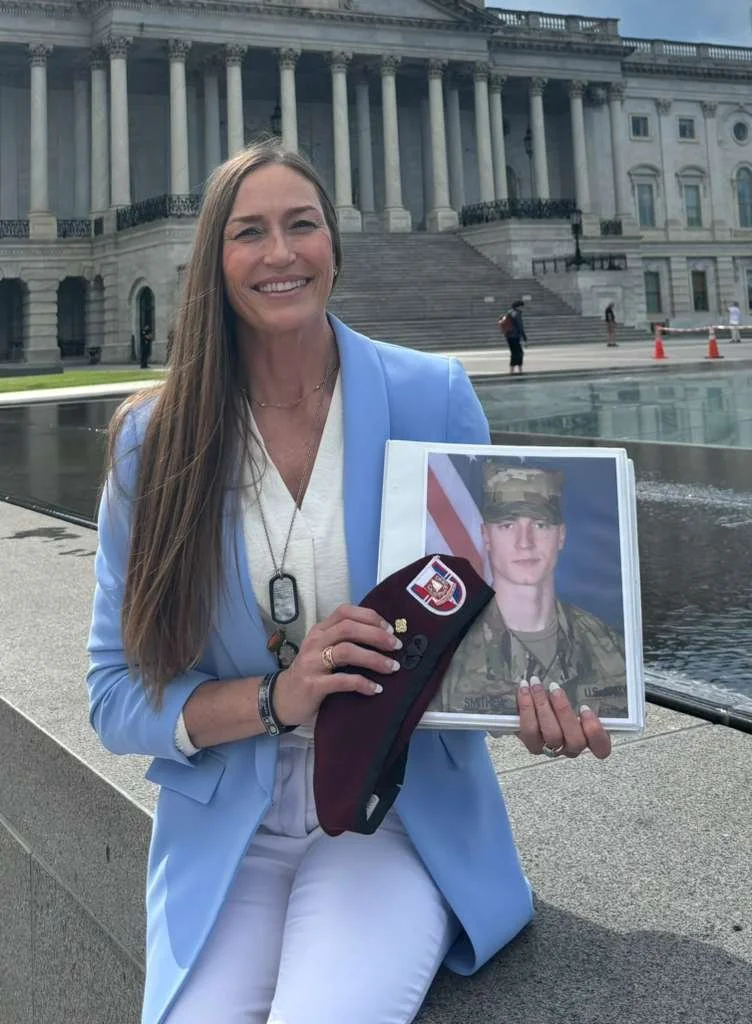
GUEST BIO: WHO IS HEATHER BAKER?
Heather Baker is a Gold Star mother, educator, and military accountability advocate whose son, U.S. Army PFC Caleb Smither, died while on active duty at Fort Bragg due to medical negligence and systemic leadership failures. A former art and special education teacher with more than two decades in education, Baker became an advocate after uncovering serious inconsistencies, redactions, and omissions in the Army’s investigation into her son’s death from acute bacterial meningitis. Refusing to accept silence or institutional deflection, she has worked with members of Congress, supported other Gold Star families—especially those affected by non-combat deaths—and pushed for reforms focused on soldier welfare, medical accountability, and leadership responsibility. Through initiatives like the Smitty Check, Baker speaks for fallen service members and challenges blind patriotism in favor of transparency, human connection, and justice.
A Soldier With Purpose
Caleb was raised in Lubbock, Texas, in a family with deep military roots. He grew up surrounded by patriotism—parades, flags, and a strong sense of duty. He admired those who served and believed service was a way to help people. Joining the Army wasn’t a whim; it was something he wanted for years.
He enlisted as a 91L track vehicle mechanic, working on heavy equipment in the motor pool. Though his childhood dream had been marine biology, the Army represented adventure, purpose, and opportunity. Caleb was exceptionally athletic, an elite runner, and scored just 13 points shy of a perfect Army Physical Fitness Test. Within seven and a half months, he had completed basic training, AIT, and airborne school—an achievement that speaks volumes about his discipline and determination.
Heather watched her son come alive in uniform. He envisioned a future in special operations, not because of prestige, but because he gravitated toward challenge. He was the kind of soldier who wanted the hardest path—and had the ability to walk it.
The Warning Signs That Were Missed
Caleb’s first and only duty station was Fort Bragg. While working in the motor pool, he struck his head on a vehicle. Initially, this injury appeared minor and was later determined not to be the cause of his death. But soon after, Caleb began experiencing severe symptoms: debilitating headaches, nausea, vision loss, and intense pain.
He went to Womack Army Medical Center multiple times. He was turned away. His condition worsened.
Audio recordings later revealed Caleb crying in pain, telling a friend how badly he was suffering. He couldn’t keep food or water down. His vital signs deteriorated. Medical notes—only uncovered after congressional intervention—showed that nurses questioned why he was being sent home despite worsening symptoms.
The true cause of his illness was acute bacterial meningitis, a medical emergency that is often survivable when treated promptly. Blood work could have caught it. Admission could have saved his life.
None of that happened.
Left Alone in the Barracks
Caleb lived in the barracks with shared facilities. The last recorded entry into his room occurred on January 15. Over the next six and a half days, no one intervened.
He missed formations. He missed physical training. He missed work. He missed a medical appointment.
No one checked on him.
The weekend coincided with a four-day Martin Luther King Jr. holiday. According to Heather, this lapse in oversight reflects a broader culture problem—where accountability disappears during downtime, and leadership fails to ensure soldier welfare.
Caleb was not found until the afternoon of January 21. By then, his body was too decomposed for an open-casket funeral. His roommate had reportedly been using air freshener to mask the smell.
This wasn’t a mystery. This was neglect.
A System That Closes Ranks
After Caleb’s death, Heather was given an investigation file riddled with redactions. Names were removed. Timelines were inconsistent. Key facts contradicted each other. The more she read, the clearer it became that the official narrative didn’t match reality.
It took years—and the involvement of Congress—to obtain unredacted medical records. Those records told a different story: one of misdiagnosis, ignored warning signs, and medical malpractice. A nurse had even documented concern about Caleb being discharged despite his declining condition.
Heather learned quickly that the system protects itself first. Redactions weren’t about privacy—they were about shielding leadership from consequences.
From Grief to Advocacy
Heather never planned to become an advocate. She had spent more than 20 years as a teacher, shaping young lives through art and special education. But grief reshaped her purpose.
She rebuilt herself through disciplines that demand precision and trust—competitive shooting and professional dog training. These pursuits became metaphors for her advocacy: clear standards, accountability, and responsibility for outcomes.
She now works with other Gold Star families, many of whom lost loved ones not in combat, but to negligence, toxic leadership, or medical failure. Their stories share a common thread: the military’s reluctance to admit fault.
Heather calls herself a “justice vigilante”—not out of vengeance, but out of necessity. Systems that are never scrutinized repeat their worst mistakes.
WATCH FULL EPISODE HERE
Why This Story Matters
Caleb Smither didn’t die because of enemy fire. He died because no one stopped to check on him. Because medical professionals failed to act. Because leadership failed to lead.
Heather’s message isn’t anti-military. It’s pro-soldier.
Blind patriotism, she argues, is dangerous. True patriotism demands honesty, accountability, and the courage to confront institutional failure—especially when lives are at stake.
Caleb’s story is painful. But silence would be worse.
By speaking for her son, Heather Baker speaks for countless service members who can no longer speak for themselves. And in doing so, she reminds us that service doesn’t end with enlistment—and responsibility doesn’t end when it’s inconvenient.
Learn More:
Read more on the Smitty Check Act - https://www.everythinglubbock.com/new...
👥 Connect with Stories of Service Podcast