One Veteran Refused to Let Abbey Gate Be Forgotten with Joe Burdick
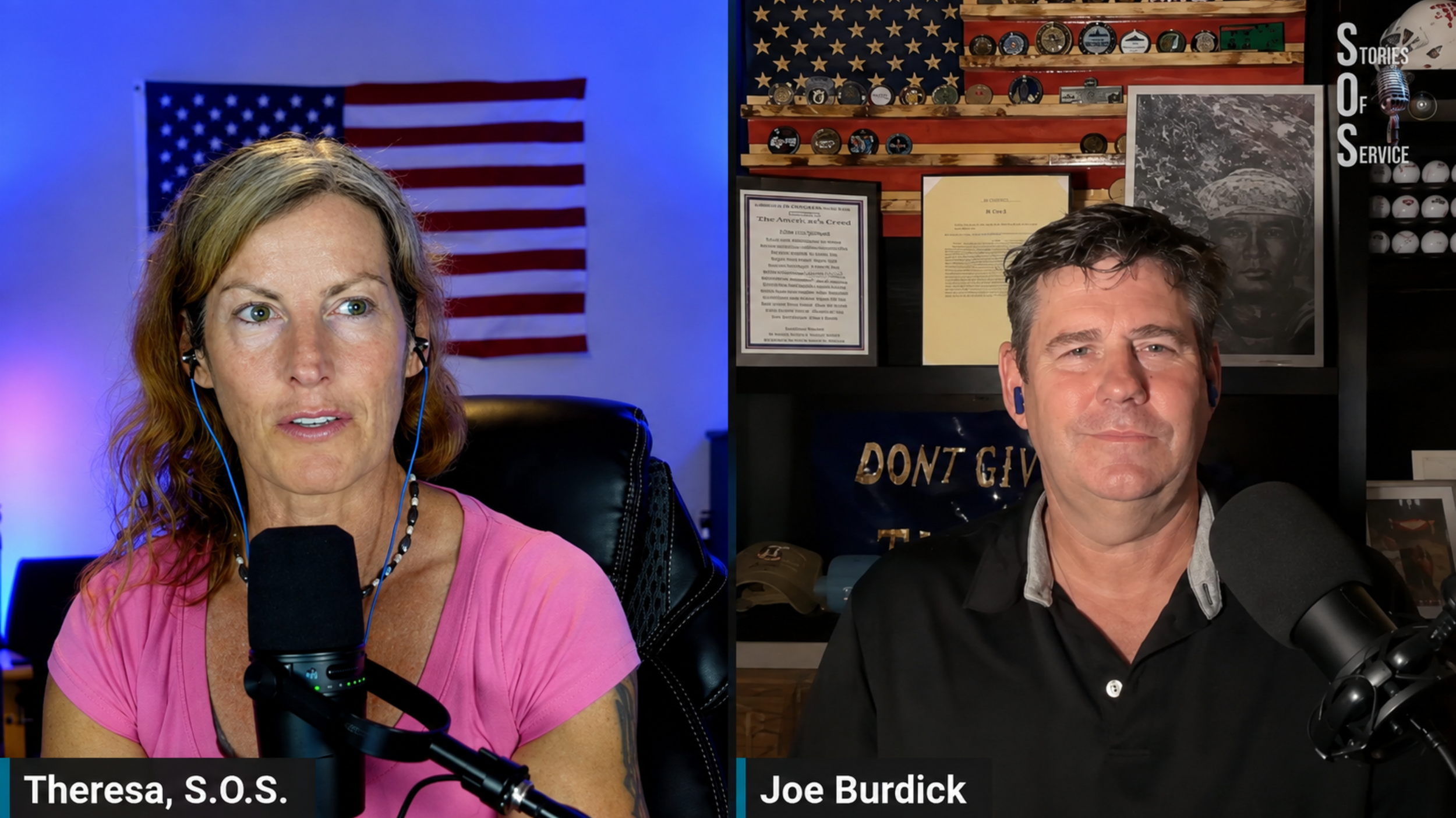
For many veterans, leaving the military means learning how to translate years of service into a new civilian identity. For Joe Burdick, that transition was not straightforward. His path moved through construction, bartending, entrepreneurship, craftsmanship, and eventually advocacy—but each chapter helped shape the mission he has today.
A U.S. Navy veteran, entrepreneur, author, podcaster, and craftsman, Burdick has built a business creating handmade wooden American flags while using his work to honor veterans, first responders, and the families who carry the memory of those who served. His story demonstrates how purpose can emerge gradually, sometimes from unexpected places.
Finding His Way After the Navy
Burdick grew up in Lakewood, Ohio, and originally joined the Navy after being inspired by Top Gun. He wanted to work around aircraft and eventually spent eight years in the service, including time working with F-18s aboard the USS Constellation. His military career also included reserve service and an activation during Operation Desert Storm.
Leaving the military presented a different kind of challenge.
Like many veterans, Burdick discovered that military experience does not always translate neatly into a civilian career. He left the Navy with significant responsibility and a top-secret clearance, but suddenly had to answer a simple question: What comes next?
His first years outside the military involved plenty of trial and error. Following advice from his father to learn a trade, he entered construction and eventually moved into construction management. He also spent about a decade bartending.
Rather than viewing those experiences as failures or detours, Burdick's story suggests that each one taught him something useful: work ethic, adaptability, management, and the willingness to figure things out when there is no obvious roadmap.

GUEST BIO: WHO IS JOE BURDICK
Joe Burdick is a U.S. Navy veteran, craftsman, entrepreneur, author, and advocate whose post-military work centers on honoring veterans, first responders, and military families.
After serving in the Navy, including working with F-18 aircraft aboard the USS Constellation, Burdick eventually turned his woodworking skills into a business creating handcrafted American flags. His work took on a deeper purpose through relationships with veterans and Gold Star families, including the family of Marine Lance Corporal Max Soviak, who was killed during the 2021 Abbey Gate attack in Afghanistan.
Beyond his craftsmanship, Burdick became involved in veteran remembrance and advocacy, helping advance efforts to establish Abbey Gate Remembrance Day in Ohio to honor the 13 U.S. service members killed in the attack.
His story is ultimately about finding a new form of service after leaving the uniform—using craftsmanship, remembrance, and advocacy to keep the sacrifices of service members from being forgotten.
A Flag Becomes Something More
The seeds of Burdick's current work were planted after September 11, 2001.
He wanted to return to military service, partly to honor his grandfather, a World War II Seabee. An injury prevented him from reenlisting, but it did not eliminate his desire to contribute.
Instead, he found other ways to serve.
He began collecting holiday cards for service members and eventually delivered them to veterans at the VA during Christmas. Then, while shopping at a craft store, he noticed a small wooden American flag. What caught his attention wasn't simply the design—it was the fact that the product was manufactured overseas.
Burdick decided he could make one himself.
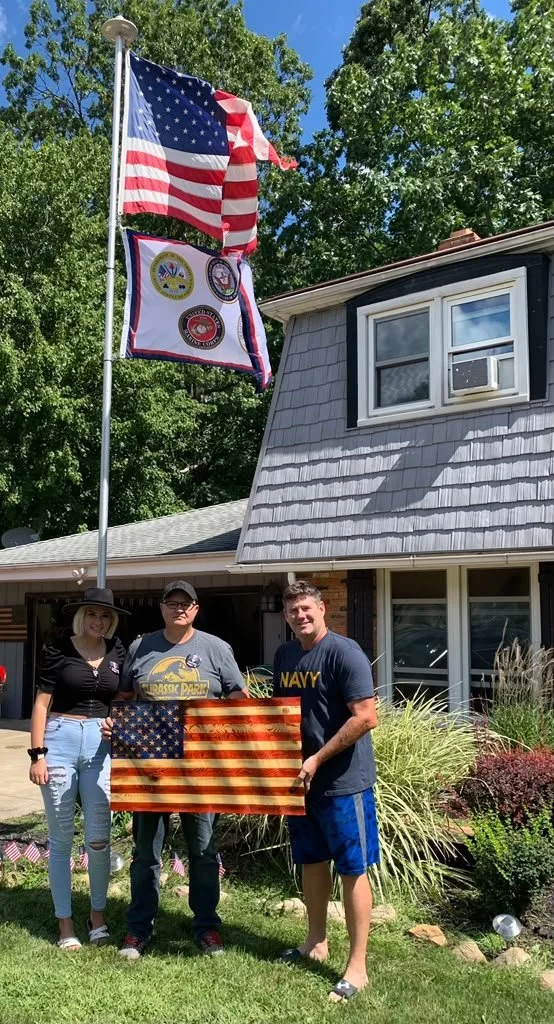
That decision eventually became the foundation for his business, Burdick Custom Flags.
What started as a personal project quickly attracted attention from friends who served in the military and first responders. People began asking him to make flags for them, initially simply covering the cost of materials.
Then Burdick began experimenting.
He studied other craftsmen, learned from online videos, tested different materials, and developed his own techniques. His approach was heavily rooted in experimentation. When something didn't work, he changed it. When a better method appeared, he adopted it.
That mindset eventually helped distinguish his work from other wooden flag makers.
Turning Craftsmanship Into a Business
Burdick's business grew through a combination of craftsmanship, persistence, and an instinct for storytelling.
One early breakthrough came when actress Jenny McCarthy responded to his outreach. Burdick offered to make a flag for her and suggested that she simply share it with her large social media audience. Instead, she purchased the flag and later ordered additional pieces. A local news story soon brought even more attention to his work.
But his biggest innovations came from continuing to experiment.
Burdick developed service ribbon and campaign ribbon designs that incorporated military honors directly into wooden flags. He also developed his own version of the wavy flag after seeing similar concepts and figuring out how to create one by hand.
The process wasn't exactly glamorous.
He experimented with power tools, materials, staining techniques, and construction methods. Some attempts were dangerous, including an incident involving a cutting tool that nearly injured his finger. Eventually, however, the experimentation produced a distinctive product that customers wanted.
During the COVID-19 pandemic, a local television station featured Burdick as part of a story about small businesses continuing to operate. Within minutes of the broadcast, his phone began filling with orders for his wavy flags.
Suddenly, the hobby had become a serious business.
When Remembrance Became Personal
Burdick's work took on an even deeper meaning when he connected with the family of Marine Lance Corporal Max Soviak, one of the 13 U.S. service members killed during the August 26, 2021, Abbey Gate attack in Afghanistan.
Soviak was the only Ohio service member among the 13 killed during the attack.
Soviak's sister, Marilyn, contacted Burdick through Instagram and asked whether he had a flag she could purchase to place beside her brother's casket.
Burdick's response was immediate: he would not sell it to her. He would give it to the family.
He offered to personally deliver the flag.
That moment helped transform the meaning behind his work.
The flags were no longer simply decorative pieces or patriotic gifts. They became tangible reminders of individual lives, military service, sacrifice, and families left behind.
From a Flag to a Legislative Mission
Burdick's commitment to remembrance eventually extended beyond craftsmanship.
He spearheaded Ohio Senate Bill 244, legislation establishing Abbey Gate Remembrance Day to permanently honor the 13 service members killed during the evacuation of Kabul. Working with Gold Star families, lawmakers, and supporters, he helped bring the issue before the Ohio General Assembly.
The effort reflects a central idea behind Burdick's work: remembrance should not depend solely on anniversaries, headlines, or individual acts of memory.
It can become part of a community's permanent history.
That distinction matters because military tragedies can quickly disappear from public attention. For the families who lost someone, however, the date never becomes ordinary.
Creating an official day of remembrance gives communities an opportunity to pause, learn the names, and understand that the people behind historical events were sons, daughters, brothers, sisters, parents, friends, and fellow citizens.
WATCH FULL EPISODE HERE
Service Doesn't Have to End With the Uniform
Burdick's journey offers a broader lesson about life after military service.
His career after the Navy did not follow a straight line. He tried different jobs, learned new skills, made mistakes, and repeatedly started over. Yet those experiences ultimately gave him the tools to build something meaningful.
His construction background helped him understand craftsmanship. His military experience shaped his appreciation for service. His entrepreneurial instincts helped him turn an idea into a business. And his relationships with veterans and military families eventually pushed him toward advocacy.
The result is more than a company that makes wooden flags.
It is a way of keeping stories visible.
For Burdick, service did not end when he left the Navy. It simply changed form. Today, his work demonstrates that honoring military service can happen in a workshop, through a business, in a community, or even in a state legislature.
Sometimes the next mission begins with something as simple as a piece of wood, an American flag, and the decision to make sure someone is remembered.
Editor’s Note
Joe Burdick’s story is a reminder that service does not necessarily end when a veteran leaves the uniform. Through craftsmanship, entrepreneurship, and advocacy, Burdick found new ways to honor those who served and preserve their stories.
His journey from Navy veteran to flag maker and advocate shows how personal experiences can become a lasting commitment to remembrance. His work, particularly with Gold Star families and the effort to establish Abbey Gate Remembrance Day, reflects the importance of recognizing the individuals behind the headlines—and ensuring their sacrifices are not forgotten.
Learn More
👥 Connect with Stories of Service Podcast