The Badge Has a Breaking Point: Chad Bruckner on Leadership, Trauma and Officer Wellness
Police officers are trained to respond to the worst moments of other people’s lives. They arrive when something has gone terribly wrong, make decisions under pressure, and are expected to return to work the next day ready to do it all again.
But what happens when the call is over?
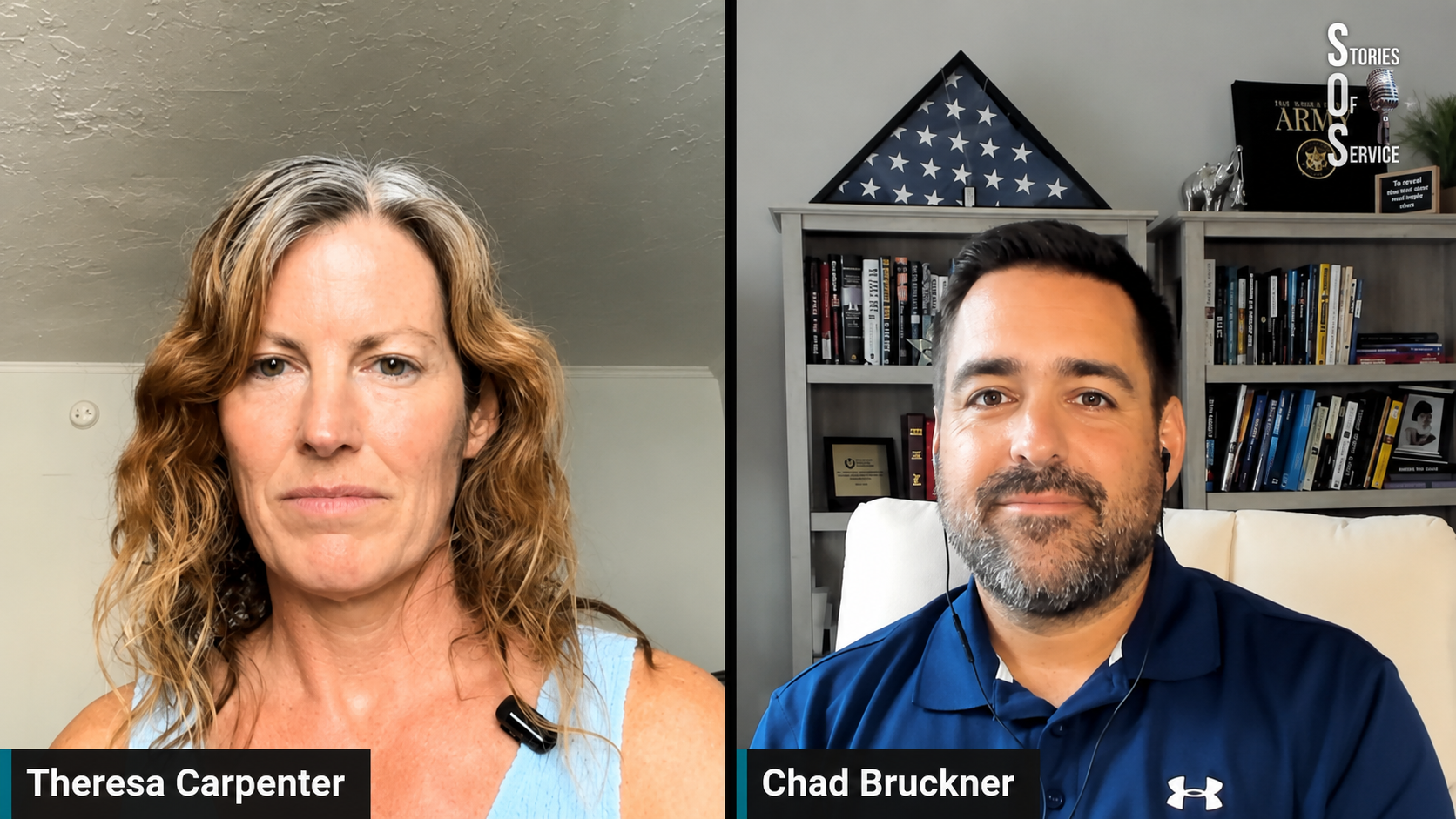
That question sits at the heart of a recent conversation on the Stories of Service podcast with Chad Bruckner, a former Army infantryman, longtime law enforcement officer, police detective, motivational speaker, and author of The Holy Trinity of Successful and Healthy Police Organizations. His experiences in both the military and policing have given him a unique perspective on what happens when people are repeatedly asked to perform in high-stakes environments without receiving the support needed to remain healthy.
The answer, he argues, cannot simply be another wellness seminar, an app, or an annual training requirement. Genuine wellness begins with the culture of an organization—and culture begins with leadership.
Building the Warrior, But Forgetting the Person
Bruckner joined the Army infantry at 17, entering a system specifically designed to transform young people into capable service members. Military training teaches discipline, teamwork, focus, and the ability to operate under extraordinary pressure.
Those lessons can be essential in combat.
But Bruckner points to an often-overlooked part of the process: what happens when service members leave that environment.
The military teaches people how to become warriors, but there is less discussion about how they transition away from that mindset. After years of learning to remain alert, respond quickly, and prioritize the mission, returning to civilian life can feel disorienting.
The world outside the military does not operate according to the same rules. The people around you may not share the same experiences, expectations, or understanding of what you have been through.
That disconnect can follow people into their next careers.
It is one reason so many veterans are drawn to policing, firefighting, emergency medical services, dispatch, and other first-responder professions. They are looking for another place where service, purpose, teamwork, and camaraderie still matter.

GUEST BIO: WHO IS CHAD BRUCKNER
Chad Bruckner is a motivational speaker, author, and law enforcement veteran with a strong background in military service and organizational leadership.
Key details about Chad Bruckner:
Military Service: He is a U.S. Army Infantry combat veteran who led missions in Iraq after enlisting at age 17.
Law Enforcement: He has spent over 15 years in law enforcement and currently serves as a detective with the Lehigh University Police Department.
Speaker & Founder: He is the founder of Motivate Change, where he speaks on officer wellness, mental health, leadership, and cultural change within high-stakes professions.
Author: He wrote The Holy Trinity of Successful and Healthy Police Organizations, which challenges traditional, "check-the-box" approaches to officer mental health and advocates for strong organizational leadership, trust, and accountability.
His primary mission centers on helping first responders and military veterans navigate transition, process trauma, and build healthy work cultures where performance standards and human wellness are treated as interconnected priorities.
The Power—and Danger—of Purpose
Military service creates an intense sense of belonging. Bruckner describes how quickly strong relationships can form within military units. Put people together, give them a shared mission, and ask them to depend on one another, and deep bonds can develop.
That sense of purpose can be difficult to replace.
In policing, however, the mission looks different. Officers may spend hours performing routine duties before suddenly being dispatched to a traumatic incident. They handle the call, return to the station, and often go right back to ordinary work.
There may be no clear transition between crisis and normalcy.
That creates a unique challenge. The officer has experienced something intense, but the organization may immediately move on to the next task.
Over time, those experiences accumulate.
And when people do not feel seen, heard, or understood, the consequences can extend far beyond the workplace.
When People Have Nowhere to Put the Stress
The conversation also explores an uncomfortable reality: people often find ways to numb what they do not know how to process.
For some, that may mean alcohol. For others, it can become compulsive exercise, unhealthy relationships, work, or other behaviors that provide temporary relief without addressing the underlying problem.
The issue is not simply whether someone is struggling. The deeper question is whether they feel safe enough to acknowledge that struggle and seek help.
Shame can make that incredibly difficult.
Many people grow up hearing messages that tell them they are not capable, talented, athletic, intelligent, or deserving enough. Those messages can become internalized and influence how they see themselves long into adulthood.
Service can sometimes challenge those beliefs by giving people an opportunity to accomplish difficult things alongside others.
That is why community matters.
Physical activity, adventure, volunteering, retreats, peer support, and shared experiences can create healthy ways for people to reconnect with purpose and with one another. Healing does not always happen in a conference room. Sometimes it begins when people simply show up together and accomplish something meaningful.
Leadership Is More Than a Title
For Bruckner, organizational change requires leadership from both directions.
Top-down leadership matters because executives, chiefs, and organizational leaders establish the culture. Their behavior communicates what is truly valued, regardless of what appears in a policy manual.
But bottom-up leadership matters too.
People at every level influence the culture around them. A person does not lose their responsibility to serve professionally simply because they disagree with a supervisor.
That requires accountability.
It also requires leaders to lead by example.
If a supervisor expects employees to complete an unpleasant task, why should the supervisor be unwilling to participate? Leadership is not about being above the work. It is about demonstrating that the mission matters enough to get involved.
Trust is built through those actions.
You cannot demand trust simply because you have a title. Influence comes from credibility, consistency, and the willingness to demonstrate the same standards expected of everyone else.
Wellness and Accountability Must Work Together
Officer wellness should never become an excuse to eliminate accountability. At the same time, accountability should never become an excuse to ignore the human beings behind the badge.
Both are necessary.
Officers have a responsibility to take care of themselves, recognize when they need help, and take ownership of their well-being. Organizations have a responsibility to create an environment where doing those things is possible without humiliation, ridicule, or fear.
A department does not supervise only its employees.
When an officer goes home after a difficult shift, the effects of that day can reach a spouse, children, friends, and the broader community. Supporting an officer therefore has consequences far beyond the workplace.
WATCH FULL EPISODE HERE
From Mediocrity to Excellence
Perhaps the most provocative point raised in the conversation is the idea that policing has become too comfortable with mediocrity.
Organizations can become consumed by meetings, paperwork, appearances, politics, and administrative processes while losing sight of the people doing the actual work.
Leadership driven by fear can make that worse.
Fear of failure. Fear of criticism. Fear of losing a position. Fear of making an unpopular decision.
But avoiding discomfort does not create excellence. It creates stagnation.
Real improvement requires leaders willing to have difficult conversations, listen to their personnel, acknowledge problems, and accept that meaningful change may look different from what has always been done.
The badge represents authority, but it also represents responsibility.
The people wearing it are human beings first. They carry the weight of what they see, what they experience, and how they are treated by the organizations they serve.
If police departments want healthier officers, stronger retention, better leadership, and stronger relationships with their communities, wellness cannot remain a box to check.
It has to become part of the culture.
That starts with trust.
It continues with accountability.
And ultimately, it requires leaders willing to roll up their sleeves, put aside the appearance of authority, and show their people that the mission—and the people carrying it out—truly matter.
Editor’s Note
What happens when the people responsible for protecting and serving others are never given the opportunity to process what they carry themselves?
In this conversation, Chad Bruckner brings together his experiences in the military and law enforcement to examine an issue that reaches far beyond officer wellness programs: organizational culture. From the challenges of transitioning out of military service to the realities of policing, Chad explores how leadership, trust, accountability, and genuine human connection can shape whether people simply survive their careers or have the support to thrive in them.
This conversation is a reminder that behind every badge is a person—and that taking care of those people is not separate from the mission. It is part of the mission.
Learn More
👥 Connect with Stories of Service Podcast
🌐Find Chad - https://motivate-change.com/about-cha...