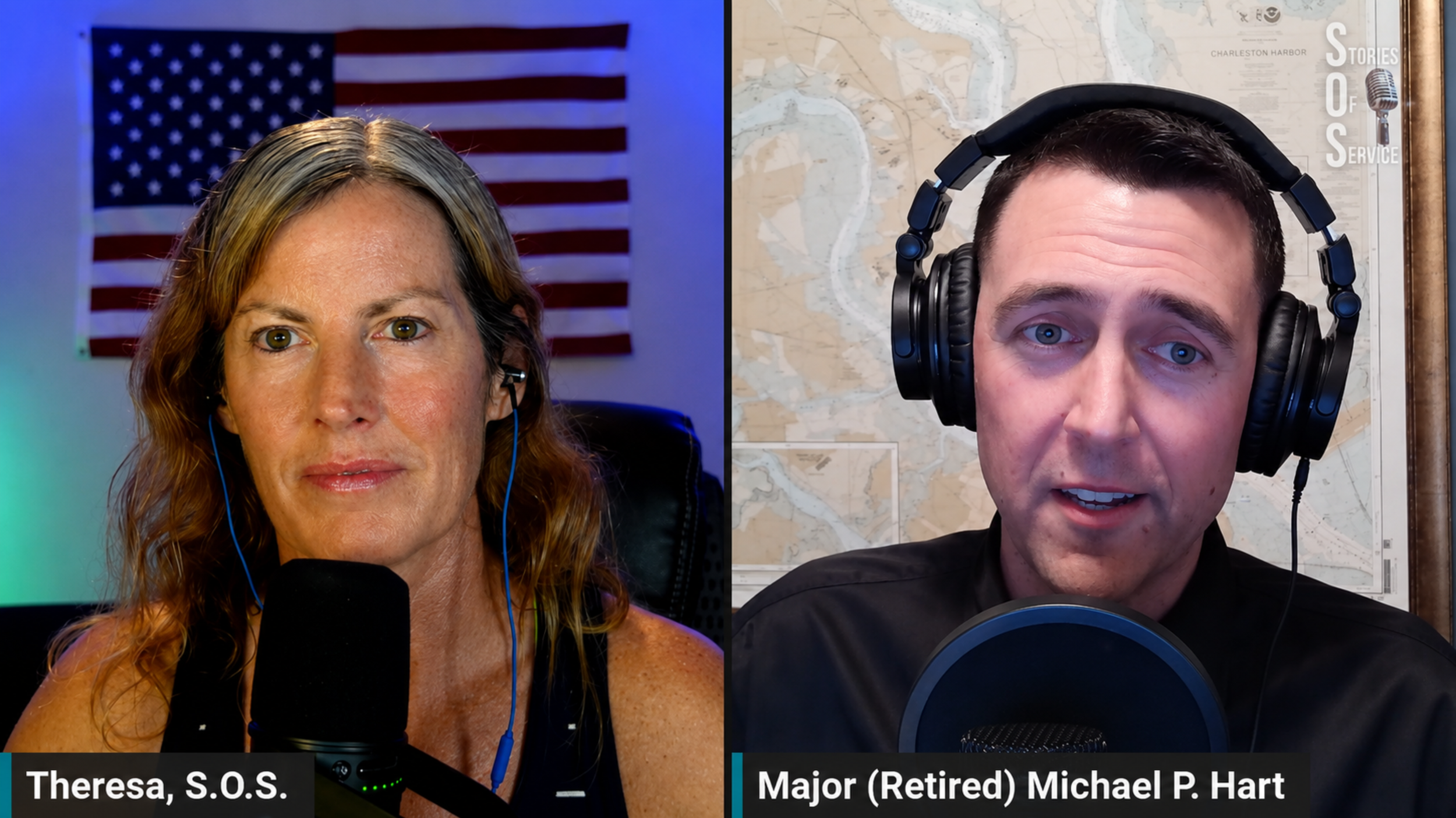
Every day, Americans are surrounded by symbols of patriotism. Military flyovers before sporting events, emotional tributes during football games, recruitment advertisements, and Hollywood portrayals of heroism all reinforce an image of military service that is inspiring and uplifting. These moments are designed to celebrate sacrifice, courage, and national pride.
But what happens when those symbols become the entire story?
In a powerful conversation on Stories of Service, host Theresa Carpenter sits down with retired U.S. Army Major Michael P. hart to examine the uncomfortable realities that often remain hidden behind patriotic imagery. Their discussion isn't about criticizing those who serve or diminishing their sacrifices. Instead, it asks an important question: Has America become more comfortable celebrating war than understanding its true human cost?
A Career That Revealed the Complexity of War
Michael P. hart served in the Illinois Army National Guard from 2004 to 2019, including a deployment to Afghanistan where he worked alongside Polish and coalition forces in Ghazni Province. His responsibilities extended far beyond combat operations.
As a deputy task force engineer, he managed infrastructure projects, coordinated multinational partnerships, and worked within strategic planning environments that connected frontline operations with senior military leadership. His experience exposed him to the operational, logistical, and ethical realities that rarely appear in public discussions about war.
Rather than viewing military service through a narrow lens of combat, hart learned that modern military operations depend on thousands of people performing interconnected roles—from engineers and logisticians to intelligence analysts, maintenance crews, and support personnel.
That broader perspective eventually inspired his book, National Treasure or Trash?, which explores the gap between America's patriotic narratives and the realities experienced by those who wear the uniform.
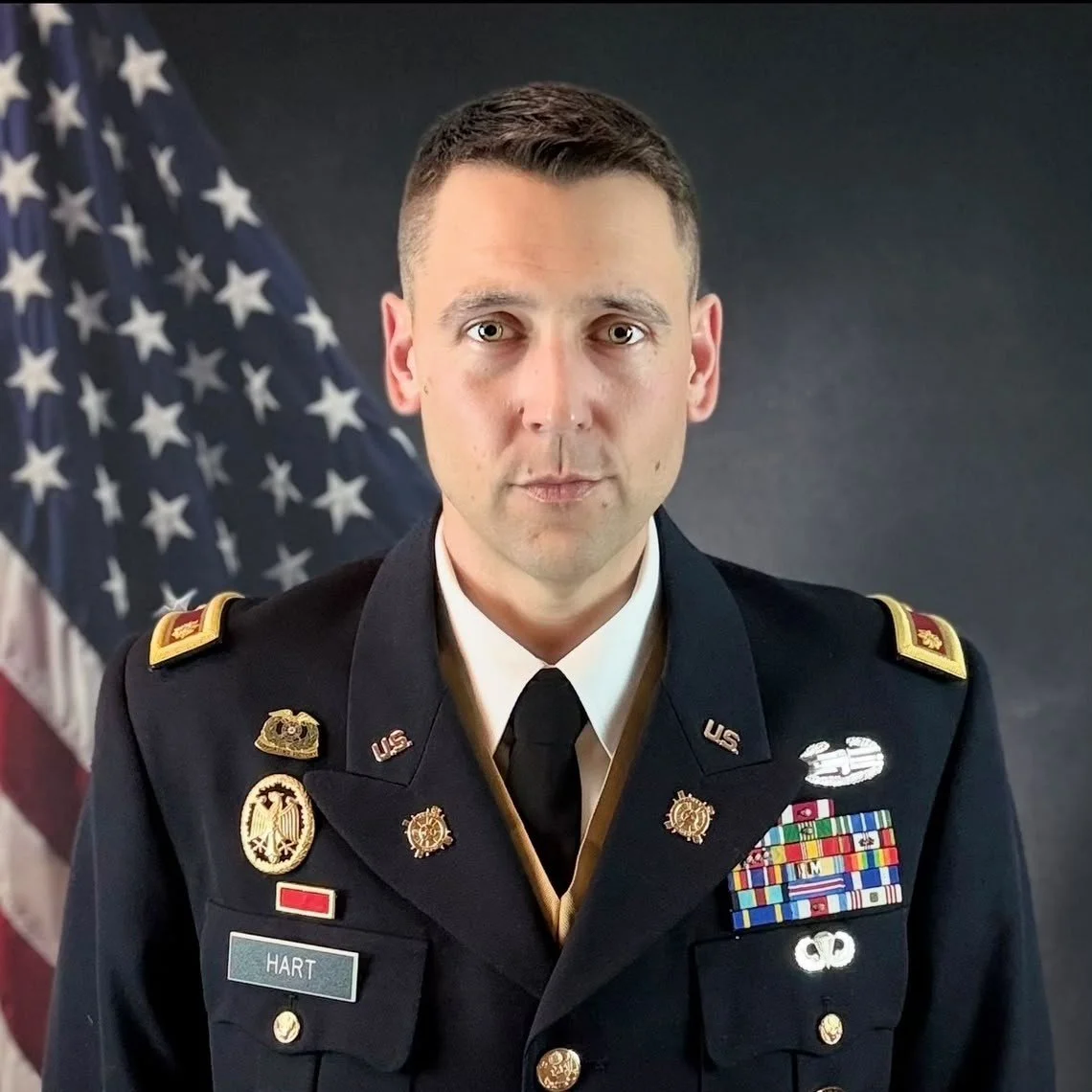
GUEST BIO: WHO IS MICHAEL P. HART
Michael P. Hart is a retired U.S. Army major, combat veteran, author, entrepreneur, and philanthropist who served in the Illinois Army National Guard from 2004 to 2019. During his deployment to Afghanistan, he worked alongside U.S., Polish, and coalition forces, overseeing engineering projects and supporting multinational operations. His military career included leadership roles in training, force integration, information operations, and strategic planning.
Today, Hart writes and speaks about the ethical complexities of war, military leadership, and the gap between public perceptions of patriotism and the realities experienced by service members. Through his book National Treasure or Trash? and public conversations, he encourages thoughtful discussions about the human cost of conflict, moral responsibility, and the lasting impact of military service.
The Difference Between Symbolism and Service
One of the central themes of the conversation is how military service is often reduced to carefully choreographed public displays.
Flyovers before sporting events, military appreciation ceremonies, and patriotic advertising certainly honor service members. However, Keyhart questions whether these moments encourage genuine understanding or simply create emotional reactions that leave little room for deeper reflection.
Theresa Carpenter echoes this concern, noting that many Americans have little exposure to military life beyond these highly polished presentations. While the imagery celebrates strength and heroism, it rarely acknowledges the difficult moral decisions, emotional burdens, and lifelong consequences that often accompany military service.
The result is a version of patriotism that celebrates the uniform without fully recognizing the people inside it.
The Ethical Questions Few People Discuss
Combat is rarely as straightforward as popular culture suggests.
During his deployment, Hart worked in information operations, where military leaders had to navigate situations involving local civilians, insurgent tactics, and complex rules of engagement.
One example involved children being paid to dig holes that could later be used to plant improvised explosive devices (IEDs). From a distance, military surveillance could identify suspicious activity, but determining intent was far more complicated.
These situations forced leaders to wrestle with impossible questions.
How do you protect your soldiers while minimizing civilian harm?
How do military professionals make life-and-death decisions when the battlefield includes innocent people being manipulated by insurgent groups?
These are the kinds of moral dilemmas that service members often carry long after deployments end.
Hart emphasizes that these experiences are not political talking points—they are deeply human realities that challenge even the most experienced leaders.
The Reality Behind Military Readiness
Another important point raised during the discussion is the contrast between training environments and combat conditions.
In peacetime, military equipment is expected to meet strict maintenance standards before missions proceed.
During combat, however, operational demands often force commanders to make difficult decisions.
Theresa Carpenter recalls her experience aboard the USS Abraham Lincoln during the Iraq War, where maintenance priorities shifted dramatically because aircraft needed to remain operational. Equipment that normally would have been grounded had to continue supporting missions.
Hart shared similar observations from Afghanistan, explaining that vehicles with mechanical issues sometimes continued operating because there simply were no alternatives available.
These examples illustrate a reality that civilians rarely see: combat often requires balancing acceptable risk against mission requirements.
Military professionals constantly make decisions under conditions that cannot be replicated during peacetime training.
Patriotism and Public Perception
The conversation also explores the relationship between professional sports and military symbolism.
Hart questions whether sponsorships, ceremonial tributes, and large-scale patriotic events genuinely educate the public about military service or simply reinforce simplified narratives.
Theresa Carpenter points to the growing influence of social media, where military personalities can gain enormous audiences despite having little or no combat experience.
While there is nothing inherently wrong with sharing military experiences online, she argues that public understanding can become distorted when visibility replaces firsthand experience.
The concern is not about who gets attention.
It is about whether Americans are hearing the voices of those who have grappled with the ethical, emotional, and psychological realities of war.
Moral Injury Beyond Physical Wounds
Perhaps the most profound part of the conversation centers on moral injury.
Unlike physical injuries or post-traumatic stress, moral injury occurs when individuals witness, participate in, or are unable to prevent actions that conflict with their deepest moral beliefs.
For many veterans, these memories are not limited to combat itself.
They involve difficult decisions, civilian suffering, ethical compromises, and situations where no choice feels completely right.
These experiences rarely fit into public celebrations of military service.
Yet they often shape veterans long after they leave active duty.
Theresa Carpenter argues that if Americans genuinely want to support veterans, they must be willing to engage with these uncomfortable conversations instead of relying solely on patriotic slogans.
Hollywood's Evolving Portrayal of War
Hart also reflects on filmmaker Tom Hanks' body of work, noting how films such as Saving Private Ryan, Band of Brothers, The Pacific, Greyhound, and Masters of the Air have gradually presented increasingly nuanced portrayals of military service.
Rather than depicting war as purely heroic, these productions reveal its emotional complexity, personal sacrifice, and lasting consequences.
Theresa expands on this idea by referencing Lieutenant Dan from Forrest Gump.
Despite being celebrated as a decorated war hero, the character struggles with profound physical and emotional trauma after returning home.
His story reminds audiences that military honors do not erase personal suffering.
Heroism and hardship often exist side by side.
Remembering the Individual Behind the Uniform
One story that stayed with hart involved Rory Bailey, an 18-year-old soldier who was severely wounded shortly after arriving in Vietnam.
Blinded and permanently disfigured by a rocket attack, Bailey endured years of surgeries before eventually passing away decades later.
For hart, Bailey's story represents something larger than one individual's tragedy.
It reflects the thousands of service members whose lives were permanently changed by conflicts that many Americans now remember only through historical headlines.
Behind every statistic is a person whose future unfolded differently because of military service.
WATCH FULL EPISODE HERE
Moving Beyond Performance Patriotism
The conversation between Michael P. Hart and Theresa Carpenter challenges listeners to think more deeply about what it truly means to support those who serve.
Patriotism is valuable.
Honoring military sacrifice matters.
But genuine appreciation requires more than ceremonies, slogans, or symbolic gestures.
It requires listening to veterans, acknowledging the ethical complexity of war, and recognizing that service often leaves invisible wounds alongside visible achievements.
When Americans move beyond performance and toward understanding, they honor veterans in a way that is both more honest and more meaningful.
Because supporting those who serve begins not with celebration alone—but with a willingness to hear the full story.
Editor’s Note
Military service is often honored through ceremonies, headlines, and patriotic imagery, but the lived experiences of those who serve are far more complex. In this conversation, Michael P. Hart shares thoughtful reflections on the ethical challenges of warfare, the realities of combat, and the responsibility of telling honest stories about military service. Rather than offering easy answers, this discussion encourages readers to look beyond symbolism and consider the moral weight carried by service members before, during, and long after war. By exploring these difficult topics with respect and nuance, we hope to foster a deeper understanding of the human cost of conflict and the importance of informed civic dialogue.
Learn More
👥 Connect with Stories of Service Podcast