The Uniform Is Not Your Brand: When Military Influencer Culture Goes Too Far with Dr. Chase Spears
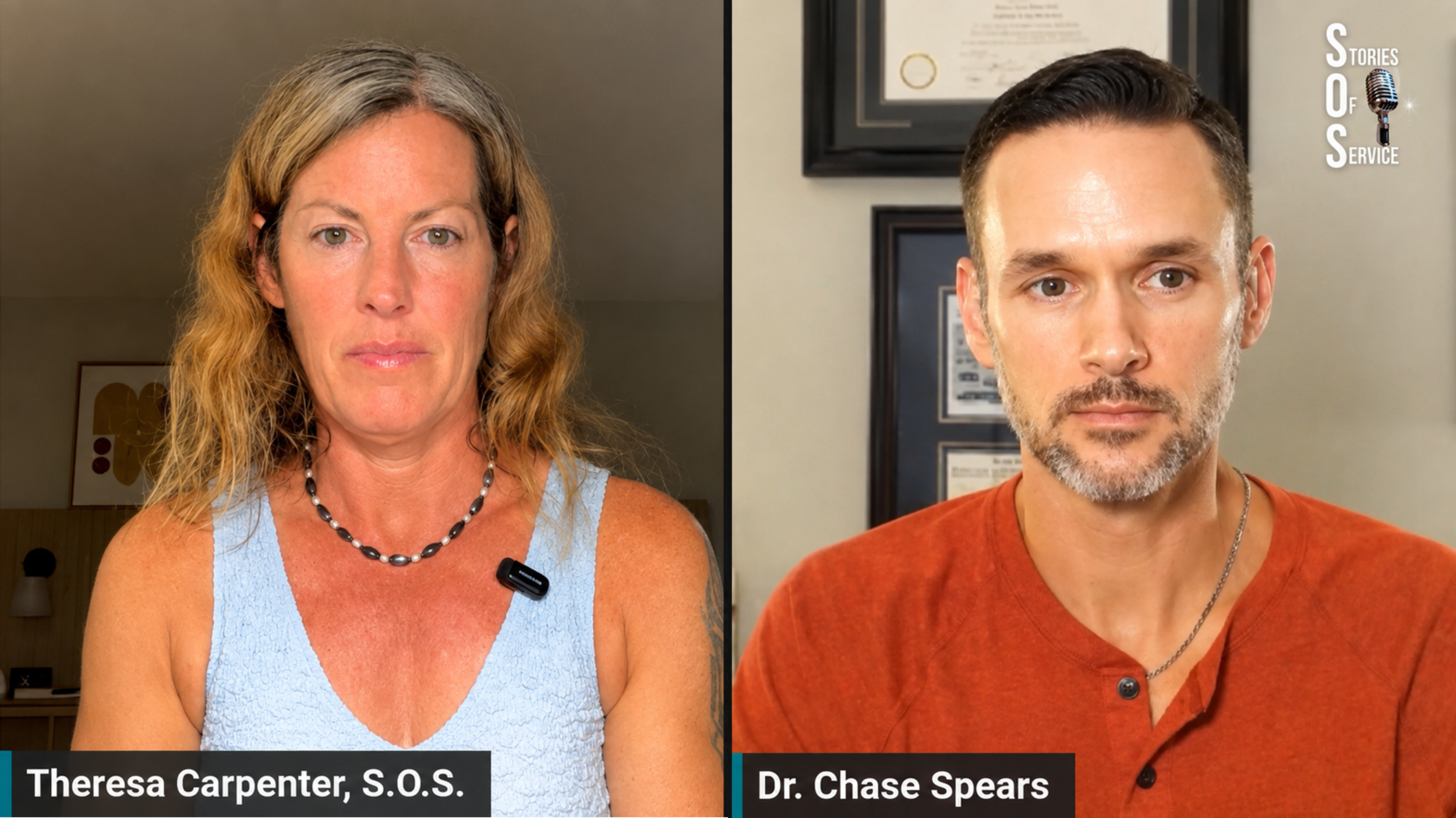
The United States military has long been revered as the ultimate meritocracy—a lethal, disciplined force where standards are absolute and professionalism is paramount. However, a growing chorus of veterans is raising the alarm on a drastic cultural shift within the ranks. On a recent episode of the Stories of Service podcast, host Theresa Carpenter sat down with former U.S. Army Public Affairs Officer Dr. Chase Spears to unpack a controversial and urgent issue: the rapid erosion of military standards.
From the rise of active-duty social media influencers to the polarizing impact of Diversity, Equity, and Inclusion (DEI) initiatives, Carpenter and Spears argue that the modern military is facing a crisis of identity. Their conversation offers a raw, unfiltered look at what happens when political pressure and digital clout take precedence over good order, discipline, and combat readiness.
The Social Media Epidemic and the Uniform
One of the most visible symptoms of declining military standards is playing out on smartphones across the globe. Carpenter recently launched a highly publicized campaign exposing active-duty service members who use their uniforms for digital clout. The trend includes troops posting risqué photos, twerking in uniform, and using their military affiliation to secure commercial brand deals and product endorsements.
This behavior is not just culturally jarring; it represents a direct violation of traditional military regulations regarding good order and discipline. Carpenter notes that the global stage makes this uniquely embarrassing for the United States. When visiting NATO allies, she observed that foreign militaries are not struggling with this level of public insubordination and unprofessionalism.
The consequences of this digital free-for-all reached a dark climax during the shocking assassination of Charlie Kirk. Both Carpenter and Spears recounted the horrifying reality of witnessing active-duty service members—including a high-ranking Colonel in the Office of the Chief of Public Affairs—openly cheering for the assassination online. While hundreds of investigations were reportedly launched, the fact that service members felt emboldened to publicly celebrate political violence points to a severe breakdown in foundational discipline and basic social media training.

GUEST BIO: WHO IS DR. CHASE SPEARS?
Dr. Chase Spears is a scholar, U.S. Army veteran, and public commentator specializing in public relations, military culture, and civil-military relations.
Core Background
Military Career: Former U.S. Army Public Affairs Officer (PAO) and combat veteran with extensive experience handling military communications.
Academic Credentials: Earned a Ph.D. and completed an Army-funded fellowship at Georgetown University, focusing his research on institutional communication and organizational culture.
Current Work & Media
Podcast: Host of The Finding Your Spine Podcast, covering institutional ethics, leadership, public policy, and defense issues.
Public Commentary: Operates as an independent rhetorician analyzing military readiness, social media conduct among service members, and internal Department of Defense policies (including DEI and personnel standards).
The Burden of the Veteran’s Voice
Why does it take retired veterans to call out these glaring issues? According to Dr. Spears, the current active-duty environment is stifling to independent thought and critical institutional review.
During his time as an Army Public Affairs Officer, Spears realized that his desire to analyze and improve institutional communication was viewed as a threat rather than an asset. He was explicitly told that his only job was to parrot the official viewpoints of the institution. Facing a future of transitioning from "green handcuffs" (military service) to "gray handcuffs" (civilian government contracting), Spears chose to strike out on his own.
Veterans like Spears and Carpenter represent a crucial safety valve for the military. Once free from the threat of administrative retaliation, they possess the freedom to publicly dissect policies that active-duty troops can only whisper about. They view speaking out not as an act of defiance, but as a solemn duty to the institution they love. By exposing uncomfortable truths, they hope to inspire future leaders who currently lack the rank or the top cover to challenge the status quo.
Misplaced Priorities: DEI, Transgender Policy, and Readiness
The conversation took a sharp turn into the deeply contentious realm of military personnel policies. Both veterans expressed profound frustration with the Pentagon's hyper-focus on Diversity, Equity, and Inclusion, arguing that identity politics inherently divide a force that relies on absolute cohesion.
A primary point of contention is the military's policy on transgender service members. Spears argues against the policy from both a philosophical and practical standpoint. Philosophically, he views the mandated acceptance of shifting gender identities as a departure from reality—a coerced moral compliance where troops are forced to adopt language and accept living conditions (such as shared showers with biological members of the opposite sex) that compromise their comfort and values.
From a practical, readiness-based perspective, Spears points out that military service requires individuals capable of living highly sacrificial, physically grueling lives in austere combat environments. The ongoing medical requirements for transgender individuals—including specialized medications, surgeries, and therapeutic regimens—are fundamentally incompatible with deployment readiness. Carpenter and Spears argue that the military exists to project lethal force and protect the nation, not to serve as a social experiment or to accommodate individualized lifestyle demands at the expense of taxpayer funds and unit readiness.
Furthermore, they argue that the narrative of "record-breaking recruiting" is a smoke screen. Hitting recruitment goals by lowering entry standards—such as waiving high school diploma requirements—does not equal a stronger military. Sacrificing quality for quantity dilutes the talent pool and ultimately weakens the force.
The Crisis of Leadership and the Paralysis of Accountability
Perhaps the most damaging element of this cultural shift is the chilling effect it has had on military leadership. Troops genuinely crave discipline, structure, and accountability. They want to be sharpened by leaders who care enough to correct their mistakes. Yet, today’s mid-level and senior leaders are increasingly paralyzed by the fear of administrative reprisal.
Carpenter shared a poignant personal anecdote from her time as a department head. When she attempted to hold her team accountable to basic daily production standards using a simple tracking spreadsheet, she was met with intense pushback. Rather than rising to the occasion, subordinates leveraged the administrative complaint system, seeking refuge with weaker leaders to avoid the workload. Carpenter was ultimately forced to lower her standards just to survive the tour without having her career destroyed.
This is the reality of the modern military grievance culture: the process is the punishment. Leaders are terrified of enforcing standards—particularly across demographic lines—because doing so invites grueling Equal Opportunity (EO) or Inspector General (IG) investigations. When leaders are too afraid to lead, the unit defaults to the lowest common denominator. Troops are pulled away from their actual jobs for DEI meetings and administrative distractions, leaving the core mission neglected.
WATCH FULL EPISODE HERE
A Call for a Return to Lethality
The military is not a corporate workplace, nor is it a platform for personal branding or social engineering. It is the ultimate instrument of national defense. The insights shared by Theresa Carpenter and Dr. Chase Spears serve as a stark warning: if the armed forces continue to prioritize influencer culture, political correctness, and identity politics over absolute lethality and accountability, the institution will crumble from within. Fixing the military will require more than just changing policies at the Pentagon; it will require a fearless class of leaders willing to enforce the rules, weather the storm of complaints, and demand greatness from every single person wearing the uniform.
Editor’s Note
This article examines a deeply contested conversation about military culture, leadership, social media, personnel policy, and the standards expected of those who serve in uniform. Drawing from a Stories of Service podcast discussion between Theresa Carpenter and Dr. Chase Spears, it presents their perspectives and concerns about the direction of the U.S. military.
Some of the views expressed—including those concerning social media conduct, DEI initiatives, transgender service policies, recruiting standards, and military leadership—are highly political and may be disputed. They are presented here as the perspectives and experiences shared by the podcast guests, not as independently verified conclusions or official positions of the U.S. military.
The goal is to encourage thoughtful discussion about a fundamental question: How can the military preserve professionalism, accountability, readiness, and public trust while navigating an increasingly complex cultural and political environment?
Readers are encouraged to consider the arguments presented, examine the broader context, and engage in constructive dialogue about the future of military service.
Learn More
👥 Connect with Stories of Service Podcast
🌐More of Dr. Chase Spears - https://chasespears.com/