They Tried to Break Him. He Fought Back with Bradley Geary
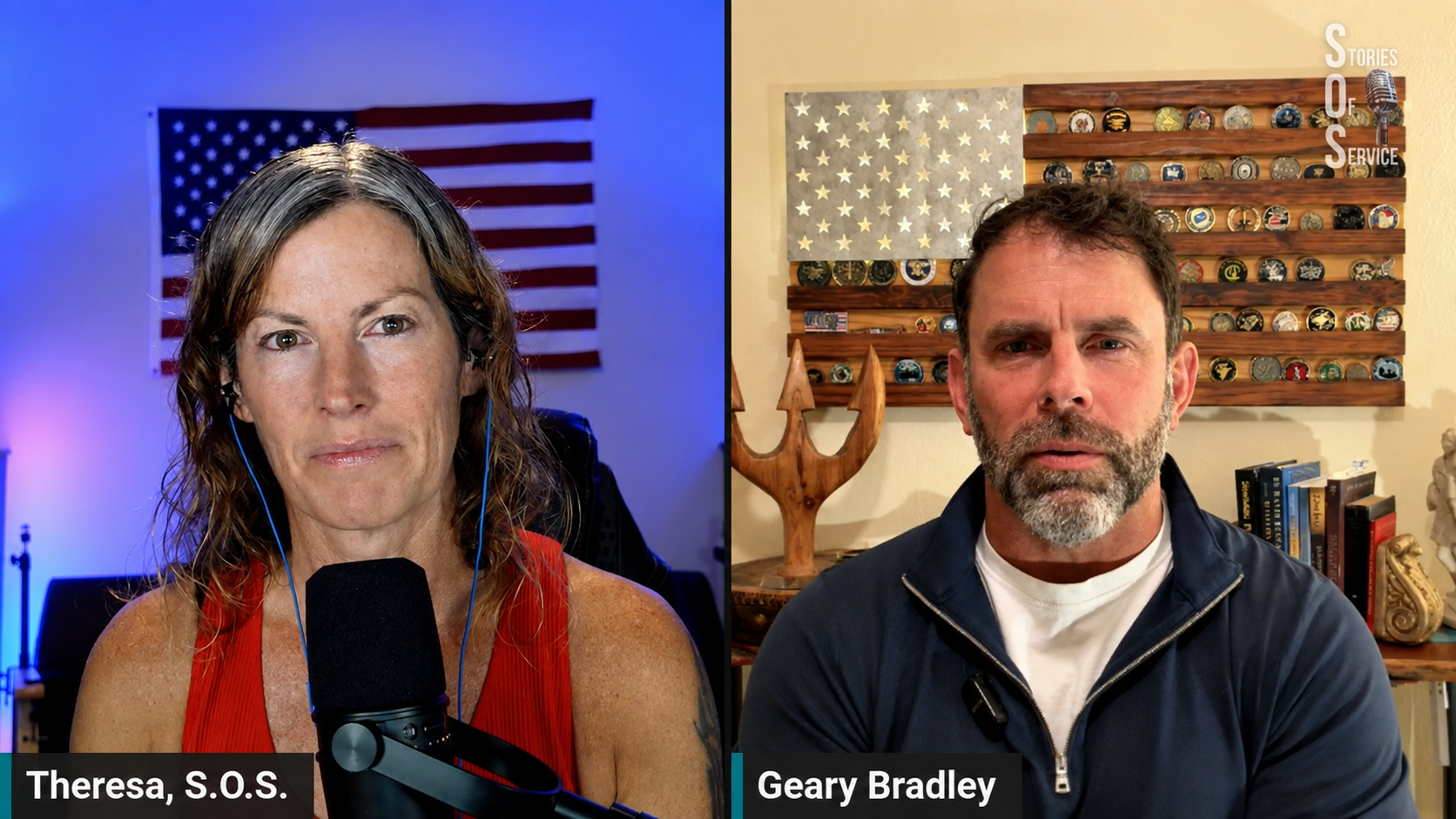
What happens when a decorated Navy SEAL officer spends decades serving the institution he believes in—only to find himself fighting that same institution to protect his reputation, his team, and what he believes is the truth?
That question sits at the center of retired Navy SEAL Captain Bradley Geary’s conversation with Theresa Carpenter on the Stories of Service podcast.
Geary spent roughly 25 years in Naval Special Warfare, serving in leadership positions that included command of SEAL Delivery Vehicle Team One and Naval Special Warfare Basic Training Command, home of BUD/S. His career eventually placed him at the center of one of the most controversial discussions surrounding SEAL training, accountability, leadership, and the death of candidate Kyle Mullen following Hell Week.
But Geary’s story is about more than one investigation.
It is about Navy SEAL leadership, military accountability, institutional trust, moral courage, and what happens when standing for your values carries a personal cost.
From the Naval Academy to the Navy SEAL Teams
Geary did not grow up expecting to join the military.
Raised in Central Florida, he was a competitive swimmer when the United States Naval Academy began recruiting him. At first, military life did not seem like a natural fit. He disliked the idea of rigid rules, strict grooming standards, and being told where to go and what to do.
His high school swim coach encouraged him to look more closely at the opportunity.
What began as a practical decision eventually became a calling.
Geary originally expected to serve his required commitment and leave the Navy. Instead, he stayed for approximately 25 years.
Throughout that career, mentors played an enormous role in shaping how he viewed leadership. Senior enlisted leaders, fellow officers, coaches, faith leaders, and family members all influenced the person and commander he became.
For Geary, leadership was never built through a single assignment or achievement.
It was built over years of small choices.
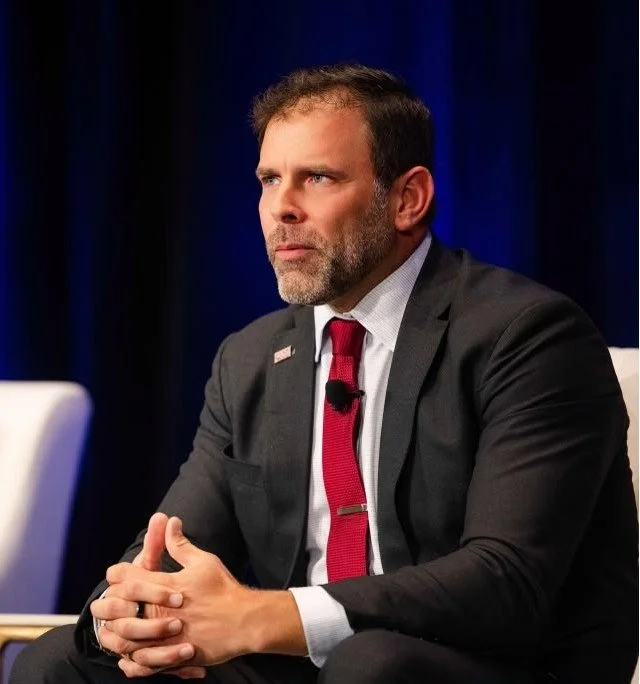
GUEST BIO: WHO IS BRADLEY GREARY?
Bradley Geary is a retired U.S. Navy SEAL Captain, former commanding officer, leadership consultant, and public speaker who served approximately 25 years in Naval Special Warfare.
During his career, Geary held senior leadership positions including command of SEAL Delivery Vehicle Team One and Naval Special Warfare Basic Training Command, which oversees BUD/S training. He also received the James Bond Stockdale Award for Inspirational Leadership, one of the Navy’s highest honors for leadership.
Geary later became involved in a highly public dispute with the Navy following the death of SEAL candidate Kyle Mullen after Hell Week. Geary challenged the investigative and administrative actions surrounding the case, arguing that evidence and accountability had been mishandled. After a nearly three-year fight, the proceedings against him were ultimately dropped, and he was permitted to retire honorably as a captain.
Today, Geary has carried those experiences into leadership consulting, keynote speaking, and writing, with a particular focus on moral courage, ethical leadership, accountability, and the responsibility to tell the truth when doing so carries a personal
How Navy SEAL Leadership Is Built Through Failure
One of Geary’s strongest leadership lessons is that people do not suddenly develop courage when a crisis arrives.
They prepare for it beforehand.
Throughout his Navy SEAL career, Geary encountered situations that required him to accept criticism, acknowledge mistakes, challenge decisions, and sometimes push against the direction of others.
He compares character development to physical training.
Muscles grow stronger because they are stressed, broken down, rested, and challenged again. He believes leadership develops through a similar process.
That means failure matters.
Rather than expecting leaders to be perfect, Geary argues that organizations should teach people how to respond when they compromise their standards or make mistakes.
Recognizing failure, accepting responsibility, and learning from it can produce stronger leaders.
That philosophy became central when Geary faced the most difficult leadership crisis of his career.
The Death of Navy SEAL Candidate Kyle Mullen
While Geary was serving as commanding officer of Naval Special Warfare Basic Training Command, Navy SEAL candidate Kyle Mullen died following Hell Week.
Geary described the event as a tragedy that immediately placed his command into crisis response.
The initial focus was Mullen’s family and understanding what had happened.
According to Geary’s account, investigators later recovered multiple performance-enhancing substances from Mullen’s vehicle. Geary says early investigations examined whether those substances may have contributed to Mullen’s death and whether the command or medical staff failed to meet required standards.
He maintains that those early reviews did not find evidence that instructors had operated outside the approved BUD/S training curriculum.
Geary also described the policies surrounding performance-enhancing drugs as explicit. Candidates were required to disclose medication use and agree not to take substances outside those prescribed by Navy medical professionals.
As the investigation continued, however, Geary says the narrative surrounding the case began to change.
Military Accountability or Institutional Scapegoating?
Geary does not argue that commanding officers should escape responsibility simply because they did not personally cause an incident.
In fact, he says he initially offered to end his career.
As commanding officer, Geary believed he carried responsibility for what happened under his command. If his removal protected Naval Special Warfare and allowed the organization to move forward, he was initially prepared to accept that outcome.
What changed was his belief that the Navy was no longer simply holding leaders accountable.
He believed the process was becoming a search for someone to blame.
According to Geary, one major concern involved public statements about whether drugs contributed to Mullen’s death. He believed the available evidence did not support definitive claims either way, particularly because the substances themselves and their potential involvement became central disputes in the investigation.
For Geary, the issue became much larger than protecting his own career.
It became a question of military ethics and institutional integrity.
Can an institution demand honesty from its service members while failing to apply the same standards to itself?
Why Moral Courage Can Be Harder Than Physical Courage
One of the most compelling themes in Geary’s interview is the distinction between physical courage and moral courage.
Navy SEALs are trained to face physical danger.
Combat requires service members to trust their teammates, perform under extreme pressure, and accept risks most civilians will never encounter.
But Geary argues that moral courage can be even more difficult.
When someone challenges their own institution, the threat is different.
The person may risk their reputation, friendships, career, professional identity, financial security, and membership in the community that has defined much of their life.
On the battlefield, the team is beside you.
During an institutional conflict, the team may suddenly distance itself from you.
Geary describes experiencing that isolation firsthand.
His broader lesson for military and civilian leaders is that organizations must teach people how to navigate moral dilemmas—not simply physical danger.
Leadership requires the ability to stand apart from the group when the group is moving in the wrong direction.
Bradley Geary’s Decision to Fight Back
Geary says he did not immediately take his case public.
His first approach was internal.
He appealed to senior leaders, asked questions, shared evidence, and attempted to find a way to resolve the situation without creating a public confrontation.
At one point, he described sitting down with senior members of the SEAL community and laying out his concerns, evidence, and possible ways forward.
His goal, he said, was to correct what he believed was an inaccurate narrative while protecting Naval Special Warfare from unnecessary public damage.
When those efforts failed, the fight expanded.
Geary and his family decided they would publicly challenge the process.
The battle included legal representation, congressional engagement, public advocacy, and major media appearances.
One significant issue emerged while Geary's defense was preparing for a Board of Inquiry. He says his team discovered that the contents of substances recovered from Mullen’s vehicle had not initially been tested.
His defense demanded testing.
Geary believes that discovery further undermined the case against him and contributed to the eventual decision to end the administrative actions.
After nearly three years of fighting, the Navy ultimately dropped the proceedings.
Even then, his retirement remained uncertain.
Geary says he received confirmation only shortly before his retirement celebration that he would be permitted to retire honorably as a Navy captain.
What the Navy SEAL Trident Really Represents
For Geary, the controversy ultimately became a question about the meaning behind military symbols.
The Navy SEAL Trident is not valuable because of the metal used to manufacture it.
Its value comes from what it represents.
Honor.
Courage.
Commitment.
Brotherhood.
Service.
If those principles disappear when they become inconvenient, Geary argues, then the symbol itself becomes meaningless.
That realization played a major role in his decision to continue fighting rather than quietly retiring.
He believed walking away would mean abandoning the very values the Trident was supposed to represent.
WATCH FULL EPISODE HERE
Bradley Geary’s Next Mission: Leadership and Moral Courage
Today, Geary has transitioned his experiences into a new mission.
He works in leadership consulting and public speaking and is preparing a book co-authored with his family about their experience.
Rather than focusing solely on those he believes failed during the controversy, Geary says the book highlights people who demonstrated integrity when doing so carried significant personal risk.
He hopes those stories will offer lessons for future military leaders and anyone navigating difficult ethical decisions.
His broader message is that leadership is a discipline.
It must be studied, practiced, questioned, and refined.
Leaders must remain humble enough to recognize their own weaknesses while developing the courage to act when circumstances become difficult.
Leadership Matters Most When Doing the Right Thing Costs You
Bradley Geary’s story raises questions that extend well beyond Naval Special Warfare.
What happens when loyalty conflicts with truth?
When does accountability become scapegoating?
How should leaders respond when they believe their institution is protecting a narrative rather than pursuing facts?
And how much are we willing to sacrifice for principles we claim to believe in?
For Geary, the ultimate lesson is that leadership cannot simply be measured by rank, awards, combat experience, or authority.
Leadership is tested when doing the right thing becomes uncomfortable.
It is tested when belonging to the team requires silence.
And it is tested when telling the truth may cost you the very career you spent decades building.
That is where moral courage begins.
Editor’s Note
Bradley Geary’s story raises difficult questions about leadership, accountability, loyalty, and institutional trust. This conversation is not about suggesting that leaders should be free from scrutiny when tragedy occurs. It is about examining whether accountability can remain credible when facts, due process, and competing evidence are disputed. Geary’s experience offers a powerful case study in moral courage: what happens when a leader believes honoring the values of an institution requires challenging the institution itself? As with every Stories of Service conversation, the goal is to create space for difficult discussions while recognizing the human cost carried by service members, their families, and those entrusted to lead them.
Learn More
👥 Connect with Stories of Service Podcast
🌐Find Bradley- https://thekeynoteagency.com/speakers...