Ty Pinkins: From the Mississippi Delta to the White House
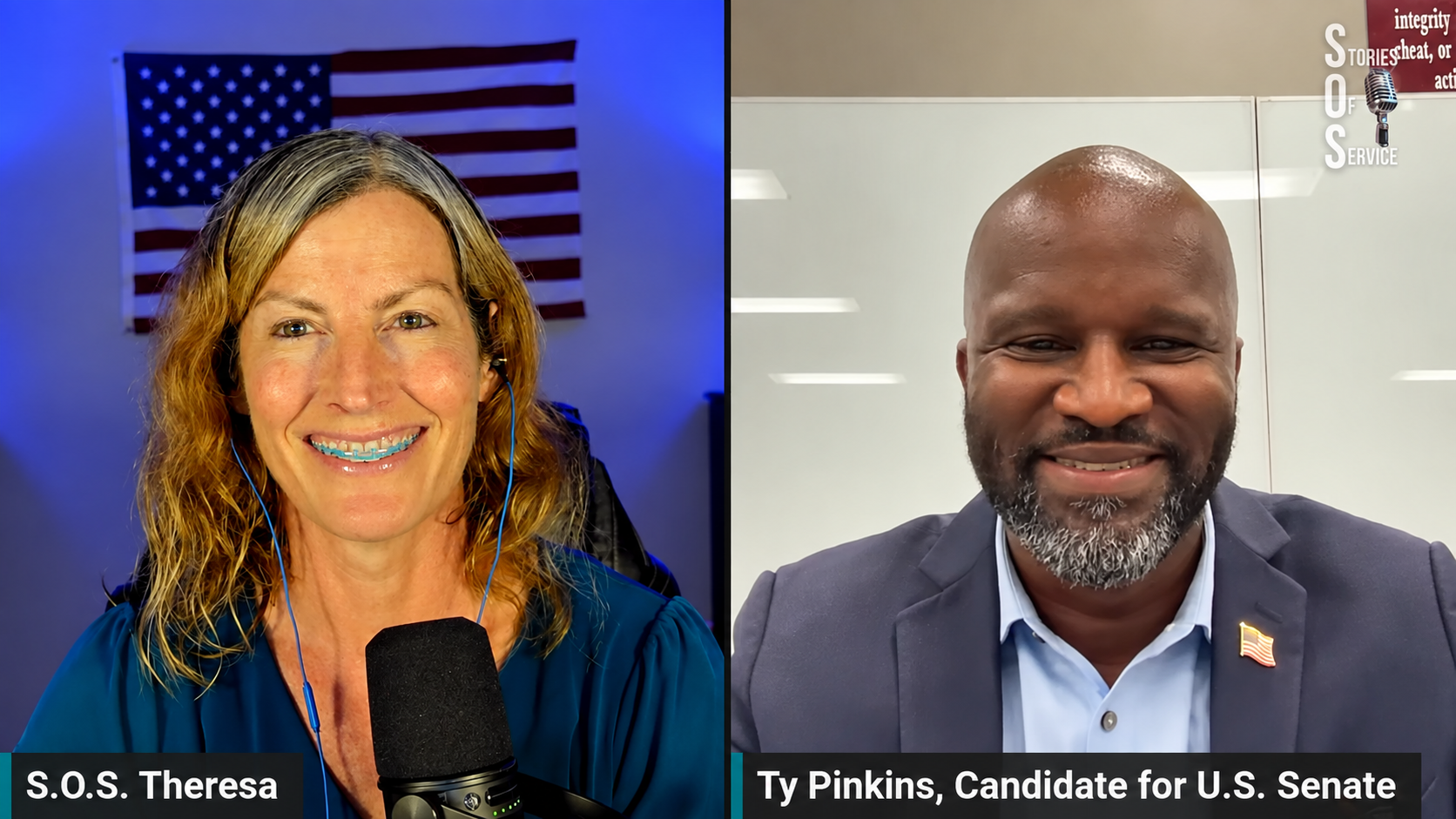
What makes someone go from chopping cotton in the Mississippi Delta to believing he can represent that same state in the United States Senate?
That question was at the heart of my conversation with Ty Pinkins on S.O.S. Stories of Service. His journey—from poverty in Rolling Fork, Mississippi, to a 21-year Army career, three combat tours, the White House, Georgetown Law, and public-interest advocacy—sounds almost impossible when reduced to a list of accomplishments.
But Ty’s story is not simply about how far he traveled. It is about why he came home.
Now an author, attorney, and independent candidate for the U.S. Senate from Mississippi, Ty is asking voters to reconsider what service and political leadership should look like. His book, 23 Miles & Running: My American Journey from Chopping Cotton in the Mississippi Delta to Sleeping in the White House, captures that remarkable path. Our discussion went beyond the book to explore the experiences that shaped his commitment to Mississippi and his decision to challenge the two-party system.
From Delta Poverty to the United States Army
Ty grew up as the son of a tractor driver. His mother left school at 15 when she gave birth to him, while his stepfather left school in sixth grade and never learned to read. Despite those circumstances, Ty became the first person in his family to graduate from high school.
His family found a way to send him to Tougaloo College, but poverty followed him there. Ty recalled surviving on bologna, mustard, and water and donating plasma to afford groceries. Near his third year, he realized he could no longer continue that way.
While passing a recruiting station in Vicksburg, he chose the Army door. He wanted challenge, an opportunity to travel, and a way to serve his country. That decision became a 21-year career.
As a communications soldier, Ty maintained the systems that kept military units connected. After his first Iraq deployment, he became a warrant officer. Yet his favorite role was serving as an E-5 sergeant and squad leader because it placed him closest to his soldiers. That experience became critical when, as a staff sergeant, he was unexpectedly placed in charge of a platoon preparing for combat. He relied on what he had learned to guide the team through a 15-month deployment and bring them home safely.
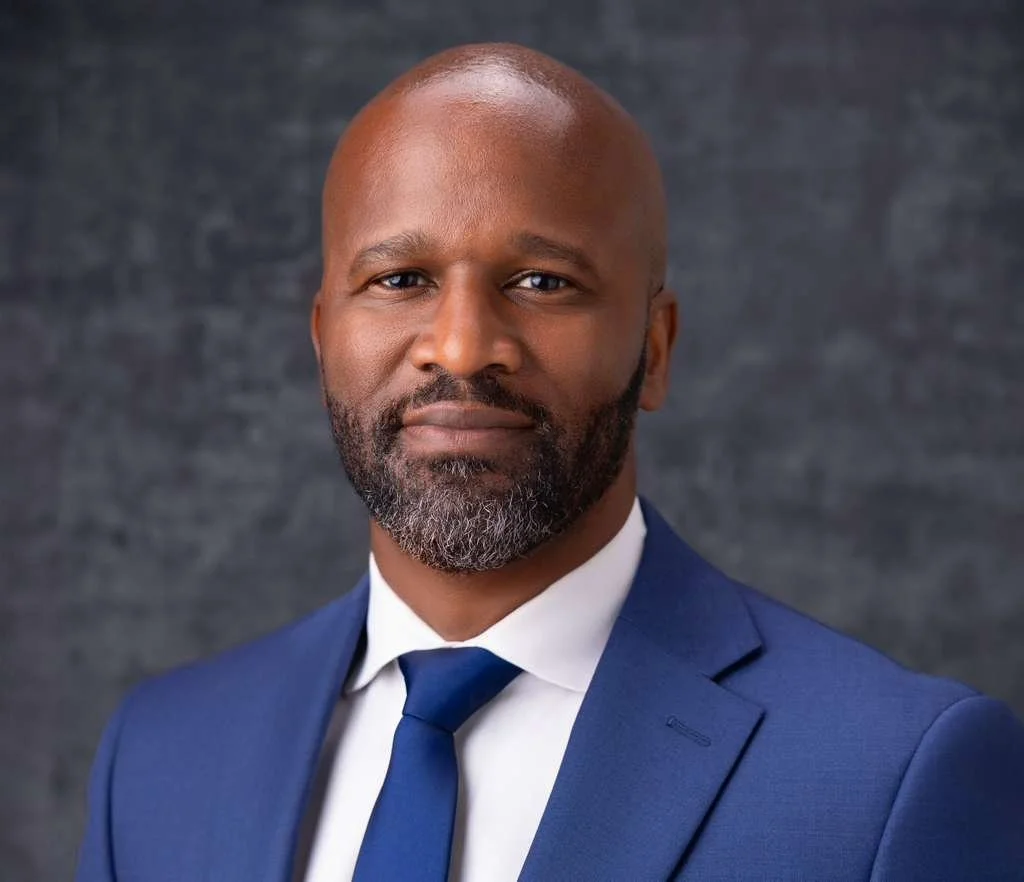
GUEST BIO: WHO IS TY PINKINS?
Ty Pinkins is a retired U.S. Army Chief Warrant Officer, attorney, author, and community advocate from Rolling Fork, Mississippi. Raised in poverty, he chopped cotton as a teenager and became the first person in his family to graduate from high school. Financial hardship eventually led him to enlist in the Army, beginning a 21-year military career that included three combat tours, advancement from enlisted soldier to warrant officer, and service as a communications aide to President Barack Obama.
After retiring from the military, Pinkins earned a Juris Doctor and an LL.M. in National Security Law from Georgetown University Law Center. He later returned to Mississippi to provide legal assistance to underserved residents facing eviction, medical debt, predatory lending, and other challenges. He also advocated for Black farmworkers who alleged wage discrimination. Pinkins is the author of 23 Miles & Running and an independent candidate for the U.S. Senate, continuing a life centered on leadership, justice, and public service.
Leadership Built on Service, Not Status
One lesson from Ty’s military career continues to guide him: the Army leadership values represented by the acronym LDRSHIP—loyalty, duty, respect, selfless service, honor, integrity, and personal courage.
Ty believes those values are missing from Washington. As a prior-enlisted Navy veteran, I understood his point immediately. Military service teaches people to make decisions under pressure, accept responsibility for others, and move forward without waiting for perfect conditions. Those lessons remain long after the uniform comes off.
From the White House to Georgetown Law
Ty’s military career culminated in an extraordinary assignment as a communications aide to President Barack Obama. Because someone from the communications team remained close to the president at all times, Ty sometimes slept inside the White House while on duty.
One morning, after completing his shift, he walked across Washington and took the law school admission test. That step eventually led him to Georgetown University Law Center, where he earned his law degrees.
For Ty, becoming a lawyer was not about joining an elite firm. He had seen how poverty and limited legal representation could determine a person’s future. Through the Justice Court Navigator Program, he assisted low-income residents in six Delta counties who faced eviction, unpaid medical bills, predatory lending disputes, and intimidating court proceedings.
One case became especially significant. Eight Black farmworkers came to Ty believing they had been cheated out of their wages. After investigating, he testified before Congress about a policy he said enabled the abuse. When federal leaders did not act, he returned to Mississippi, sued the farm owners, and won. That experience helped propel him toward public office.
Why Ty Pinkins Chose to Run as an Independent
Ty was raised as a Democrat and previously ran for office under that party. However, his experience left him convinced that both major parties are too influenced by wealthy donors, political gatekeepers, and pressure to protect their own power.
His decision to run as an independent is not the easy path. He described having to collect more than 1,000 voter signatures and verify them through county registrars, while major-party candidates faced simpler ballot-access requirements. Ty also says he refuses money from millionaires, billionaires, super PACs, and lobbyists because he wants voters to evaluate a candidate who is not financially tied to those interests.
Ty also described a group of independent veteran Senate candidates who hope to disrupt partisan gridlock and demand reforms such as restrictions on congressional stock trading and changes to campaign finance.
Mississippi Voters Deserve Real Debate
Throughout the campaign, Ty said Mississippians consistently raised the same concerns: healthcare, housing, education, college costs, and supporting their families. These are not exclusively Democratic or Republican needs. They are everyday American needs.
Yet voters cannot make an informed decision if candidates refuse to face one another. Ty told me that proposed nonpartisan forums at Millsaps College and the University of Southern Mississippi did not move forward as full candidate debates after his opponents declined to participate.
Debates allow voters to compare ideas, examine plans, and see how candidates respond when challenged. Anyone asking to serve in the U.S. Senate should be willing to defend their positions publicly.
WATCH FULL EPISODE HERE
A Return Home—and a Different Kind of Service
What stayed with me most was Ty’s decision to return to the Mississippi Delta. He could have built a life almost anywhere. Instead, he came home to represent farmworkers, families facing eviction, and residents who often feel forgotten.
Near the end of our conversation, Ty described visiting a veteran who became emotional because no politician had ever sat in his living room and asked what was happening in his life. That moment captures the kind of leadership many Americans are looking for: present, personal, and accountable.
Whether voters agree with every part of Ty’s platform is for them to decide. But his journey offers a powerful reminder that service is not defined by a title, uniform, political party, or proximity to power. It is defined by whom you choose to stand beside—and whether you are willing to return home and do the work.
Leadership Matters Most When Doing the Right Thing Costs You
Bradley Geary’s story raises questions that extend well beyond Naval Special Warfare.
What happens when loyalty conflicts with truth?
When does accountability become scapegoating?
How should leaders respond when they believe their institution is protecting a narrative rather than pursuing facts?
And how much are we willing to sacrifice for principles we claim to believe in?
For Geary, the ultimate lesson is that leadership cannot simply be measured by rank, awards, combat experience, or authority.
Leadership is tested when doing the right thing becomes uncomfortable.
It is tested when belonging to the team requires silence.
And it is tested when telling the truth may cost you the very career you spent decades building.
That is where moral courage begins.
Editor’s Note
This article is based on Theresa Carpenter’s conversation with Ty Pinkins on S.O.S. Stories of Service. It examines how his experiences in the Mississippi Delta, the military, law, and politics shaped his views on leadership and public service. The political opinions and campaign claims presented are Pinkins’ own and do not constitute an endorsement by Carpenter or the podcast. Readers are encouraged to research every candidate and make an informed decision.
Learn More
👥 Connect with Stories of Service Podcast