Women in combat: Have Drones Changed The Debate?
For decades, the debate over women in combat has revolved around one question: Can women meet the demands of ground warfare? But when that conversation becomes a contest between political talking points, we lose sight of the people whose lives depend on getting the answer right.
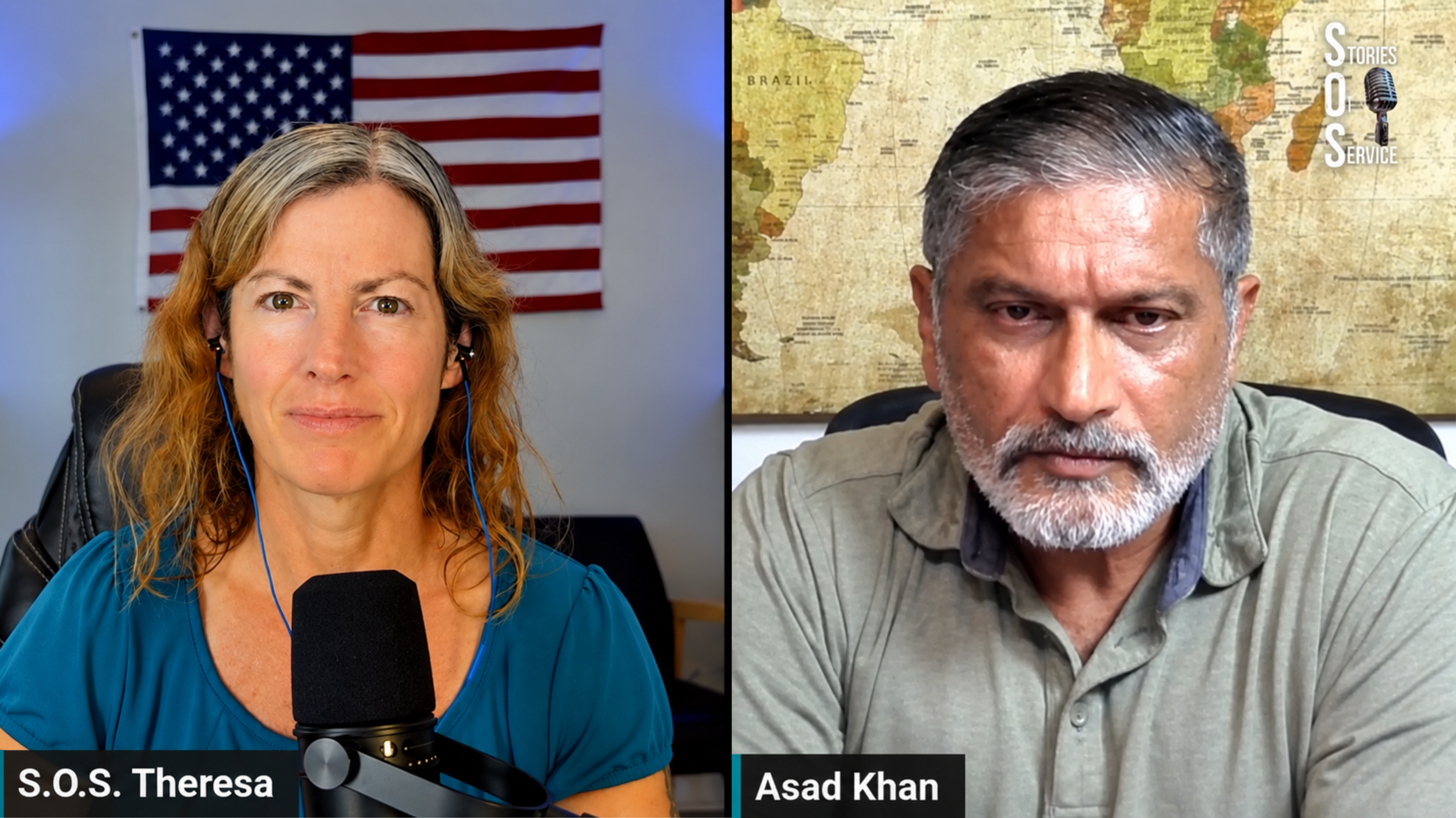
On this episode of S.O.S. Stories of Service, I welcomed Marine veteran Asad Khan, author of Betrayal of Command, to discuss combat readiness, physical standards, drone warfare, and military leadership. His experience commanding troops in Afghanistan brings a perspective that challenges easy assumptions on either side.
We do not agree on everything. That is part of why these conversations matter. I wanted to move beyond slogans and ask a more useful question: What does the mission require, and who can meet those requirements?
Women in Afghanistan: Service Under Fire
Asad described arriving in Afghanistan in 2004 and recognizing an immediate operational problem. His male Marines could not search local women without risking serious damage to relationships with the population. Women serving in the Navy and Marine Corps volunteered to help fill that need.
Their contribution was practical and consequential. They helped his unit operate in a cultural environment where ignoring local customs could undermine the mission.
One story involved a nighttime medical evacuation after Afghan militia members were injured in vehicle accidents along mountain roads. Asad recalled a woman Marine pilot landing a helicopter in difficult, dusty conditions and evacuating the casualties.
For the Afghan partners watching, that rescue demonstrated that the Marines would take risks to protect them. The pilot's skill helped save lives and strengthen trust.
He also remembered a woman Marine officer moving uphill during an ambush alongside his troops. In his telling, she acted because she understood her responsibility as an officer. These experiences left him with deep respect for the women who served with his battalion.
Physical Standards Must Reflect the Mission
Respect for those women did not erase Asad's concerns about infantry requirements. He emphasized the strain of carrying weapons, ammunition, water, protective equipment, and other supplies across difficult terrain.
That burden affects everyone. A service member may need to move under fire, climb with heavy equipment, or help evacuate a wounded teammate while already exhausted.
Asad's argument was that standards should follow the demands of a specific military occupation. The abilities required of an infantry Marine differ from those required in other specialties, even when every role contributes to combat effectiveness.
He also acknowledged women who complete demanding military training and said he would fight alongside women who meet the required standard.
For me, the essential question is whether an assessment measures the work people will actually perform. A standard should explain what the mission requires and give individuals a fair opportunity to demonstrate that capability.
Does Drone Warfare Replace Physical Readiness?
Drones and other technologies raise important questions about how we define a combat-ready force. Technical skill, judgment, and the ability to interpret information all deserve serious consideration.
But Asad pushed back against the suggestion that technology makes ground combat's physical demands disappear. He emphasized the final movement toward an enemy position, where troops may still have to maneuver, carry equipment, and fight at close range.
Our discussion highlighted why combat readiness cannot be reduced to a single trait. Operating sophisticated technology and enduring physically demanding conditions can belong to the same battlefield.
I believe we should examine how warfare changes without assuming that every older requirement becomes irrelevant. The task is to understand which capabilities a mission needs, then prepare people to deliver them under pressure.
Unit Cohesion Begins With Trust
Asad also challenged the idea that commitment or reliability belongs to one gender. He described women who performed exceptionally and others who struggled. He recounted disappointment with male personnel as well.
His experiences brought the conversation back to individual performance and responsibility. A unit depends on people knowing their teammates can contribute when conditions become dangerous.
That trust can weaken when service members believe expectations are inconsistent or leaders overlook deficiencies. It can grow when leaders apply clear requirements and take preparation seriously.
Equipment belongs in this discussion, too. Asad raised concerns about equipment designed around a limited range of body sizes. Evaluating performance responsibly means examining the conditions in which people are expected to succeed, including whether their equipment fits.
Military Leadership Needs Meaningful Evaluation
Our conversation eventually reached a question that deserves equal attention: How do we evaluate the people entrusted to lead these forces?
We discussed a joint warfighter evaluation described during the episode as a way to assess officers seeking their first star. Asad supported testing decision-making, communication, and warfighting ability through challenging scenarios.
Drawing on his staff-training experience, he described helping senior officers communicate their intent during exercises. His concern was that rank and polished presentations do not necessarily demonstrate readiness to command under pressure.
I share the frustration behind that concern. Leaders need professional knowledge, humility, and the ability to turn decisions into action. They also need to recognize what they do not know and seek informed advice.
Asad cautioned that an evaluation could become another administrative exercise unless it meaningfully influences selection. That concern asks us to distinguish between introducing a process and creating lasting accountability.
Finding Purpose Beyond the Badge
After retirement, John developed routines and interests that belonged to him—not to the Secret Service.
He became deeply involved in Brazilian jiu-jitsu, where he found humility, friendship, and community. He spent more time with his family, improved his cooking, studied languages, read, journaled, and built a consulting business.
These activities helped him recognize that identity is not limited to one role. A person can be a parent, spouse, friend, student, mentor, athlete, and community member.
Finding a community was especially important. Through jiu-jitsu, church, leadership programs, and other local relationships, John connected with people from different professions, political perspectives, and backgrounds.
They did not need to agree on everything to serve, learn, and help one another.
WATCH FULL EPISODE HERE
Equal Opportunity and Honest Conversations
Toward the end of our discussion, Asad returned to the importance of giving people a chance. He spoke about arriving in the United States as a refugee and the responsibility he felt when entrusted with American sons and daughters.
That perspective stayed with me. Equal opportunity and demanding expectations can exist together when the requirements are relevant, transparent, and applied consistently.
The debate over women in combat deserves honest questions about physical readiness, technical ability, equipment, and leadership. It also deserves respect for the individuals doing the work.
Listen to this episode of S.O.S. Stories of Service for the full conversation with Asad Khan. Keep asking difficult questions, stay engaged in your community, and take care of each other.
Editor’s Note
This conversation invites readers to consider difficult questions about military readiness, equal opportunity, and leadership without reducing them to partisan talking points. Asad Khan’s observations reflect his personal experiences and perspectives; they are not presented as universal conclusions about women or men in uniform. Readers are encouraged to listen to the full episode, weigh differing viewpoints, and consider how clear, mission-relevant standards and accountable leadership can best serve those entrusted with defending our country.
Learn More
👥 Connect with Stories of Service Podcast