Ocean Springs Opened Its Arms to a Ukrainian Family. Now Deportation Could Tear Them Away
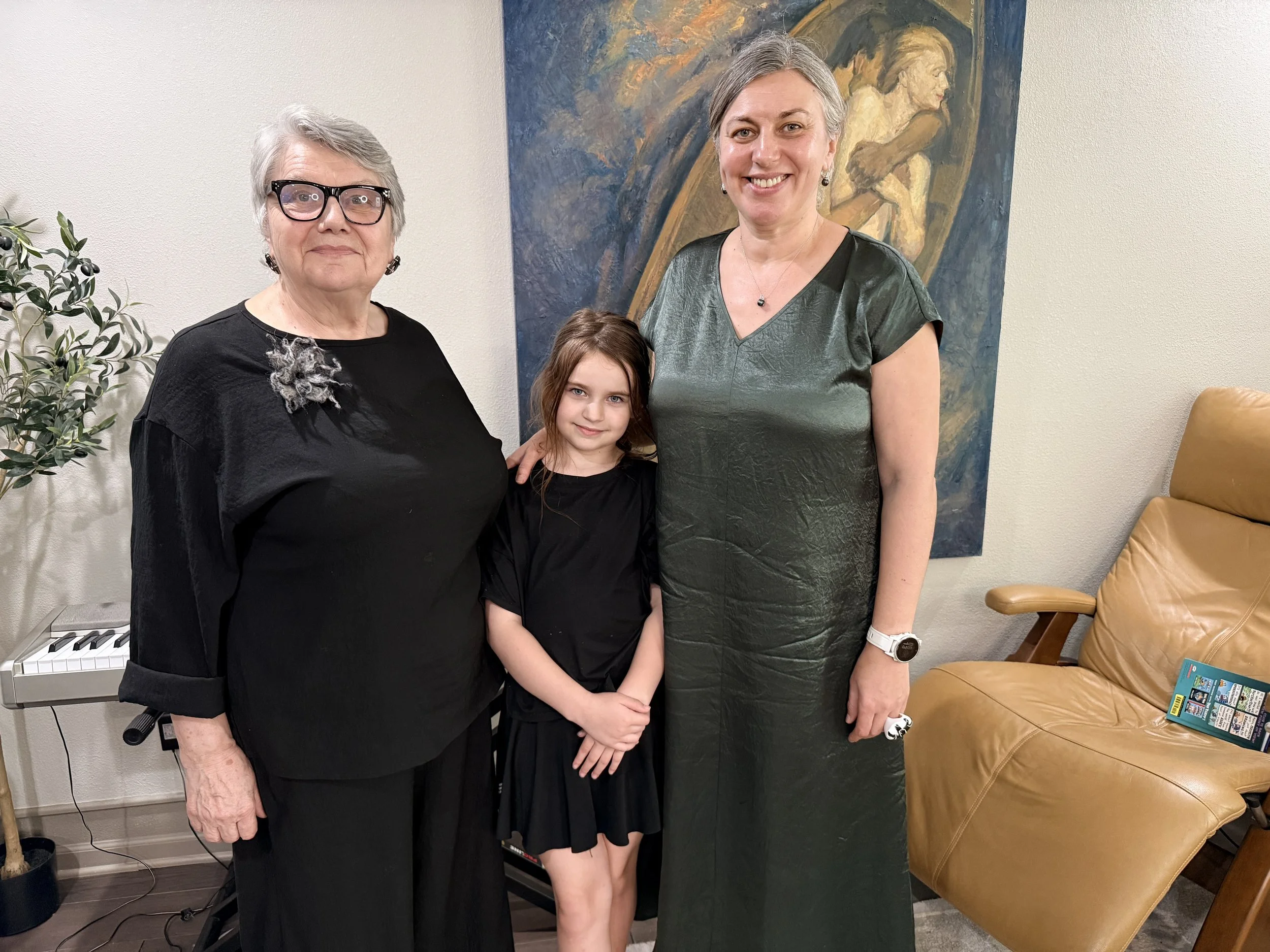
Polina, Kira and Iryna
War rearranges lives in an instant. What it cannot erase is resilience.
In the coastal arts community of Ocean Springs, one Ukrainian family now faces a second upheaval. After fleeing war and rebuilding their lives on the Mississippi Gulf Coast, they may soon be forced to leave the place that has become their refuge.
Nearly four years ago, Iryna Gusiuk, her mother Polina, and Iryna’s then three-year-old daughter Kira escaped the Russian invasion of Ukraine. They left behind their home, their careers, and the life they had carefully built.
“I remember that the United States and the United Kingdom warned about the possibility of an invasion,” Iryna says. “But many people in Europe did not believe it because it seemed illogical. I was one of those people.”
Today she sees the world differently.
“War can come to any country. People often believe their borders or their politics will protect them. But that is an illusion.”
War leaves fingerprints long after the bombs stop falling. Now seven years old, Kira still wakes from nightmares. Loud noises, especially Fourth of July fireworks, can send her back to those terrifying early days of the invasion.
Now the stability the family fought to rebuild is once again uncertain. Unless federal protections for Ukrainian refugees continue, the family could be forced to return to a country still scarred by war. Deportation would mean leaving behind the community that helped them heal and the only home Kira truly remembers.
A Life Interrupted
Before the war, Iryna lived in the historic port city of Odesa, where she built a respected career as an artist and educator. She taught art for more than sixteen years, exhibited her paintings internationally, and worked as an interior designer while raising her daughter with the help of her mother.
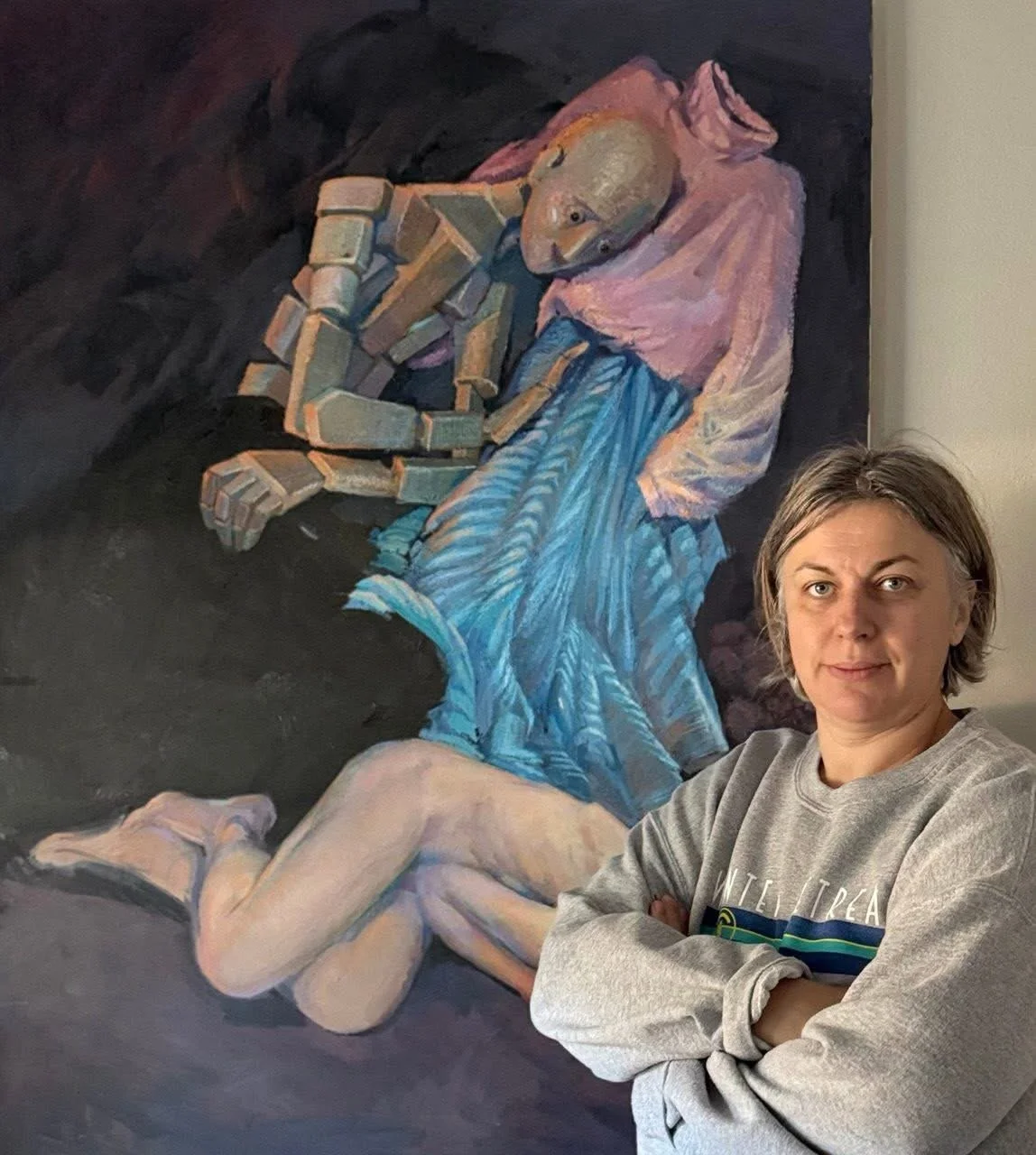
One of Iryna’s paintings
“Shortly after finishing my studies, I had nine exhibitions in cities across Ukraine,” she recalls. “Later my work appeared in London, Poland, and Moscow.”
Art was not simply her profession. It was the center of her life.
“I have always believed that art’s real power is that it asks questions,” she says. “It creates space for conversation. My life was completely connected to art. Teaching, exhibitions, my students, and the artistic community.”
Then the war arrived, and everything changed. Driving toward the border as explosions echoed across the country, three generations of women fled the only home they had ever known.
A Strange New Beginning
Iryna did not choose Ocean Springs. “It simply became part of my story,” she says.
She remembers waking up the first morning after arriving in the United States and feeling a wave of fear. “I thought, what have I done? I am thousands of miles from my home, my friends, my life.”
Even small details felt unfamiliar. The light switches were different. The electrical outlets looked strange. The appliances worked in ways she did not understand.
“It felt like stepping into someone else’s life,” she says.
But slowly, something began to change. As she explored the town, she discovered galleries, art shows, and a community that valued creativity. “For me, as an artist, that meant a lot,” she says.
The deeper transformation came from the people she met.
“In the beginning I noticed there are two kinds of help,” she explains. “Some people say, ‘If you need anything, let me know.’ Those words are kind, but when you arrive from war it is very difficult to ask for help.”
“But there are other people who do something different. They invite you into their lives. They include you in their dinners, their friendships, and their daily routines. Slowly you stop feeling like someone receiving help and start feeling like part of the community.”
A Community Steps In
The family arrived in the United States through Uniting for Ukraine (U4U), a humanitarian program created after the 2022 Russian invasion that allowed displaced Ukrainians to enter the country with the support of an American sponsor.
The Gusiuks are far from alone in this journey. Since its inception, the Uniting for Ukraine program has been a lifeline for a massive surge of displaced people.
Approximately 240,000 Ukrainians have been admitted to the U.S. under the U4U humanitarian parole program. They are part of a broader population of over 510,000 Ukrainian immigrants currently living in the U.S., many of whom arrived following the 2022 invasion.
While the program provided immediate safety, new applications were paused in early 2025. For the hundreds of thousands already here, the two-year parole periods are beginning to expire, leaving many in the same precarious position as Iryna’s family.
For the Gusiuk family, specific support came from the Litke family and the wider Ocean Springs community. They lived with their original sponsor for nearly two years. As that mark approached, local attorney Linda Litke helped ensure the transition to independence was handled respectfully.
Eventually, Linda and her husband Eric, both Navy veterans, welcomed the family into their own home while they searched for a permanent solution. They helped enroll Kira at St. Alphonsus Catholic School.
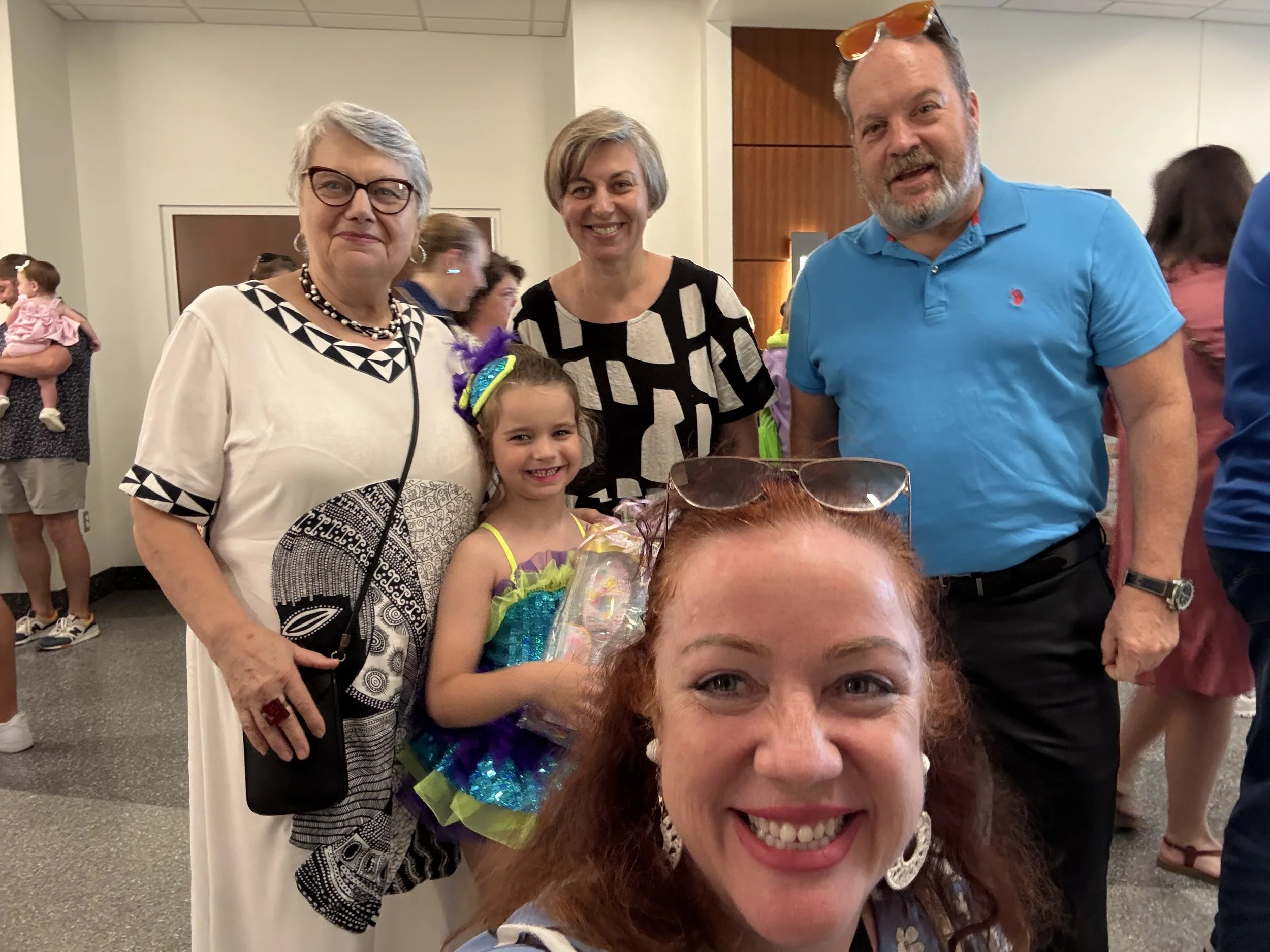
Linda and Eric with family
“I will never forget Kira’s first day at school,” Iryna says. “The children and teachers prepared small hearts in the blue and yellow colors of the Ukrainian flag. Each heart had a message written for her. I still keep those hearts.”
Putting Down Roots
Today the family has deep ties to the community. After months of renovation and support from friends, neighbors, and donors, Iryna and her family moved into a home of their own.
“For me it was not just a financial decision,” she says. “It was my way of saying I want to live here. I want to be part of this community and this country.”
Her mother Polina has also become part of the local arts scene, creating costumes for community theater. Iryna continues teaching art and will have an upcoming exhibition at the Walter Anderson Museum of Art this spring.
And Kira is thriving. On March 6, 2026, she placed first in her category at the regional science fair at the University of Southern Mississippi, competing against more than 200 students. For a child who once slept in bomb shelters, the moment carried special meaning.
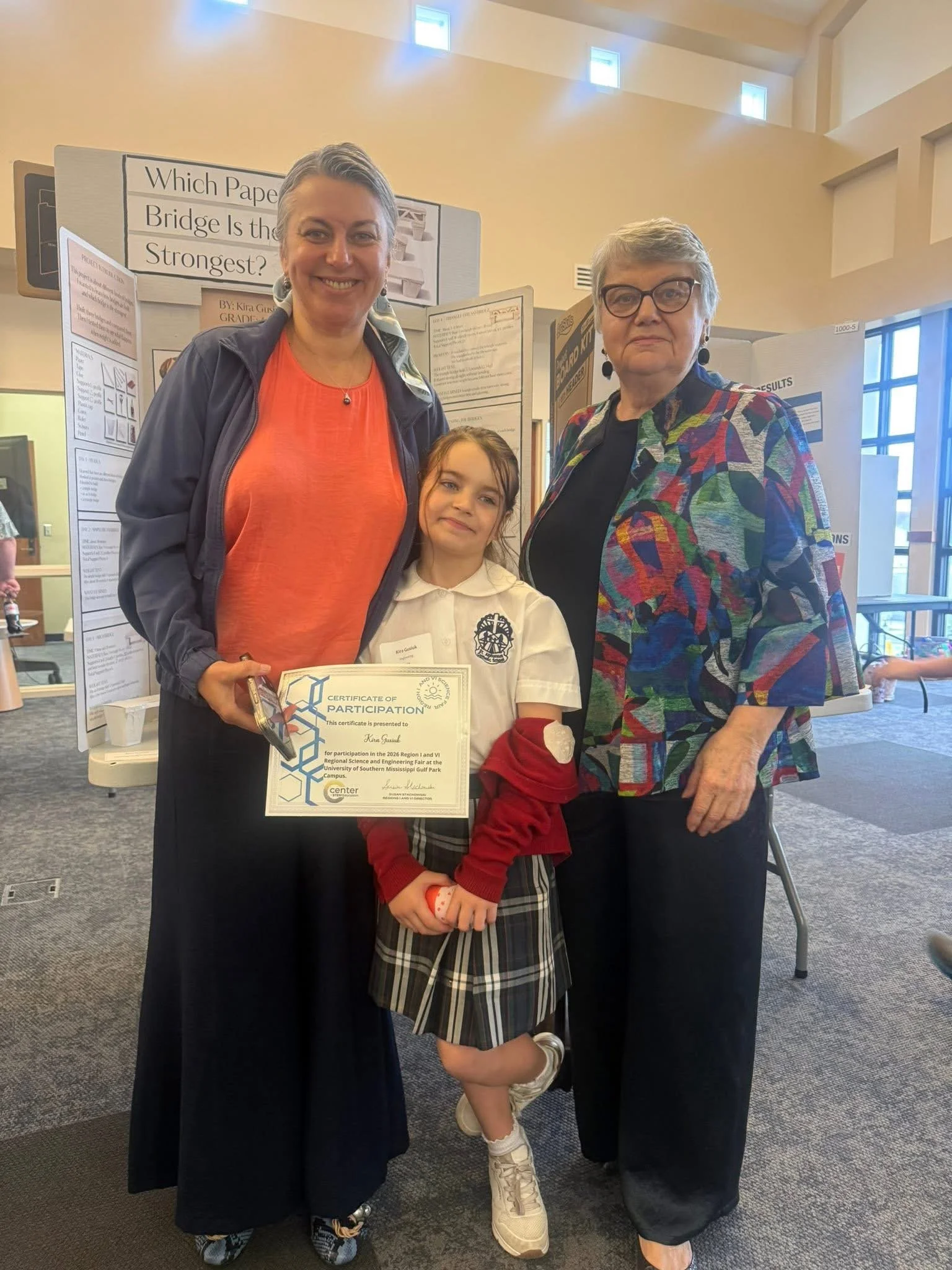
Where Kira took 1st place in a science fair
A Future in Question
Despite their progress, the family’s future remains uncertain. After their initial stay under the U4U program, the family transitioned to Temporary Protected Status (TPS).
While TPS allows them to work and live legally, it provides no direct path to permanent residency. The current designation is set to expire on October 19, 2026. If it is not renewed, the legal foundation for their lives in Mississippi could vanish overnight.
Eric Litke hopes elected officials may take an interest. “I’ve been trying to arrange a meeting with Senator Roger Wicker to tell him about this incredible family,” he says. “He has always been very supportive of the people of Ukraine.”
For Iryna, the uncertainty is difficult, but she remains hopeful. Her family is spread across several countries - her father remains in Ukraine, and her brother lives in Moldova. Years have passed since they have all been together.
“Video calls help,” she says. “But we have not hugged each other. We have not sat at the same table.”
What she hopes for most is something simple.
“There is one thing without which a person quickly stops truly living,” she says quietly. “That thing is the future.”
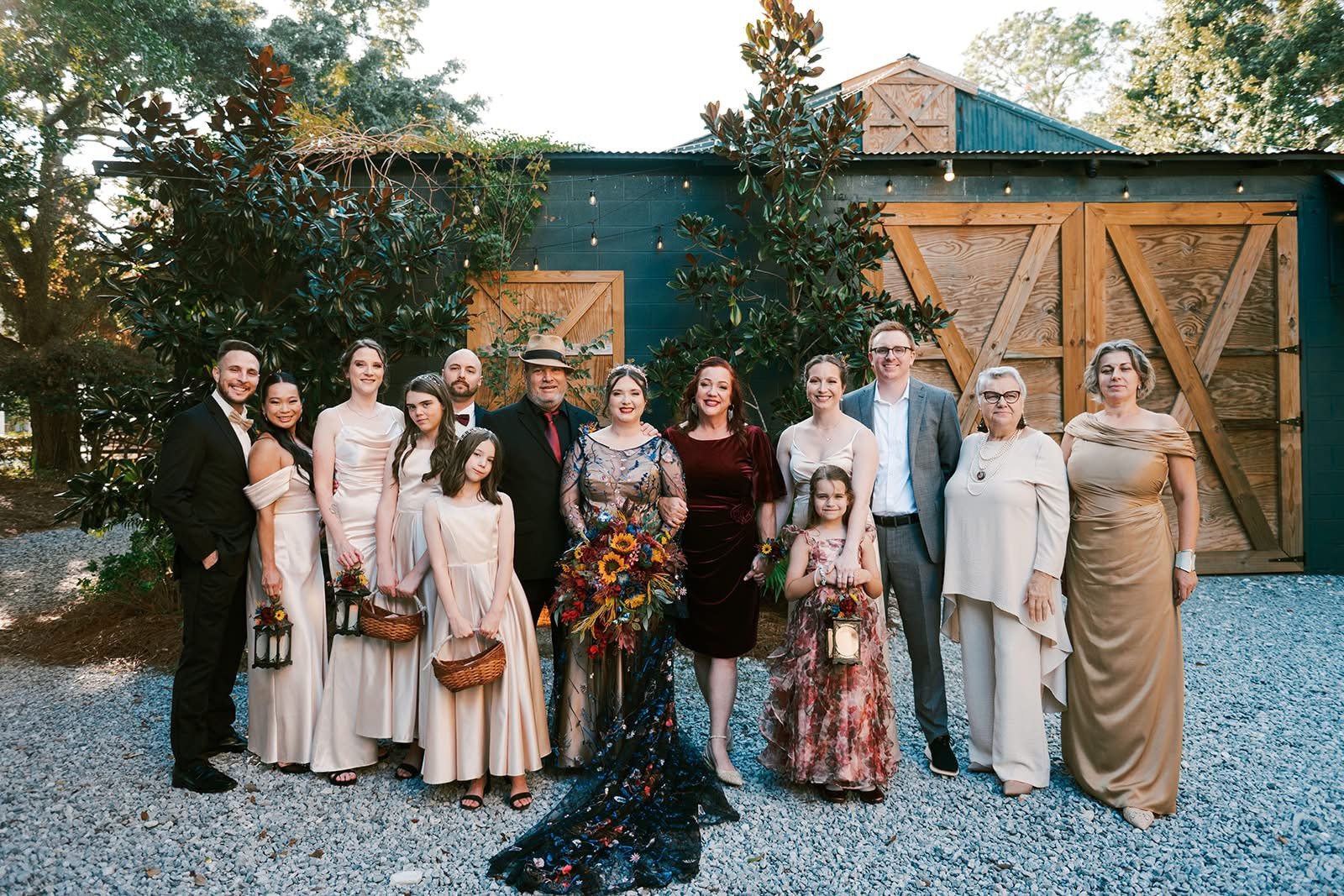
Linda’s daughter got married and the Gusiuks joined them